Editor Interview: Charlie Ilgunas (Little Bee Books)

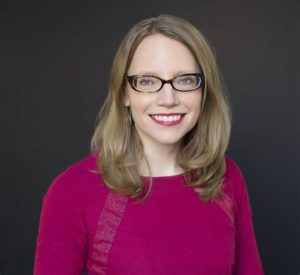
This month’s Industry Insider interview is with Charlie Ilgunas, Associate Editor at Little Bee Books. Once I saw how his Twitter bio claimed that despite what Pottermore tells him, his Patronus is a capybara, I knew we’d get along famously—my unofficial Patronus is a penguin, after all!

C’mon. Everyone knows that the capybara is just a furry, flipperless penguin.

Since we’ll hit on a lot of bio-​type stuff below, let’s just jump right into the Qs and As, okay? Onward!

Twitter: https://twitter.com/chillgunas
LinkedIn: https://www.linkedin.com/in/cilgunas/
Little Bee Books Website: https://littlebeebooks.com/


RVC: Instead of beginning with the typical “how did you get started?” questions, let’s go a different route. You’re been with Little Bee Books for almost five years now. In all that time, what have you come to realize distinguishes a Little Bee picture book from those that other publishers produce?

CI: I think I would define our books as sophisticated but accessible. We acquire a lot of books that revolve around little-​known stories or people, that happen around big events or movements, or discussing topics that don’t get discussed enough in picture books and middle grade. We’re also proud to work with GLAAD on titles that we hope will increase LGBTQ visibility in younger readers and accelerate inclusivity and acceptance.

RVC: What are a few of your titles that you think made big strides in that direction?

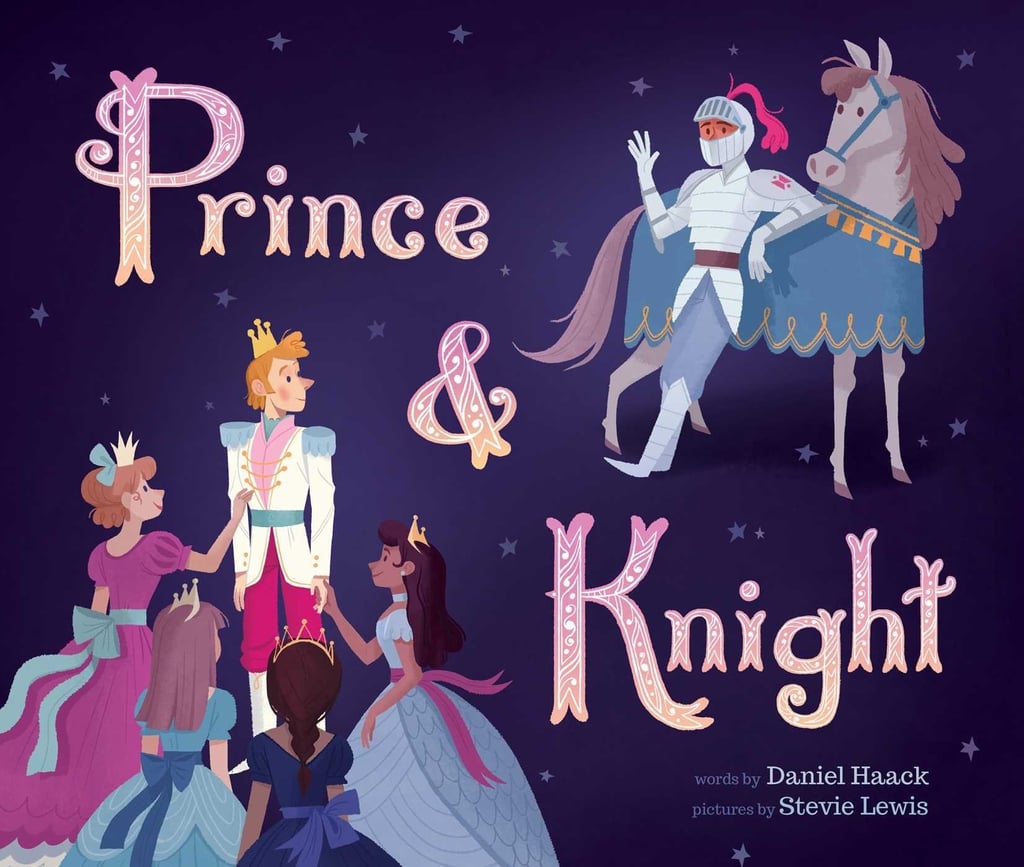
See the source imageCI: Prince & Knight has made the biggest impact so far; the reception to that one over the past year been fantastic! And its companion title, Maiden & Princess, just came out in April. This month we have two more coming out, Except When They Don’t, a book about gender stereotypes, and Our Rainbow, a board book about the colors of the pride flag.

RVC: Let’s talk about the process of getting great manuscripts into the hands of the decision makers. Early career writers ask me this all the time—what’s the difference between editor titles (assistant, associate, etc.)? Is one a better submission target for first-​time-​at-​book-​length picture book authors?

CI: It can mean different things at different houses. At large houses, since their lists are bigger, the roles can be a bit more rigid. Editorial assistants assist the director/​publisher with their work and any admin, research, and submission help, whereas assistant editors are there to help a particular editor on the team and are getting more hands-​on experience in the editorial process—and this is usually the time that they start getting a few of their own acquisitions. Associate editor is the next step up and are essentially junior editors that are forming their own list.

At Little Bee, however, we’re quite a small publisher, so roles are more fluid! When I was an editorial assistant, about 7 months in I took something to acquisitions and signed my first title. And when I became assistant editor, I was essentially acquiring and building my own list. So there is a lot of creative freedom and involvement in the editorial process allowed for assistants here, which I really appreciated.

As for targeting submissions, I wouldn’t say that any one is a better target for debut authors. Newer editors might have less preconceived notions about a text and don’t have as much in the back of their mind to compare it to other projects they’ve worked on or the publisher’s list, but even so, that still gets brought up in acquisitions by other members of the team who do have that experience!

RVC: After earning your BA in English Lit from Washington University in St. Louis, you got a Graduate Certificate in Publishing at the Denver Publishing Institute at the University of Denver. What was that certificate program like? How did it prepare you for being a kidlit editor?

CI: The certificate program was a great experience. It really appealed to me because it was solely focused on books, and the ones at Columbia and NYU have half their curriculum devoted to magazines/​digital media, which I wasn’t interested in. It prepared me in that it exposed me to a lot of aspects and functions involved in the process of getting a book from acquisitions to publication that I hadn’t thought of or was aware of at the time. And it also connected me with a lot of other people who were passionate about publishing and helped me prepare for getting my first job!

RVC: How did you find yourself in the kidlit publishing side versus, say, handling textbooks, literary fiction, or potboilers?

CI: It’s kind of funny–I remember that a big chunk of the group at Denver loved the kidlit presentation (from Greenwillow Books) and seemed determined to get into kid’s books. At the time, I was actually leaning more toward adult fiction or nonfiction. But as time passed and I was trying to get my foot in the door anywhere, I ended up getting an internship at Bloomsbury in their children’s department that completely changed my perspective. Now, I can’t imagine doing anything else!

RVC: What finally sold you on kidlit?

CI: I think what clicked when I started working there is that I just reconnected with what made me fall in love with books as a child. The sweeping illustrations and zany or heart-​melting stories of picture books, the feeling of anticipation with a great adventure, the desire to get spooked with a creepy middle grade. I think in a lot of ways, adult books (and some YA, to an extent), can be locked into tropes and conventions of whatever genre it is, but with picture books and middle grade, I feel that their worlds and characters are so open and that they can go anywhere in the next turn of the page.

RVC: Three of my own students have recently decided that being a book editor might be for them. What path do you recommend they take after they finish their BFA in the creative writing program I run at Ringling College of Art and Design?

CI: Internships are really the best way to get into the business, since you’ll build experience, a pool of references, and may even by hired by the company you intern with. I was lucky because the internship I did with Bloomsbury was both paid and open-​ended, meaning I could work there until I found an editorial assistant job.

Another thing I’ll say is that you shouldn’t be picky about what you apply to. As I said, I was really focused toward adult books, but I started applying to everything, even managing editorial jobs. And that’s actually how I got the Bloomsbury job—I interviewed for a managing editorial internship and didn’t get it (because I had absolutely no managing ed experience!), but I got along so will with the managing editor that she sent me an e‑mail when there was an editorial internship opening and recommended me to the hiring editors.

See the source imageRVC: You recently acquired Albert D.J. Cashier and Two Grooms on a Cake in a two-​book deal with Rob Sanders, a friend of OPB. (In fact, his was the first interview we ever did.) What drew you to those manuscripts? (I confess I feel a real stake in this since I knew these manuscripts well before you ever saw them—Rob talked about them during his frequent classroom visits at Ringling College.) 

CI: So, we were first presented with two manuscripts, Albert D.J. Cashier and one we didn’t end up acquiring. I really liked Albert because it was a really interesting story that I hadn’t heard anything about before. And I was so impressed with Rob’s research. His backmatter is very extensive, and in the editing process, it was fascinating to comb through a 192-​page pension file to see all the back and forth about Albert’s case.

Two Grooms on a Cake actually came at the last minute; we were about to settle the contract for Albert when the agent sent it over, and I couldn’t have been happier reading through it. It was such a great perspective to tell the story of America’s first gay wedding from, and since we already had Albert slated for 2020, Two Grooms would come out in 2021, the 50th anniversary of Jack and Michael’s wedding. It was too perfect!

RVC: I hear a lot from picture book authors who can’t seem to break through. What’s the most common thing that ends up being the deal breaker for an otherwise-​pretty-​solid manuscript?

CI: I read a lot of picture books that have very solid, even fantastic ideas, but just peter out at the end and don’t have a satisfying arc. Having a great idea is important, but the author still needs to find somewhere to take it and a way to make it a full story—one that will keep a distracted kid interested at story times or when learning to read for themselves, one they will want to read again and again.

RVC: One last question before we reach the much-​ballyhooed, never-​equaled, always-​appreciated LIGHTNING ROUND! What kind of picture books do you think the marketplace is missing right now?

CI: I think what’s exciting is that there is such a diversity of stories being told today that there aren’t as many things clearly and perceptibly missing from the market. But one thing I can think of is that I wish that there was more room for unusual picture book formats—oversized, or unusually shaped, or the like. A lot of accounts are pretty quick to reject stuff like this since they have shelf requirements, but indies are pretty accommodating to these types of formats as long as they think it’s cool and see buyers for it!

RVC: Okay, it’s time. Lightning-​fast Qs and As please! Ready?

CI: Let’s do this!

RVC: Most underappreciated Harry Potter spell?

CI: Arania Exumai—it’s only in the movies, but I would use this all time against spiders!

RVC: Favorite burger joint in NYC?

CI: I don’t know if I’m qualified to say, since I was a vegetarian for 8 years until recently; I haven’t had too many yet! I like Shake Shack, and there’s a place near where I live called Burger Club that makes a great burger.

RVC: On a scale of 1 to 1,000, how excited would you be to get a picture book manuscript about (or by!) a capybara?

CI: I actually have one right now that includes a capybara! Not the main character, though, so not quite 1,000, but I was still so excited.

RVC: The #1 Little Bee picture book to watch for in 2020?

CI: Grandpa Grumps. I loved working on this book so so much; it will make you laugh and cry (and possibly hungry)!

RVC: Your favorite non-​Little Bee picture book of 2018?

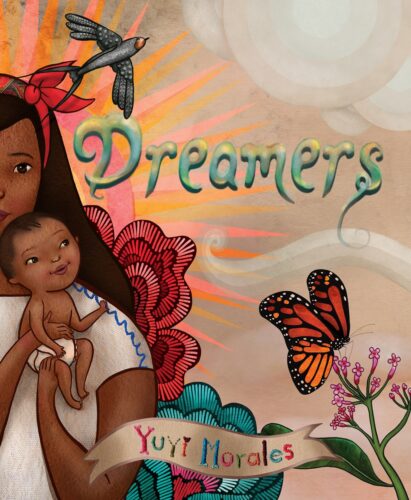
See the source imageCI: I thought We Don’t Eat Our Classmates was hilarious. And Dreamers is utterly gorgeous.

RVC: Three words that describe your work (or goals or philosophy—whatever works best here) as an editor.

CI: Curiosity. Conscientiousness. Wonder.

RVC: Thanks so much, Charlie. Much appreciated!

Editor Interview: Cheryl Klein (Lee & Low Books)

This month’s Industry Insider Interview is with Lee & Low Books’ Editorial Director, Cheryl Klein. She’s been on my Wish List for OPB for some time, so when I was asked in the 11th hour to provide a super-​brief intro for Cheryl’s talk at the SCBWI regional conference in Miami this past January, I knew the literary gods were smiling upon me.

To a roomful of SCBWI members, I shared these three things about Cheryl by way of an introduction:

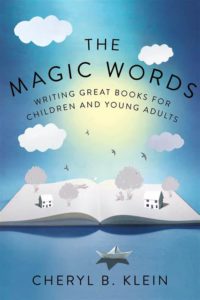
1–“As a writing professor and creative writing program director, I regularly loan out writing craft books to students. That includes Cheryl’s The Magic Words: Writing Great books for Children and Young Adults.” [Then I turned to Cheryl and fake glared at her.] “Yours almost never comes back. I’ve had to buy many, many copies of it over the years. So THANKS for that!”

2–“My literary agent and I were recently talking about picture book editors recently. When Cheryl’s name came up, my agent simply said: ‘She’s good people.’ That’s all I needed to hear.”

3–“Since I launched OPB back in April of 2018, I’ve always had a short Wish List of people I wanted to interview. Some I landed. Jane Yolen. Liz Garton Scanlon. Floyd Cooper. Rob Sanders. Elizabeth Harding. Sylvie Frank. But a few have so far eluded me. One name that’s moved to the top of my 2019 OPB Wish List? Cheryl Klein.” [I now pretended to whisper to the crowd as if Cheryl wasn’t standing six feet to my right.] “I’m hoping that this fancy-​pants introduction might just tip the odds in my favor.”

And here we are, OPB and Cheryl–all thanks to social pressure, some literary luck, and good old-​fashioned schmoozing (and I mean that in only the best sense of the word “schmoozing,” which is really just networking, acting like a pro, and being pleasant, vs. people who are crazy, stalkery, and IN-​YOUR-​FACE pushy–we’ll do a special OPB Bonus Goodie on that “Don’t Do This!” topic another time).

But now that we’re all here and ready to go, let’s get cooking! Take it away, Cheryl!

Website: www.cherylklein.com
Facebook: www.facebook.com/cherylkleinedit/
Twitter: www.twitter.com/chavelaque
MS Wishlist: www.mswishlist.com/editor/chavelaque


RVC: Unlike most editors, you almost had another career … as a spy. How did that (almost) happen?

CK: As a former Midwesterner, I pride myself on my ability to be nice, bland, and unobtrusive to the point of inconspicuousness when I so choose. This served me well in making me a good observer and allowing me to pass through most places unremarked-upon—even if I was, say, carrying the unpublished manuscript for the seventh Harry Potter book (which I did once).

The privileges of being a middle-​class-​ish white lady help here too, of course.

RVC: As a fellow former Midwesterner, I, too, have been known to enter a crowded room and not be noticed until I had my foot stepped on. Depending on how you look at that, it might be considered a gift.

But back to your non-​spy career. Once you started working at Lee & Low, how did you know that you’d found your true calling? What were the signs?

CK: I’ve worked in the industry for nearly nineteen years now, and I felt like it’s my calling since day one. The main sign of that calling is the quality of my books and my relationships with my authors, I think, and how content I feel when I’m doing the work … the “mechanic’s delight,” as the late Canadian writer/​editor Brian Doyle called it, of seeing how much stronger a scene in a novel might be when we take out all the filter words, or discovering a new illustrator’s portfolio and connecting her with a manuscript that lets her talents shine. It makes me deeply happy to make books right or better. And one of the best parts of being an editorial director is helping my team figure out their own rights or betters, and do their best work too.

RVC: I sometimes hear writers bemoan how the days of Maxwell Perkins and hands-​on editors is long gone, and that most editors are just gatekeepers. Could you help dispel that myth by explaining some of the actual work that goes into taking a single picture book manuscript from promising-​manuscript-​I-​acquired to the-best-thing-we-collectively-can-create?

CK: This varies from manuscript to manuscript, and with whether the author is illustrating the book as well, but the process usually runs in three stages. In the first, the author and I think and talk about the concept or point of the book—what the story is, what the author wants to convey, how the project as a whole should feel to readers, where the child’s and adult’s pleasure or interest in it might come from. Here I write (typically long) letters saying what I’m presently seeing in the text, and asking how that differs from the author’s vision, and then defining and explaining what I hope to see in the book long-​term, if the author agrees. We talk that over until the author is ready to go off and revise.

In the second stage, the author takes all that feedback and conversation and moves around the necessary story pieces—or invents new ones—to put the book in a form that conveys the story and those thoughts and feelings compellingly. That might involve setting up a theme or idea on p. 4 that will then pay off on p. 26, or switching out one plot event for another, or just building out a character’s emotional arc a little more. With some manuscripts, we also try to figure out pagination at this point, while with other projects, I might leave that to the illustrator.

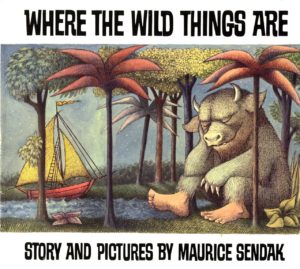
And in the third stage, we try to refine the language so it sounds marvelous when read aloud, leaves plenty of space for the illustrator, etc., etc. Here I do a lot of line-​editing on paper or in Track Changes, going back and forth until everything feels and sounds right to me and the author. Stages II & III tend to bleed into each other a lot, actually, because so much of the sense of picture books is in the sound of them—how a thought or emotion is phrased, even things like word choice. I always think about the fact that Where the Wild Things Are would be infinitely last satisfying if the last phrase were “and it was still warm.”

RVC: Unlike most picture book editors, you’re also an author. In fact, you have two picture books coming out in 2019. What advantages might you have by being both an editor and author versus solely being an author? 

CK: Mostly it’s that I have an intimate knowledge of what’s going on behind the scenes, from what might be happening in an Acquisitions meeting, through the thought process my editor might be going through in phrasing a revision request a specific way. This could be crazy-​making in the sense that I could worry, “Oh man, I heard that Barnes & Noble wants picture books with longer texts. Will the B&N rep speak up against my twelve-​word text in the Acquisitions meeting?”

RVC: I think all writers hear rumors/​trends like that from time to time and panic. A bit. Sometimes a lot.

CK: And while those thoughts do pass through my head, I’ve also been around the industry long enough to know that (a) a lot of this stuff is entirely out of my control, and hence not worth spending mental time on, if I can avoid it; (b) it isn’t personal – someone not liking my writing (particularly for market reasons) has nothing to do with who I am as a person, and my work has integrity no matter what that someone thinks; and © publishing opinions are never definitive or final. In six months, B&N may be begging for short texts, or an editor who didn’t respond to a text once might come around in a year or so and say “Hey, you know what? I can’t stop thinking about that manuscript, and now’s the right time to publish it.” (I know this in part because I have been that editor!) I’m also aware of just how much behind-​the-​scenes work is going on for a book, even when the author can’t see it, and I’m deeply grateful for that. So my knowledge of how things work mostly helps me let go.

RVC: Do you handle getting editorial notes any better than the rest of us?

CK: I will admit that I don’t love getting edits, but I try to think of them as problems to be solved: This is what I want to say; my editor is a smart reader, and she’s not understanding what I’m trying to do, as evinced by these edits; how can I fix the text to make her understand? Thinking that way takes my ego and its associated emotions out of the edits and helps me get the job done.

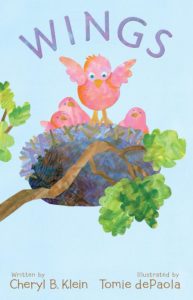
RVC: Tomie dePaola did the illustrations for your own picture book, Wings. What was it like working with an OMG illustrator? 

CK: My editor for Wings was Emma Ledbetter of Atheneum/​Simon & Schuster BFYR, now the editorial director at Abrams BFYR. She worked as Tomie’s in-​house editor at Simon & Schuster, and she knew he loved birds, so she suggested him, and I was blown away by the mere idea of having him do the book. I of course envisioned his lovely, thick-​lined, Strega Nona style at first—the one he’s best known for—and I was thrilled when I saw the new medium he used here: full-​page-​sized Avery labels, colored with markers and cut into shapes! It’s so simple, but in Tomie’s hands, so vibrant and artful, and perfect for the very elemental text. It’s been an honor and a pleasure, all the way around.

RVC: Quite a few writers keep nudging me to ask agents and editors about what they do and don’t want. So let’s toss them a bone. Please offer up three specific things that just aren’t your cup of literary oolong.

CK: List manuscripts (that is, texts that are basically lists on a topic) that don’t build up to illuminate some underlying story or theme; rhyming texts with no sense of purpose, meter, or form; and scatological stuff. As much as kids love poop, pee, and fart jokes, I’m afraid I just say “Ew.”

RVC: I can’t help it—I’m a giver! So let’s give writers one more thing to chew on. What do you dream of finding in the slush pile?

CK: A manuscript by a diverse author illuminating a story from a contemporary kid’s life or a historical or scientific concept through their specific cultural lens, written to achieve some specific emotional effect, and pulling it off so well that I can’t wait to share it with everyone I know.

RVC: One last thing about your own work as a writer. What motivated you to create your own book on writing, The Magic Words?

CK: The Magic Words is a revision of my first, self-​published book, Second Sight: Writing Great Books for Children and Young Adults, which was a collection of my SCBWI talks and personal blog posts and reflections on the art of writing. My motivation to write all of that material came in part from being asked to speak at various events, and in part from my longtime fascination with How Books Work, which dates back to my time as an English major in college. (I never went to grad school—I went into publishing instead—so my books on writing are kind of my attempt to do an M.A. on my own.) Still, maybe the thing I love most about great literature is that even when you take all the pieces apart as best you can—plot and theme and character and sound and so forth—there’s always some indefinable spark that can’t be captured:  life, or truth, or anima, or soul … But I do love trying to capture it, and taking those pieces apart accordingly.

RVC: Got a favorite takeaway or tip?

As for the best takeaways from The Magic Words, readers tend to love how practical the book is, so I’d point out the Character and Plot Checklists, which prompt readers to think about the essentials of both of those huge subjects as manifested in their own works-​in-​progress. I also place a strong emphasis on the fact that every writer is different, and no one writer’s technique is the One True Way That Will Work for Us All on Every Book—not even mine! But I offer a lot of options and directions to help each writer figure out their own True Way. And the closing essay on publishing puts forth one of my favorite similes: The submission process is as subjective and personal as dating, and to be approached rather like dating—with thoughtfulness about who you are, what your book is, and what you want out of the agent/​editor/​publishing relationship, and with a sense of humor as well.

RVC: Okay, it’s time to change things up. It’s time for … The OPB Speed Round! High-​velocity Qs and As only, please. Are you ready?

CK: Bring it on!

RVC: What would be hardest to give up: social media or TV?

CK: Social media!

RVC: Stranger Things. Great Netflix original series, or the greatest Netflix original series?

CK: Great! (But I confess I only watched season one.)

RVC: You’re hosting an ice cream party for picture book characters, but you’ve only got the fixings for yourself plus three guests. Who joins you for double fudgie sundaes with extra strawberry sprinkles?

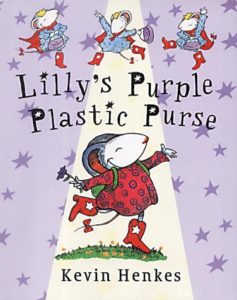
CK: Princess Pinecone and the Pony from Kate Beaton’s The Princess and the Pony (which I co-​edited, I admit), and Lilly from Lilly’s Purple Plastic Purse. Lilly and Pinecone would get along famously, and the Pony and I would enjoy watching them as we ate all the ice cream.

RVC: What’s the most recent picture book you signed? And using only three words, explain why you bought it.

CK: Unstoppable: Thirteen Adventures Alongside Athletes with Physical Disabilities, by Patty Cisneros Prevo. In three words: Energy! Inspiring! Diverse!  

RVC: What’s the most underappreciated picture book of 2018?

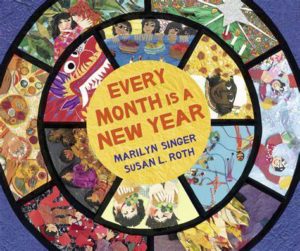
CK: Oh, man. My favorite (non-​Lee & Low) picture book of the year was A Big Mooncake for Little Star by Grace Lin, but it received plenty of appreciation! I do wish more people had seen the Lee & Low book Every Month Is A New Year, by Marilyn Singer, with illustrations by Susan L. Roth, edited by my colleague Louise May. It’s a marvel of concept (the New Year’s celebrations that take place in each month of the year, somewhere around the world), research, poetry, illustration (all collage!), design, and backmatter.

RVC: Best compliment you’ve ever received? 

CK: Can I cite two—one professional, one personal? Sherry Thomas, a novelist I work with, said, “I didn’t think editors edited like this anymore” after we finished her book. And J. K. Rowling told me that I looked like Gwyneth Paltrow!

RVC: Thanks so much, Cheryl!


Agent Interview: Christy Tugeau Ewers (The CAT Agency, Inc.)

This month’s Industry Insider interview is with Christy T. Ewers, an artists’ agent who is the owner of The CAT Agency, Inc. She’s been surrounded by artists her entire life, with a mom who has a Fine Art degree, a husband who’s a filmmaker, and a pair of book-​loving children (one has a deep appreciation for unicorns and the other “enjoys using every crayon in the box”). You put anyone in that environment and they’re pretty much going to come out as an artists’ rep!

That’s probably all you really need to know in terms of pre-​interview stuff, though there is a good bit on her LinkedIn page about HTML, Java, and C++ skills (that kind of thing always impresses the heck out of me). So we could just move on to the interview … but here at OPB, we do more than the average bear does. And after extensive research (I Googled for about nine seconds), I’ve determined that when the average bear creates a list, they’ll only use three items. OPB can top that. So here are four—count ‘em, FOUR!!!!!—bonus facts about Christy to better prepare you for the almost-​ready-​to-​start interview.

Christy loves:

  • seaside escapes
  • very hot coffee
  • pitbulls
  • handwritten notes

With that, let’s get to the OPB interview with our new favorite artists’ agent, Christy!

website: www.catagencyinc.com
Facebook: www.facebook.com/CATugeau
Instagram: @the_cat_agency

RVC: Let’s talk about the elephant in the room. You’re half of The CAT Agency, the first mother/​daughter agency in the kidlit business. Describe what that’s like on a day-​to-​day basis.

CTE: Well, a lot of what makes working with my mother so successful is that we have separate offices in separate places. Haha! But it’s not what you think – we get along famously – it’s just that if we were in the same office, neither one of us would get any work done. We like to talk! So when we DO work in the same place, there’s a lot of good-​hearted goofing off.

Also, after 25 years at the helm, she’s now enjoying semi-​retirement and/​or “working from the boat” where she can often be found cruising around with my dad. No one is more deserving of R&R, and she can enjoy it, knowing that I’m very happy behind the wheel in my little office nook.

RVC: Sounds delightful!

CE: It is! One of the things I love most about my job is that the day-​to-​day is different every day. Some days are promo days, where I spend the hours putting together blasts, or postcard mailings, or going into NYC to meet with editors and art directors. Some days, I focus purely on sending out dummies and pitches. Some days, it’s all about accounting; invoicing, cutting checks, balancing the books. Some days I read a lot of contracts – and negotiate terms. Some days I dedicate to reading manuscripts and dummies and providing feedback and notes. Some days I’m a cheerleader or a therapist, or both! Some days, I get to be the delivery person of amazing news, and some days, not so amazing.

And then there’s the occasional Field Trip Day to the local bookstores, where I get a latte, and dig in in the children’s section. I love the daily variety of being an agent. But every day consists of replying to email, talking to my mom 30x on the phone, participating in social media, and staying up way too late replying to submissions. There are always some constants!

RVC: Though you have author/​illustrators on your client list, you’re not currently representing text-​only authors. As someone with a degree in English/​Journalism, do you ever ache to just work on the word side of the picture book equation?

CTE: Good question! I find that I feed that hunger in helping our author/​illustrators – and also helping those who submit dummies to us. I spend a lot of time working with people in helping them to write – but I also spend a lot of time learning as much as I can, too. I read about writing, research, go to conferences, and listen to authors and editors speak, etc. So it’s really also about continuing education for me, and I enjoy that immensely. I have so much to learn, and such great resources! I find it satisfying to learn as much as I can, and then apply that in helping people who are writing for children. It’s very different from the literature I studied in school and the creative writing I have done…writing for children is much, much harder!

Honestly, I love the art part. Art has always been a major part of my life. If I ever just worked on the word side of the equation, I would miss working with artists immensely. I think I’d feel like a glass half empty – whereas now, I’m full to the brim!

RVC: Beyond your degree in English/​Journalism from the University of Delaware, what was the best life or career experience(s) in terms of preparing you to succeed as an agent?

CTE: Oh boy, this one is going to make my parents chuckle – but hands down – Assistant Managing a fine-​dining restaurant. When I was in college, my parents urged me to get a summer internship in NYC (I’ll give you one guess as to what industry my mom was pushing!). So what did I do? I spent my summers living in practical squalor on Nantucket Island, where I spent my days at the beach, and my evenings as the Assistant Manager at a very popular fine-​dining restaurant. My parents were thrilled, let me tell you! But honestly, there was no better preparation for life, let alone agenting than those 4 summers.

First of all, I had to have confidence in myself – or at least pretend to – because I had to finagle my way into that job, even though I was woefully inexperienced. And then I had to learn quick! Right out of the gate, I had to learn how to liaise between the kitchen staff, and the wait staff – which anyone who has ever worked in a restaurant understands is a difficult undertaking! I had to smile while restaurant-​goers screamed at me after I told them that there were no open reservations – and then I had to “find” them a table. I had to put out literal and figurative fires, keep my cool, and multi-​task more than I ever had. I learned to work harmoniously with everyone from the bus boys, to the bartenders, to the line cooks, to the owners, to the doormen. I really listened to people with more knowledge and experience than me, and began to understand that no one reaches a point in which they have nothing left to learn. I embraced being human; to always keep things in perspective, and to laugh. Because sometimes, the only thing there is to do is laugh. I learned that at the end of the day, none of what I was doing was life and death, but people’s livelihoods depended on the job that I did. And I took it very seriously.

By the end of my last summer, I was hiring people, training people, and feeling an immense sense of pride at the end of each night, no matter what happened. I came to see the challenges of the job as a positive thing, and learned SO much from each and every one of them. Even though I held this position nearly 15 years before becoming an agent, working in a restaurant set the blueprint for who I am today. It made me a better person – and a much more diplomatic, understanding and patient one. All of the skills that I acquired and honed in that job, (including learning a LOT about wine) I have applied to my life and career every day since.

Plus, that’s where I met my husband…he was a waiter! So…it was a real win/​win/​win/​win/​win/​win for me.

RVC: What’s the most challenging aspect of being an agent?

CTE: Hmmm. I’d have to say convincing people with immense talent that they are not totally untalented and worthless; which usually immediately follows a rejection. I completely understand how it feels to be on the receiving end of a rejection – and how difficult it is to put one’s heart on their sleeve the way that authors and illustrators do. This is definitely a crux in most artistic and creative lives, but I see so much self-​doubt and self-​deprecation oftentimes when it’s completely uncalled for! I find it challenging to combat that in an effective way. Thank goodness for Jane Yolen for ALL things, but I appreciate that she openly (and often hilariously) posts about her rejections and woes. I think that really helps ease the sting for other authors and creatives! We have a tendency to share only good things – which is human. But the flip side of that is that when we only share things to celebrate, rejections seem fewer and farther between – when in fact, they are tenfold! It’s hard to convince people that they are not alone – and that it happens to the best of them!

RVC: While we finally met face-​to-​face at the 2019 SCBWI regional conference in Miami, I’ve known about you and your agency for far longer than that thanks to your third Thursdays “Ask CAT” posts on Kathy Temean’s blog/​newsletter. How did that relationship come about?

CTE: My mom was on faculty at the NJ SCBWI conference many many years ago when Kathy was an RA, and they hit it off! They go way back – and have much respect for one another personally and professionally. Just like Kathy, my mom has always been very active in sharing her knowledge and skills, so it only made sense to contribute to Kathy’s incredible blog. We admire Kathy greatly and would do anything for her – and we are always happy to help her readers in any way we can.

RVC: I saw on your agency’s blog (The Way Tugeau) that you reposted a piece you did for Kathy on the difference between a licensing contract and a publishing contract–something that really confused some people. In a nutshell, what’s the difference? And why are people confused about it?

CTE: In a nutshell, licensing is a whole different ballgame. I think that the biggest difference is that in licensing, you’re negotiating the term of the license from the perspective of knowing its end-​point. You’re also licensing your work in terms of usage. And those factors determine the compensation. In trade publishing, at least, the terms are more boilerplate. If you retain the copyright to your work, you are licensing it to the publishing of the book, and book materials, usually worldwide. And the terms of the license end when the book goes out of print. This doesn’t determine the compensation for the book – other variables come into play as far as that negotiation goes.

RVC: Are you noticing any particular trends in the picture book market now? (I’ve recently seen a few books that have a decidedly comic-​book style to them, but I’d really suggest that it’s the marked rise of interest from publishers in the work of author/​illustrators.)

CTE: Graphic novels (even in the younger genres) are all the rage now, yes. And it’s about time! They tap into a whole new market of children who read in a less traditional way. And it’s wonderful! I have a resistant reader, and she loves the graphic novel format. I’m so relieved that this “trend” is here to stay! It’s also a wonderful showcase of highly crafted writing, and beautiful illustrations. It takes special people with very special talents to create a successful graphic novel!

You’re right that there is a bit of an influx of author/​illustrators. It makes sense. If an editor is presented with a dummy, and they like the story AND the art, then voila! It’s a one-​stop-​shop. But I think that’s also happening because some editors are starting with artwork. I know several who will see the work of an illustrator and/​or a visual story, and say “do they write!?!” and if they don’t, the editor will say “do they want to?!”. There are a lot of editors out there right now who are willing to help illustrators write, based on beautiful visual stories that they have already created. I really love this trend, especially for picture books, because the illustrations ultimately drive the story. It kind of makes sense to start there, right?

I’m also seeing an influx of Own Voices, diverse stories, and books that are visually representing the world we live in. HOORAY! I don’t even want to use the word “trend” with any of these things, though, because that implies that it’s temporary. None of these things I have mentioned should be temporary.

RVC: Could you talk about your role in pairing a picture book artist with a writer via a publisher? Do publishers ever come to you and say “We’ve got a book by so-​and-​so about subject X. Do you have a client who’d be ideal for that?” Or do they come with a specific client of yours in mind? How does it all work, and how can you promote your clients to create new opportunities for them versus waiting for opportunities to arrive? (Lots of big questions—I know!)

CTE: These are great questions! It’s a little bit of both. I’d say 50/​50. Sometimes, editors and art directors come to us and say “We are on the search for an illustrator who can do XYZ and ABC – got any suggestions?” and then I say “Heck yeah!” and send along links and samples and it goes from there. Oftentimes, I get the emails with a specific inquiry – asking if so-​and-​so is available and interested in a specific manuscript. Other times, it’s an “audition” scenario where I’m contacted regarding several illustrators, and they would like them to create samples for a project (along with artists from other agencies) and then we see that play out.

My job as an agent is to make sure that I’m promoting, promoting, promoting, without being annoying. So I’m either arranging postcard mailings, sending blasts, visiting publishers to show portfolios and dummies in person, or just doing direct-​reach-​outs to art buyers to remind them of the talent in our group. It’s a trick to stay in the forefront of people’s minds when they are looking for an illustrator, while making sure that I’m not being too “agent‑y”!

RVC: I hear that artists are sometimes as reluctant as writers to promote themselves. So let’s help them! What’s one thing an early-​career artist can do to get noticed by an agent or other industry professional? What’s worked on you?

CTE: Everyone is going to hate me, but BEAUTIFUL ARTWORK!! That certainly catches my eye. That, and a personal email/​cover letter. We always try to look at everyone’s work and get back to everyone with a thoughtful and personal response (even if it’s a pass), but if someone takes a minute to actually look at the people we represent and researches our agency a little, and mentions that in their email, it means a lot. It’s clear when it’s a mass submission, and not only does that bum me out, but I see that as a missed opportunity for the artist. When I see a mass submission (especially beginning with “Dear Sirs”) I’m less inclined to give their submission any attention when I know they didn’t do the same for us. A little effort goes a long way.

RVC: Final question for “serious” part of the interview—What’s the most important thing someone should know or understand about The CAT Agency? (I dearly hope your answer involves something about cat interns!)

CTE: Ha! If anything, we’d have dog interns. I’m highly allergic to cats!

One thing that a lot of people don’t know or realize is that we are The CAT Agency, because my mother’s initials are C. A. T. The agency used to be called the Christina A. Tugeau Artist Agency. When I took over, we shortened it to “CAT” to pay homage to our founder, and to be a lot more pronounceable. 🙂

And we’ve always had our little reading cat logo, so it made sense! It’s funny, because I’ve never been a cat person. But they are growing on me…and they’re all over my office!

RVC: So it’s time for the often-​copied, never-​equaled LIGHTNING ROUND! Ready for some zippy-​skippy Q and A?

CTE: Ready!

RVC: This is such a low-​hanging fruit, but I’ve got to ask. If Harry Potter zapped you into a cat, what type of cat would you hope for?

CTE: Sorry, cats–I’d hope to be a dog. But if I HAD to be a cat, I’d have to say lioness.

RVC: Most surprising song (or artist) on your playlist.

CTE: The title score to Game of Thrones. Don’t knock it ‘til you try it!

RVC: What’s the bigger deal-breaker—an artist with a galaxy-​sized ego or an artist who is unbothered by the sound of deadlines that WHOOSH by?

CTE: Oh man. Ahhhh! Both give me hives. Ummm…I’d have to say an artist who is unbothered by the sound of deadlines whooshing by. Because you kinda also have to have a big ego for that to be true. To think that deadlines are inconsequential, and that your time is more important than someone else’s is the sign of a pretty big head. And, as we know, meeting deadlines makes or breaks a career, not just your relationship with your agent!

I can (begrudgingly) deal with inflated egos – so long as those egos meet deadlines.

RVC: Spec covers. Yay or nay?

CTE: Do you mean doing a cover on spec in hopes of being hired for a cover? If so, YAY!

RVC:A picture book illustrator I don’t rep but whose work is underappreciated despite being totally awesome is ___________.”

CTE: Oh, there are so many!! P. Marin. She’s got a very distinct style; full of raw emotion and energy. I follow her on Instagram.

RVC: Three words that describe your art aesthetic. 

CTE: Emotive, loose lines, contrast‑y (yes, that’s a word!)

RVC: Thanks so much, Christy!
Agent Interview: Wendi Gu (Janklow & Nesbit)

This month’s Industry Insider interview is with Wendi Gu of Janklow & Nesbit.
Wendi grew up in the sleepy suburbs of Chicago and studied Creative Writing at Northwestern University. Soon after, she found herself working at Sanford J. Greenburger Associates before moving on to Janklow & Nesbit in 2018.

But that’s the standard stuff. At OPB, we plunge deeper. Here’s where we really start to get know what Wendi’s all about.

Five Fun Facts:

  1. Believes smoked gouda is good on ANY cracker.
  2. Used to be picked last in gym class, but thanks to weekend yoga, she can match Dwayne Johnson/​The Rock push-​up for push-up.
  3. Has watched Beyonce’s Lemonade more than any other film in her adult life.
  4. Desires clients who are “unafraid of poop jokes.”
  5. Admits that while beagles are her favorite, “all dogs have good souls.”

Armed with that kind of in-​depth 411, we’re practically coffee-​shop pals with Wendi. So let’s move on to see what our new buddy says about the world of picture books. from a literary agent’s perspective.

Onward!

Agency Website: www.janklowandnesbit.com/​node/​4165
Twitter: @wendilulugu
Manuscript Wish List: www.manuscriptwishlist.com/​mswl-​post/​wendi-​lulu-​gu/​


RVC: Before we really get cooking along, I’ve got to ask–you have a degree in creative writing from Northwestern University. But you also earned a degree in anthropology. How’d that come about? (Especially because you were interning as an undergraduate with children’s book agent Brenda Bowen at Sanford J. Greenburger Associates! Was being Indiana Jones Gu your backup plan to the kidlit business?)

WG: Great question. I loved the reading list in the creative writing program, but I loved reading ethnographies too, which often got into the nitty gritty of cultural exchange. Really nerdy stuff.

RVC: So let’s talk about the world of agenting. What are a few unexpected things that people might not realize is actually part of what it takes to be an effective agent?

WG: Authors need thick skin, but boy do agents need it too. We get rejected all the time by prospective clients and editors.

RVC: Why is agenting the right fit for you versus, say, being an editor?

WG: I like being the midwife. I think editors are geniuses because they’re the real finishers. But I’d rather spot the potential for something.

RVC: Pet peeves regarding prospective clients?

WG: Spell my name right!

RVC: Amen to that! If I earned a quarter for each time a letter/​email/​note came to me but was addressed to “Dr. Cleave,” “V. Cleave,” or some variation of Cleeve/​Cleve/​Clave, I’d be in retirement mode already.

But let’s get back to you. It seems like you’re quite the fan of Twitter (love the bio: “Taller than your dad. Pure lit agent.”). Is following you there the best way for prospective clients to find out if you and they are a good match? 

WG: Finding interviews like this one is a good start. Otherwise, read the books I represent! 🙂

RVC: If you could wave your magic literary wand and suddenly have your existing clients deliver knockout picture books about X, Y, and Z, what would those subjects/​ideas be? (What are you looking/​wishing/​dreaming for in terms of submissions?)

WG: You know, agents get asked this question all the time, but when we fall in love with a project it’s usually a book that we didn’t even know we were waiting for. But I love voice-​driven stories, books so honest that it’s clear only that very author could’ve written that story.

RVC: What are some of the most exciting trends that you’re seeing in the picture book realm?

WG: I’m seeing a lot of great picture book biographies out there. It’s such a great way to share little-​known pieces of history, brought to you by little-​known heroes.

RVC: What trends would you like to see in the foreseeable future?

WG: It’s expensive…and this isn’t really a trend, but I love die cuts. I just wish they weren’t cost-​prohibitive for the publisher.

RVC: Got any terrifically exciting picture book projects in the works that you’d like to gush about?

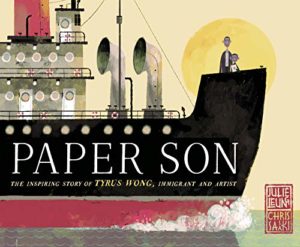
WG: Oh yes. Paper Son: The Inspiring Story of Tyrus Wong, Immigrant and Artist by Julie Leung, illustrated by Chris Sasaki, presenting the life and times of animator Wong, the Chinese-​American immigrant behind Disney’s Bambi. Publishing this fall!

RVC: One final question for this part of the interview–your name is spelled differently than most might expect (and perhaps differently than far too many queries sent your way have it!). 

WG: My name is Chinese. Wen means “culture” and Di means “enlightenment.” My parents named me that because they knew I’d grow up between two cultures.

RVC: The name Ryan means “little king.” So clearly both of our parents were on the ball when it came to naming, right? 🙂

So I’ve been waiting for it. You’ve been waiting for it. OPB friends and fans have been waiting for it … THE LIGHTNING ROUND! Zaptastically quick answers and shockingly good answers, please! Ready?

WG: Ready!

RVC: Since we’re both Chicago-​ites … the best slice of REAL Chicago pizza can be found at ________

WG: Uno’s? Uno’s!

RVC: “My guilty pleasure podcasts are ________”

WG: Call Your Girlfriend, Still Processing, and Keeping a Notebook with Nina LaCour (a client rec!). However I wouldn’t characterize these as guilty pleasures. I just love them deeply.

I did BRIEFLY listen to a podcast about Megan Markle/​Prince Harry’s royal wedding, but ultimately it didn’t stick. The pictures were better.

RVC: Favorite karoake song?

WG: “Torn” by Natalie Imbruglia. The world doesn’t even know how much they miss that song.

RVC: I know you’re a fan of the underdog character in stories. Favorite one from a picture book?

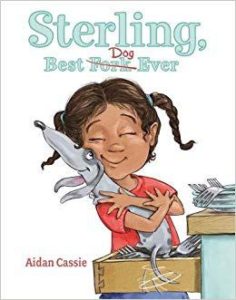
WG: Sterling the dachshund, who just wants a family to love him, from Sterling, Best Dog Ever by Aidan Cassie.

RVC: Best picture book from 2018 that your agency didn’t rep?

WG: I loved the wordless picture book I Walk with Vanessa by Kerascoët.

RVC: Three words that get to the heart of who you are–and what you’re all about–as an agent?

WG: Affirmative, heart-​forward, hardworking.

RVC: Thanks so much, Wendi!


Editor Interview: Emily Feinberg (Roaring Brook Press)

The first Industry Insider interview of 2019 is with Emily Feinberg, who got on my radar because her name kept appearing in the Dealmakers section of Publisher’s Marketplace. But what REALLY sealed the deal for me in terms of making her a priority must-​have for a 2019 Industry Insider interview? Her terrific Twitter bio that simply confirms what I already suspected–we’re kindred spirits. Like literary peas in a bookish pod. Like two ducks in an inky ocean of words. Like two psychic penguins who  … well, you’ll see for yourself.

Here’s her Twitter bio:

Children’s book editor at Roaring Brook Press, a Broadway music lover, and a dog fanatic.”

What more do you need than that, right?

But here at OPB we under-​promise and over-​deliver, so let me offer up four more facts that might just confirm how you too are (quite likely) kindred spirits with Emily to some degree.

Favorite coffeehouse beverage: A cappuccino with cinnamon on top.

Favorite snack: Anything with chocolate…but no raisins. Never raisins.

Favorite childhood book: I had many but I was particularly fond of The Story of Ferdinand and The Little Prince.

Coolest talent not enough people know about: I can wiggle my ears.

So now that we’re all pals here, let’s get to that OPB interview and learn more about why authors love working with Emily. And perhaps, too, we’ll get to the heart of that anti-​raisin thing!

Roaring Brook Website: www.us.macmillan.com/publishers/roaring-brook-press
Facebook: www.facebook.com/emily.feinberg.3
Twitter: @EmilyFeinberg


RVC: What type of childhood did you have, and how did it prepare you for a career as a kidlit editor?

EF: I was raised by a mother who was a librarian, so my brother and I spent tons of time in the library. The children’s room was often our babysitter. I wouldn’t call myself a huge reader as a child, at least not in a traditional sense. I was never much for novels but I would become obsessed with biographies of real people, reading Helen Keller’s story over and over again, or any book I could find on Nadia Comaneci or gymnastics. I also loved David Macaulay’s The Way Things Work.

In elementary school, I thought I wasn’t really a reader but that was just because I wasn’t reading what other people were reading. I was reading all the time, though. As I got older, in junior high and high school, I grew to like fiction more but spent most of my time reading The X‑Files fan fiction. Pages and pages. Probably tens of thousands of pages. So I guess I was a reader. We always had books in the house, always had older relatives asking us what we were reading, occasionally bribing us with a dollar for a book report. Now, I read a lot more traditional books for my job but as an editor tend to like less traditional books as well as nonfiction.See the source image

RVC: What about The X‑Files fan fiction drew you in so powerfully?

EF: For me, The X‑Files was always about character and storytelling. The mysteries were cool, and of course the aliens and conspiracies, but ultimately it was Mulder and Scully and their relationship that drove the show. I always loved TV more than movies because you could invest in the characters more deeply and for a longer period of time. It’s not over in two hours. I think fan fiction just extends that even longer. I could finish an episode and within a day or two, there would be stories online extending it. I always thought that was really cool.

RVC: At what point during your master’s degree program in Children’s and Adolescent Literature at Simmons College did you realize your future was in publishing?

EF: I actually knew I wanted to be an editor going into grad school and picked the Simmons program because I had heard great things about the faculty.

RVC: How did you know you wanted to be an editor? What were the signs?

EFIn high school I would go over my friends’ papers for them and help them form better sentences. In return, they’d explain math to me. At one point in high school, my mom and I took a trip to San Francisco (we lived in LA county) to visit a friend of hers who owned a small publishing house in Berkeley. He showed us around and I asked a million questions but still didn’t really know I wanted to be an editor. I remember just liking the atmosphere at the publishing house. I finished grad school at Simmons and worried I’d never break into the industry, which is super competitive, especially on the editorial side, so I took the LSATs. I would have gone to law school but a friend said to me “you’ll hate it–you need to do something more creative.” And for some reason that really stuck. So I kept trying to get into publishing and eventually it worked out.

RVC: It seems that some NY editors hide from authors, but you do the opposite. You’re active on the SCBWI scene, and you do cool things like picture book webinars for Kidlit411. Sure, you’re networking and all that, but as a creative, what do you get out of these activities? In what way(s) do they feed you?

EF: Well, honestly, publishing isn’t the most lucrative business to work in and participating in SCBWI conferences and webinars helps me make ends meet. I do enjoy meeting people at the conferences, though, and it helps me stay fresh and updated on industry conversations.

RVC: What do you see as the current trend(s) in the picture book world?

EF: We talk about this a bit at Roaring Brook. I think right now we’re seeing a strong response to or current political climate, whether its books teaching empathy, nonfiction teaching civics and government, or books about strong girls and women. That makes sense to me, especially with kids books. You don’t want to be didactic but I think writers and illustrators right now, along with editors, want to give kids the tools they need to understand what’s happening around them.

Also, unicorns.

RVC: What’s the most common misconception about the life/​work of a NY kidlit editor?

EF: One thing I think about a lot is what writers and editors have in common. People maybe don’t know that editors also face a lot of rejection and you have to develop really thick skin. If I’m going to take a book to acquisitions meeting, sit in front of 30 people, and try to convince them to invest in it, in the author, in the illustrator, my heart is tied up in that, too. Children’s books have a long lead time. It takes around 2–2.5 years to make a picture book from acquisition to publication, and I certainly don’t want to spend two years on a project I don’t absolutely love. But with all that comes some in-​house pressure that I’m not sure is ever really communicated to the author.

RVC: What does your editorial process look like?

EF: I’m a visual person so I try to book map everything so I can see where the page turns are, where text needs to be cut, where the illustration needs to lead. I think authors I work with would say there’s a lot of back and forth and that’s mostly because I’m not a fast editor. Sometimes something will occur to me later than it should.

RVC: It’s hard to have a 1:1 with an editor without the Big Questions All Aspiring Authors Want Answers To. So here’s one. What’s the most common dealbreaker you see with pretty good picture book manuscripts that you ultimately still say “Thanks but no thanks!” to?

EF: It’s different with each case. Sometimes a manuscript is so beautifully written and I really want to take it on but there’s just no market for it yet. Sometimes the story is strong and the writing is good but it just feels too familiar. Sometimes everything is great (especially with nonfiction) but the storytelling doesn’t have a fresh angle or the market is too saturated.

RVC: And one more of those Big Questions. What’s on your PB Wish List for 2019?

EF: This question is so hard. I’m looking for a little more middle grade, actually. Anything comparable to Karen Cushman. For picture books, always exploratory subjects. The other day I was thinking it might be cool to have a book exploring theories of time travel–how viable they are, how one would do it, why they wouldn’t be able to do it.

RVC: I’ve got to ask. What’s your deal with raisins? Inquiring minds DO want to know. 🙂

EF: They’re disgusting and an abomination. They sneak their way into cookies, you think they’re chocolate chips, but they’re not,  and they ruin your cookie-​eating experience.

RVC: Speed round. Ready? Here we go! James Bond or Jason Bourne?

EF: Dana Scully.

RVC: Best place in NYC to get a truly yum-​tastic cappuccino?

EF: Did you mean “martini”? Rose’s in Brooklyn.

RVC: Most underappreciated yet awesome Broadway musical?

EF: Guys and Dolls.

RVC: Last non-​Roaring Brook picture book that just blew you away.

EF: A Big Mooncake for Little Star by Grace Lin. I bought it, read it out loud to my mother because I needed her to understand the brilliance, and read it about once a week. I love it.

RVC: Which forthcoming Roaring Brook title of yours is going to blow away readers the most?

rsz_9781250155337EF: It’s so hard to choose. Two books coming out around the time of this interview that I’m SO proud of are Just Right: Searching for the Goldilocks Planet, a gorgeously written and illustrated nonfiction picture book about exoplanets, and How to Walk An Ant, about a girl who shows the reader how to leash up and walk ants–both out this winter!

RVC: If Yoda were one of your authors, what’s the endorsement he’d give you?

EF: Good snacks, she has.

RVC: Thanks so much, Emily!

Editor Interview: Kait Feldmann (Arthur A. Levine/​Scholastic)

The final Industry Insider interview for 2018 is with Kait Feldmann. And not to toot my own OPB horn here, but the following is SO GOOD that it’s totally worth sending out on Xmas eve. Feel free to tuck this post under your tree and wait to open it until Xmas day, if you want! 

That being said–here are 11 fun facts about Kait to get us started! Why 11 and not 10? Because at OPB, you always get a little extra literary love. Plus there’s always the This is Spinal Tap connection to be enjoyed.

  1. Her fancy title? “Editor at Arthur A. Levine Books, an imprint of Scholastic.”
  2. How many n’s in “Feldmann”? Two.
  3. When did she join Scholastic? May 2014.
  4. She assisted on Newbery Honor-​winner Echo by Pam Muñoz Ryan, The Marvels by Brian Selznick, and The Tales of Beedle the Bard: The Illustrated Edition by J.K. Rowling, illustrated by Lisbeth Zwerger.
  5. Book hoarder, insomniac, and lover of all things sloth.”
  6. She’s a “proud hapa.”
  7. Sometimes wishes “referral” were spelled “refferrall.” (Ryan’s note: Don’t we all?)
  8. What does Kait yearn for in a manuscript? “Meaningful, character-​driven stories with humor and heart.”
  9. Also “likes a little whimsy, light layers of magic.” (Ryan’s note: Witness the Potterhead Q&A exchange below! And note what Kait’s both reading and holding in the picture above!)
  10. Wants to see more picture books featuring kids of color.
  11. Submission WARNING from Kait! “I have a stone-​cold heart the size of a pea and am not moved by sweeping texts that explore ideas like love, family, tradition, etc., through a glimpse into many different kinds of experiences. Instead, I prefer to see specific narratives that focus on a particular character’s emotional journey. Universal through the specific!”

Arthur A. Levine website: www.arthuralevinebooks.com
Personal Website: www.kaitfeldmann.com
Twitter: www.twitter.com/kaitfeldmann
Tumblr: www.scattershotsilly.tumblr.com
Manuscript Wish List: www.manuscriptwishlist.com/mswl-post/kait-feldmann/


RVC: How did you first get involved with the publishing world?

KF: My first foray into publishing was an internship with Scholastic, which was offered after providing my mom (children’s book author Lisa Yee)  notes on Warp Speed that she passed along to her editor, Arthur Levine. He liked what I had to say and asked me to intern for him. I hadn’t considered an editorial career before, but that experience ignited my passion, and I spent the rest of my college years taking on any kind of book-​related work I could, interning remotely, assisting a local independent publisher, freelance editing, and selling fine writing pens in Vroman’s stationery department where I’d sneakily pretend to be a bookseller on the side.

RVC: So in your current editorial position at Arthur A. Levine Books, you’re primarily looking to acquire picture books and graphic novels. What appeals to you most about these ways of telling stories? 

KF: Images bring something to a story that I think, when done right, can really enhance the world of words. And you can play with story in the book format in a way you simply can’t do in another medium. A great example is Tillie Walden’s I Love This Part, which I might call a middle-​grade picture book. It follows two girls through their relationship and break up in glimpses—each spread a different scene from their love story, not necessarily in order. Tillie only uses two colors, but she plays with them thoughtfully, saturating scenes of affection with purple and going grayscale in times of turmoil. She also plays with proportion and surrealism in a way that you’re just going to have to see for yourself…some things words can’t properly express.

RVC: Any advice on how to make this type of magic happen?

KF: Read widely. Really understand the ins and outs of the picture book form, know how to pace and paginate a story, study the way art is composed (notice the room left for text; the difference between spots, single pages, and full-​bleed spreads…). This is important even if you’re a writer only! Make it a habit to browse your library or bookstore every month or so to get a feel for what’s out there. In a submission, I can tell who does this and who doesn’t.

RVC: Plenty of relatively competent submissions hit your desk daily, I’m sure. In fact, just tell us. What’s an average week for you? How many new submissions come at you?

KF: It fluctuates depending on a number of factors, including whether I’ve been to a conference recently and how responsive I’ve been to agents (I try to be speedy! The catch is that the quicker I respond, the more submissions I get—it creates a sort of Hydra effect that’s quite stressful!).

Taking a look at a random week, I see: six agented submissions (three are international—already published but looking for a North American/​English-​language publisher), and 72 unagented submissions. 

RVC: How can you tell when writers haven’t done their homework for a submission? What’s the giveaway?

KF: Well, there’s the cosmetic stuff—I get a lot of “Dear Editorial Department,” “To Whom It May Concern,” or “Dear Kate Feldman” (note both first/​last misspelled). It’s not an automatic rejection if you have a generic or misspelled salutation, but since it’s your VERY FIRST impression, it does stand out…in a bad way.

Then there’s the pitch. My acquisition profile is easily Googleable, as are most editors’ and agents’. My bailiwick is picture books and graphic novels but I get a lot of MG/​YA novel submissions that are clearly copy-​pasted from a template. I’m also very vocal and specific about publishing diverse books and creators, yet I get a number of queries that either ignore that or say “I know you’re interested in diversity so my book might not be for you but I’m going to try anyway.” What? No! That’s almost worse than not doing your homework. It’s taking the time to do your homework wrong and turning it in anyway.

Query letters are like cover letters—if you want to stand out you need to personalize each one you send to show why you are a great fit for that position. In a way…you are applying for a job. There’s a lot of work ahead, so show that you’re serious and have thought it through.

RVC: When a submission hits your desk and you’re intrigued, do you Google the author? If so, what are you looking for?

KF: Yup, I’m a Googler. I don’t always know what I’m looking for—I guess just a broader sense of who the person is. What they like. What they stand for. How active they are in the book community. And of course, any red flags! It hasn’t happened often, but there were a few instances where I came across a Tweet and thought ohhhh…yeah, we won’t get along.

RVC: So speaking of getting along … we first met at the SCBWI conference in Orlando this past June. What do you get out of being a speaker at events like that?

KF: I love discussing craft and publishing and find that I learn and grow from my experiences at writers conferences, too. And of course, I always hope to make lasting connections. One of the first authors I signed, the indomitable Aida Salazar, is someone I met at SCBWI LA. My colleague Nick Thomas had a critique with her and passed along her work. We both fell so hard for her writing that we offered a two-​book deal right away. Her debut novel, The Moon Within (which Nick edited), comes out February 26, 2019 and her picture book, Jovita Wears Pants: The Story of a Revolutionary Fighter (that one’s mine!) follows in 2020.

RVC: Every editor and agent I speak with has a conference horror story or two–they were cornered in a bathroom stall, or someone slid 500 pages of a YA werefox thriller under their hotel door … three pages at a time … at 2 a.m. in the morning.

What’s YOUR conference-​related writer horror story?

KF: Omg, can anyone beat the 2 a.m. page slide? Imagine the editor sitting on the other side, reading in suspense, waiting for the next pages to follow…(kidding—I’m sure that’s NOT what happened and don’t encourage that behavior).

Mine is the time I was talking to an author at a bar and a man asked to join us—he was friendly but very focused on me, wanted to know all about my interests outside of publishing. It didn’t read as flirtatious but it was clear he had an agenda, and that shifted the dynamic of the conversation in an uncomfortable way. A month or so later I’d forgotten all about it when I received a big box packed with my favorite things…and at the very bottom, a manuscript. From Bar Guy. It was completely inappropriate, and under Scholastic’s Code of Ethics, also considered a bribe.

RVC: That’s crazy. And speaking of crazy, here’s a semi-​popular belief among writers: Editor’s don’t edit much anymore–they primarily just acquire (or more often, not!). While that might be true in some book areas, I don’t find that as valid to say about picture book editors.

How much time do you put in on any given picture book manuscript? How much before the sale is made? How much after?

KF: Is that true?? Perhaps in some circles, but that’s not how I was trained, and it’s not how I work! I typically schedule picture books to publish two years out from when I sign them, minimum! We go through rounds and rounds and rounds and rounds of editing. It really varies depending on the book and the creator and our working style—I try to adapt to provide what each creator needs from me, but sometimes neither of us knows what that looks like until we’ve taken a few different tacks!

There’s one creator who I approached cold and asked to develop a project from scratch—we worked for ten months on creating a story I could share with my acquisition team—but all that time working together and figuring out our style meant that by the time we officially signed it up we were flying.

RVC: What’s the most common misconception about being a picture book editor? What do authors–and possibly even agents–have wrong?

KF: The best way to make a children’s book editor bristle is to say “Oh how cute! You edit picture books? That must be so easy!” But I’m sure your readers know well…IT ISN’T EASY!

The one thing that bothers me even more, however, is people who underestimate the picture book audience. First of all, we should be writing UP to kids, not down. Kids are so smart, emotionally and intellectually, and they know instantly when their worth is being devalued. Second, picture books are not just for kids. They’re for anyone who loves a good story!

RVC: Alright–it’s time for the Speed Round! Go! What zoo animal deserves more picture book coverage?

KF: I’m very happy that sloths are finally having their moment, but they deserve moooooore!!!

RVC: You semi-​frequently tweet about amazing workplace discoveries. The office copier’s ability to corner staple. The “move to folder” dropdown in Outlook. What’s the latest breakthrough?

KF: The secret tunnel that leads to a cupcake store. You think I’m kidding.

RVC: Grammar gaff that drives you the most bonkers?

KF: Er…I’m not the bestest at grammar myself.

RVC: You’ve openly confessed to being a Potterhead. Spill the (Bertie Bott’s Every Flavour) beans. Most underappreciated character?

KFAngelina Johnson.

RVC: Three current picture book authors who are setting/​raising the bar?

KF: Jessica Love (Julián Is a Mermaid); Minh Lê (Drawn Together, illustrated by Dan Santat); Tillie Walden (I Love This Part).

RVC: The most unforgivable thing in a picture book submission is …

KF: Getting the person’s name wrong!

RVC: What would like to see written on your literary tombstone?

KF: Here lies Kait, who died as she lived, under a pile of books.

RVC: Thanks so much, Kait. What a way to wrap up the first year of OPB! Thanks!!