Editor Interview: Kristine Enderle (Magination Press)

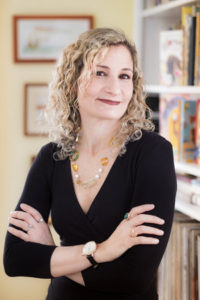
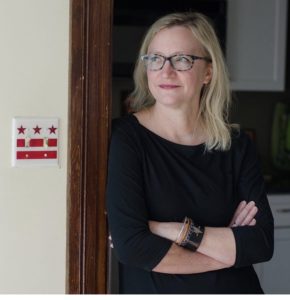
photo credit: Elizabeth Dranitzke

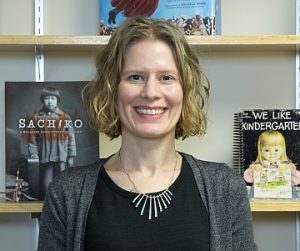
Hello! We’re here today with Kristine Enderle, the Editorial Director of Magination Press. One of the things that intrigues me most is how she came to publishing in such a roundabout way (more on that in a moment!). Her Twitter bio declares her a “full-​time mom, all-​the-​time-​feminist, serious ally, and native Hoosier.” In terms of her publishing career highlights, she offers this sample of titles:
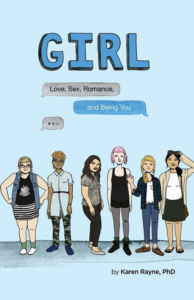
 

Girl: Love, Sex, Romance, and Being You by Karen Rayne (starred review from Publisher’s Weekly; one of Chicago Public Library’s Best of the Best Nonfiction Teen books)
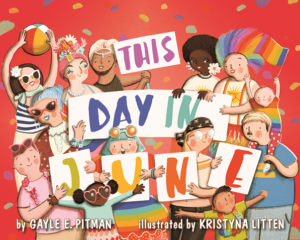
 

This Day in June by Gayle Pitman (Stonewall Award winner; ALA Office of Intellectual Freedom’s Top 100 Challenged Books)
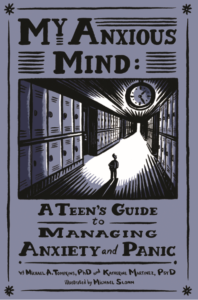
 

My Anxious Mind: A Teen’s Guide to Managing Anxiety and Panic by Michael Tompkins and Katherine Martinez (ABCT Self Help Book Seal of Merit Award)
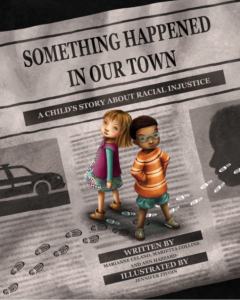
 

Something Happened In Our Town: A  Child’s Guide to Racial Injustice by Marianne Celano, Marietta Collins, and Ann Hazard (A New York Times and #1 IndieBound bestseller, A Little Free Library Action Book Club Selection, and an NCSS-​CBC 2019 Notable Social Science Trade Book for Young People)


Whew! That’s a great start. But let’s move on to the interview to find out a bit more about Kristine and her career.


RVC: As mentioned in the intro above, you might win the award for most unusual path toward becoming an editor—at least in terms of industry insider interviews here at OPB! You’ve got a BS degree in microbiology (minor in psychology) from Indiana U, right? What kind of career goals did you have back then?

KE: I honestly didn’t have any career goals! I was lucky enough to be allowed to just study whatever I wanted in college! I grew up in an enormous old house (with actual bats in the attic) in the middle of the woods in southern Indiana. There was always something smashed on the road that we could poke at, or strange insects or fungi living on rotting logs. My dad was a doctor and my mom was a nurse, so there were always ongoing conversations about medicine and health in my house.

RVC: That sounds like an awesome way to grow up.

KE: You bet! I grew to love the natural world and naturally (hah!) that flowed into biology coursework. Eventually after taking a microbiology course, my sights were set on what is unseen and I became fascinated by fungus and bacteria and have a sweet spot for infectious diseases.

RVC: After college, you worked as an AIDS research tech for the AIDS Vaccine Development Program at the National Cancer Institute, and then as a tech at Northwestern University’s Lurie Cancer Center. Isn’t the latter position where you started taking classes in writing?

KE: Yes. While working at Northwestern I took fiction writing, linguistics, and communication courses. I needed to move away from lab work to exercise the other side of my brain. I always hung out with English majors and musicians in school, so I finally got to take all those classes I missed as an undergrad.

RVC: What’s the most valuable thing you learned in those writing classes?

KE: That I am NOT a fiction writer! I have so much appreciation for storytellers and creative people now. Plus it’s more fun to be the oddball science nerd in the room than the way-​too-​serious poet.

RVC: What was the learning curve like going from a science researcher to a development editor at Human Kinetics, a sports science textbook publisher in Illinois? 

KE: Between working in the lab and my first publishing gig, I was a Medical & Scientific Affairs manager at the Alzheimer’s Association. This was pre-​Internet, so I wrote newsletters and fact sheets for the general public and answered the phone, fielding a ton of questions from families and caregivers about Alzheimer’s disease. Working there taught me to explain complicated concepts and technical language, so maybe this was what got me from the lab to publishing?

RVC: Sounds like GREAT training to be an editor.

KE: At Human Kinetics as a development editor, I had to look at big picture things in planning a textbook–editing and organization becomes a puzzle to solve as you need to figure out a way to fit and package a ton of information into ways people can understand and into one comprehensive and complete book, visually with photos, diagrams, charts, and graphs. I still do that at Magination. Our books combine science and literature (or evidence-​based information and creative expression) into something that is accessible and interesting to read.
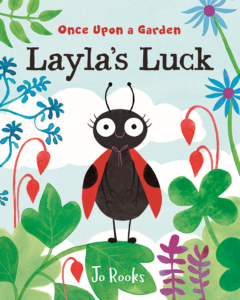
A great example of this is Move Your Mood which is a hoot and teaches readers about how physical movement positively affects mood–there is psychological research to support this. Or Layla’s Luck. People tend to attribute a woman’s or girl’s success as them being lucky and not relating to their smarts, skill, and hard work. Layla takes aim at that.

RVC: Let’s dig a bit deeper into your publishing career. These days, you’re the Editorial Director at Magination Press. How does that compare to being a developmental editor? Writers ask me versions of this all the time—what’s the difference in terms of those roles?

KE: Editorial director really means that I am responsible for editorial strategy and focus of the press and oversee major initiatives, budgets, planning, and staff. But having come up through the ranks, I am still developing and editing and acquiring books because I have a hard time leaving that behind. I am still a senior/​acquiring editor and have a nice group of house authors I have been working with since their debut work. Many authors call me their editor (and that’s the best thing ever!)

RVC: Compare that to the roles of your Magination colleagues, Senior Editor Sarah Fell and Editor Katie Ten Hagen.

KE: Sarah and Katie do all that, minus the planning and overseeing, and have a bunch more books than me to develop. And they work with new authors mostly, and I’m technically their boss!

RVC: Thanks for that!

Now, some people might not realize that Magination Press is connected to the APA (American Psychological Association). How does that work?

KE: APA’s mission is to promote the advancement, communication, and application of psychological science and knowledge to benefit society and improve lives. So what that means for Magination Press is that we share world mental health expertise and psychological knowledge to help kids through rough patches. Some of our books deal with serious issues like depression and anxiety; others are more of those everyday things that bug you or that you may confront sometime during your life. Also just recognizing the sometimes-​tough job of being a kid these days. We want kids and teens to know that we are listening, we see what they are dealing with, and might have something that can help.
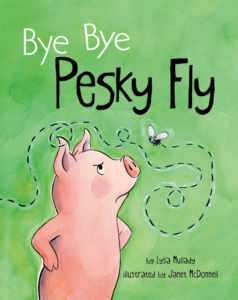
I’d like to think that books like Bye Bye Pesky Fly, Lucy’s Light, Jacob’s Room to Choose, and Lulu the One and Only really make a difference in the lives and well-​being of kids.

RVC: Here’s something else that people might be surprised by. Not only do you publish books exclusively for kids (ages 4–18), but you’re putting out 20+ books a year! 

KE: Yeah. We are kind of overachievers that way.

RVC: What’s the common denominator with all your kidlit?

KE: The stories (and nonfiction) really must be grounded in evidence-​based research. It’s true that there is a little bit of psychology in everything, but to be a publication of the American Psychological Association, the work must be based on science and fact. It would be irresponsible otherwise!

RVC: How vital is it that your writers have backgrounds in psychology or the sciences? Or know APA style?

KE: We prefer our authors be psychologists or are mental health professionals, but it’s not a prerequisite. If an author doesn’t have those credentials, we will hire a psychologist to write the endmatter/​readers note (to provide the psychological context for the story). Also all of our books are reviewed by our editorial advisory board that is made up of child psychologists. They act as peer reviewers and comment on the accuracy and relevancy of the psychological content and whether the coping strategies have merit.
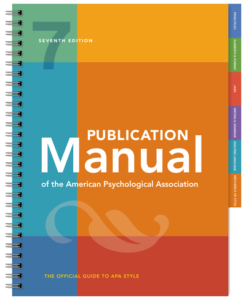
Extra points for folks using APA Style/​Pub Manual 7!

RVC: Let’s say you publish a picture book on depression and so, too, does a NYC press. What are some of the likely differences in how a Magination picture book covers a topic like that? 

KE: Reviewed and vetted by the American Psychological Association, maybe?

RVC: That’s a key distinction, for sure.

Now, you just signed When Nana Dances, a picture book by Jane Yolen and her granddaughter about the relationship between children and grandparents, and how dance can be at its core. This isn’t as clear of an “issue book” as some of your others. Why did you have to snatch this one up?

KE: Because Jane Yolen!

No, really it’s a joyful celebration that combats ageism and models mentally healthy and happy intergenerational relationships. You know that emotional stress can speed up aging at the cellular level. So, this is stress-​relief and mental wellness at its core!

RVC: Your press is always at the trade shows—in fact, that’s how I learned about it. I chatted with one of your sales reps at BEA (Book Expo America) at the Javits Center in NYC a couple years ago, and I was impressed by the quality of the books and topics covered. 

KE: Thank you! You can find us all over, from the Bologna Children Book Fair to the Texas Library Association annual meeting to National Council for Teachers of English. We also attend psychological conferences like American Counseling Association, and of course APA’s Annual Convention.

RVC: For people considering writing for your press, what’s the most important thing they should know or understand?

KE: Despite our serious and sensitive topics, we love humor, humility, and honesty. Not sure what that means exactly for books… might speak more to who we are and our community of authors and illustrators we take up with.

Otherwise a couple things come to mind:

  • Do your research. Before submitting a proposal, please review our catalog: we don’t repeat topics year after year and are unlikely to acquire new titles on already-​covered topics.
  • Keep it universal. We are not interested in autobiography, reflections on childhood, or personal stories about family members, pets, or friends. Keep the appeal wide and general and keep the focus on interesting characters and good storytelling. Be careful with first-​person narrative. Good stories and excellent topics can sour with unrealistic, adult-​sounding, or dated dialog.

RVC: In all your experience with editing picture books, what has most surprised you?

KE: Just how many books I have signed after just reading the cover letter. Another book hooked me immediately with its proposed title–There’s a Cat in My Class!

RVC: One final question for this part of the interview. Your Twitter bio says you’re a “part-​time troublemaker.” Care to support that impressive claim with evidence?

KE: I live in the Capitol Hill neighborhood in Washington, DC. Marching and protesting is what we do!

RVC: Okay, Kristine. We’ve now reached the SPEED ROUND. Speedy questions and even faster answers. Ready?

KE: Ready!

RVC: “If I didn’t have a career in publishing or science, I’d be…”

KE: A park ranger!

RVC: Fave secret lunch spot in DC?

KE: Indigo!

RVC: If you could be any picture book character for a day, who would it be?

KE: Nancy Drew!

RVC: Something that’s on your picture book wish list?

KE: A book about a whale.

RVC: An underappreciated Magination picture book that you simply adore?
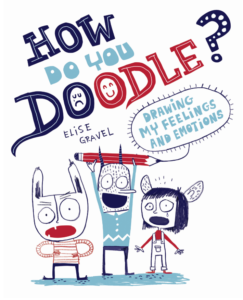
KE: Underappreciated? I’m a huge fan of King Calm: Mindful Gorilla in the City. But I also adore our more recent relatively unknown activity book, How Do You Doodle: Drawing Your Feelings and Emotions.

RVC: The one must-​have for every picture book you acquire?

KE: A good pun or a dog.

RVC: Thanks so much, Kristine!
Editor Interview: Amy Novesky (Cameron Kids)

Hold on to your collective literary hats, folks, because this month’s Industry Interview subject—Amy Novesky, the Children’s Book Editor + Director @ Cameron Kids—said “I would love to have some fun” with this interview.
Challenge accepted, Amy.

She also pointed out that while she enjoyed the OPB interview I did with her friend Abigail Samoun, her own life “is not nearly as exciting.”

Implied challenge also accepted, Amy.

So, to get things off on the right foot, let’s begin with a semi-​biographical free association thing. I’ll start a sentence, you finish it. Ready, Amy?

  • If Netflix is the answer, the question is… 
    • what do you waste time endlessly scrolling?
  • If Sausalito were a sandwich, the right condiment for it would be… 
  • When I was a child, my least-​favorite crayon color was… 
    • the broken one.
  • A penguin walks into your room right now, and it’s wearing a tuxedo because it… 
    • clearly is a character from a picture book.
  • The only thing more important than giving a child a book is… 
    • teaching him how to cook dinner.

Whew, we’re off to a great start. I think we’re ready for the regular interview now. Sound good?

So, let me offer up a few URLs of note, then let’s get to the interview.


RVC: As an editor and writer, you’ve been involved with making kidlit books for two decades. Are you a writer who edits, an editor who writes? Or do you have some other way of thinking about it entirely? 

AN: Both, depending on the day. But I think of myself as a writer first, always. Writer is who I am, editor is what I do.

RVC: Then let’s talk about writing first!

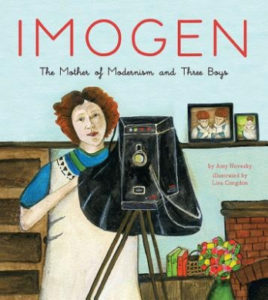
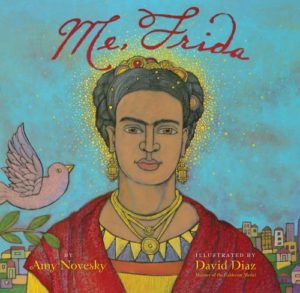
One of the clear throughlines in your own books is your affection for creative folks–Georgia O’Keeffe (Georgia in Hawaii), Frida Kahlo (Me, Frida), and Imogen Cunningham (Imogen: The Mother of Modernism and Three Boys), to name just a few. How conscious of a thing is that? 

AN: I do have a thing for women artists—especially painters. And I have consciously wondered why, and made the connection to my mom who paints, and to our ancestors, a large family of artists called the Peales, who were known for their early American portraits. My great (x4) grandfather, Raphaelle, painted still lifes; he was the rebel of the family. So maybe the artist/​portrait/​still life gene got passed down to me, and manifests in words, instead of paint.

RVC: That’s such a cool story.

AN: I am drawn to the arts, and to artists, because I have always been in awe of one who can paint, play the piano, dance, sing. What an amazing life. For me it’s not just the art but the way these artists lived their lives like works of art. Frida was a walking canvas.

Incidentally, one of the things that connects almost all of the artists I have written about is flowers, which, I also love: Georgia’s giant red poppies, the flowers Frida wore in her hair, the signature gardenia Billie wore behind her ear. The magnolia flower Imogen photographed close-​up. And, all of these artists, Louise Bourgeois included, were especially bad ass. Imogen, was probably the most bad ass of all: she managed to be an artist and make art, while raising three boys. That’s what my book, Imogen: The Mother of Modernism and Three Boys, is about.

RVC: Speaking of your books, let’s examine the launch of your picture book author career. What’s the story of that first book?

AN: I wrote Elephant Prince after a trip to India. Among the many things that amazed me was this elephant-​headed god named Ganesh. Who was he? And why did he have the head of an elephant? The story is also, simply, the story of a mother who longs for a child, which was something I could relate to; my son, Quinn, was born a year after the book published.

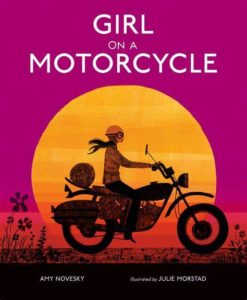
RVC: You just had another picture book come out this month—Girl on a Motorcycle. Congrats on that! What’s your 20-​second pitch for the book?

AN: Thank you!

Girl with a good job in Paris, leaves it all, jumps on a motorcycle, carries only the essentials (pocket knife, tarp, anti-​diarrheal, eyeliner, bikini, paper & pen …), rides around the world—from France, through Canada to Alaska…to India and Afghanistan…—breaks down, fixes bike, falls, gets back up, finds the world is beautiful and good, writes about it, returns home.

RVC: And all in one sentence, too? Consider me grammatically wowed!

I’m curious. Like the unnamed young Parisian in this story, have you ever dreamed “to go Elsewhere”? 

AN: Every day.

RVC: Don’t we all, right? Even before the COVID world we now live in. [sigh]

What was the biggest challenge you faced when creating this book?

AN: Not being fluent in French (despite—I’m appalled to admit—15 years of studying it in school). Luckily Anne-​France Dautheville, the subject of Girl On a Motorcycle, speaks decent and, comment dit-​on, colorful English. But I would love to be able to talk with her and read her books in French. When I visited her at her home outside of Paris, I felt tongue-​tied, in addition to totally jet-​lagged. Not the best combo for meeting and interviewing your heroine.

RVC: Well, if you ever want help with French, let me know. I am très good at it! (Spoiler–I might be overstating this a bit. “Très” might be the only thing I actually recall from my Ph.D. crash-​course semester in French.)

Moving on–what do you most admire about Julie Morstad’s accompanying artwork for your book Girl On a Motorcycle?

AN: I’ve been a fan of Julie’s work for some time, and she immediately came to mind for this book for her exquisite illustrations, her stylish characters, her sublime palette, which, in this book—beginning with those gorgeous sunset colors on the cover; the coppery brown, uncoated, separate ends; and the muted, earthy and airy hues throughout—takes my breath away.

RVC: Let’s switch gears to your work as an editor. What fulfills you most about that type of work?

AN: Working with words, and in a form that is so distilled, poetic and visual. And, because I am an equally visual person, looking for and working with illustrators and artists.

RVC: How did you get the editing bug?

AN: I’ve been writing since I could write. I studied poetry in college and got a masters in writing, with a focus on short story. It’s hard to make a living writing poetry and short stories, and so I went to work for a publishing house. When I didn’t get the fiction editorial assistant job, I applied to the other editor job that was open: children’s editorial assistant. I fell in love with the picture book form and discovered it was a really good fit for me, and I’ve been doing it since.

RVC: What was the most memorable thing about working for Chronicle Books, where you got that first job in editing?

AN: Living and working in San Francisco in my 20s, making beautiful books, and, the people—many of whom are still close friends, and some I even work with (2 of the 12 Cameron employees worked at Chronicle).

RVC: What was the first picture book you acquired there?

AN: Oh boy. The Go Go Dogs, about two dogs who travel the world, a consistent theme for me. It’s got to be about 3000 words and was clearly influenced by my love of Maira Kalman.

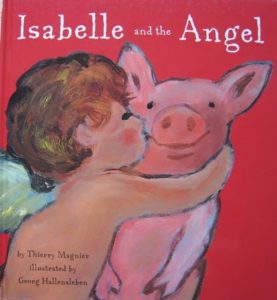
And then there was Isabelle and the Angel, illustrated by Georg Hallensleben, a French buy-​in about an art-​loving pig who falls in love with an angel in a painting at a museum. She loves him so much she becomes a security guard so she can be near him all night. I know, it’s a little odd. But the art is so gorgeous! I have a soft spot for esoteric French picture books, what can I say. The English-​language edition is, sadly, out of print, but I did fairly recently find the original book on the bookstore shelf at the Musée D’Orsay.

RVC: A few years back, you left Chronicle and ended up acquiring titles for two presses at once. How did that happen?

AN: I left my job in 2000 to write and raise a son, and I have been a freelance editor since. Being a freelancer can be tough. I’ve had many many jobs over the years—some I wish I never took and at least one, like my stint at Pixar, which was great fun. Such is the life of a freelancer.

RVC: Tell me about it! My up-​to-​date resume is 40+ pages long to accommodate all the people/​company I’ve worked with over 20+ years of being a writer. 

AN: I started working for Cameron + Company, beginning in 2010, book-​by-​book, and then helped launch their children’s book imprint in 2015. Still, it was only part-​time. When Creative Editions, another small, family-​owned press, offered me part-​time work acquiring for their list, I couldn’t turn it down. Living in the Bay Area on a freelance editor’s income is not easy. Luckily, I was able to do the latter from home, and the two lists are aesthetically different so, creatively, it worked out. I left Creative in February to focus on growing Cameron Kids. And, as of September 1, 2020, I can report that I am a full-​time employee of Abrams, New York, which acquired Cameron + Company.

In short, yes, we editors often wear many hats.

RVC: Why is this super-​new role at Cameron + Company (congrats on that!!) such a good fit for you?

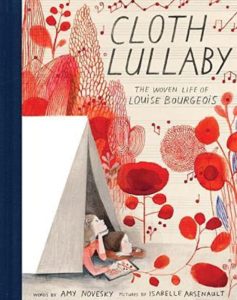
AN: To be the editorial director of a beautiful, thoughtful, well-​curated list of books I helped create; to work with people I respect and adore; and now to be a west coast division of a major New York publishing house, whom I also adore (and who published two of my books: Me, Frida and Cloth Lullaby), is a dream job. It was a long time coming, a lot of hard work, patience, and literal blood, sweat and tears, and I couldn’t be happier.

RVC: What’s the most common misconception about picture book editors?

AN: That we like children. Just kidding!

RVC: Who or what has influenced you most as an editor?

AN: I will give you a who and a what.

RVC: Way to overdeliver!

AN: Who: Victoria Rock at Chronicle Books. I learned so much, mostly from typing up her long, handwritten letters to authors and illustrators.

What: traveling the world. The places I’ve been and have lived and loved—India, Mexico, Paris, New York, Southern California, San Francisco, Kauai—influence my books.

RVC: How do picture books create an opportunity for adult readers to be present with kids?

AN: A picture book is a beautiful, tactile object. It takes time to turn a page, to read the words, to stop and define a difficult word or concept or two. One misconception about picture books is that they are simplistic, but they can be quite sophisticated and profound. The best books stop time, allow you to be present, and isn’t that what we strive for with our kids?

RVC: Well said, Amy. 

Let me ask an industry question. I’m hearing mixed answers these days. Is COVID making things better or worse for writers? Some argue that editors working from home are able to get more done. Some argue that editors working from home are just as swamped as ever, or even more so. What’s been your experience? And what have you seen/​heard from colleagues?

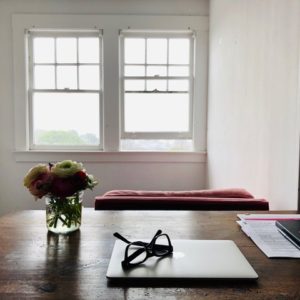
Amy’s home office in March 2020.
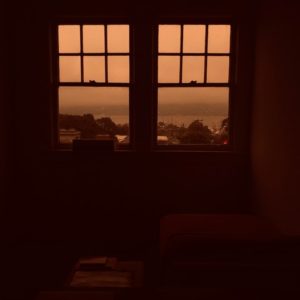
Amy’s home office in September 2020.

AN: For me, despite it all, I have been incredibly lucky. I have space. I live in a beautiful place. I have work and I can work from home. My son is old enough now to manage his online schooling and make a sandwich. And so, while I’ve surely gone through as many pandemic phases as stages of grief—from the urgency of it in those first few months, to heaviness and depression and rage, to a measure of acceptance, to moments of stillness and creativity–I’m doing okay, getting work done, chasing new books, even writing a new story or two.

But I know many people, friends and colleagues, who are struggling to do it all. It’s a lot. And here in California, we have pandemic + wildfires + smoke + heat + power outages, and there’s always a few earthquakes rattling about. September has been a particularly harrowing and heartbreaking month. When I can get to the office, 1⁄2 hour north, I keep a go-​bag, a 7‑gallon jug of water, and masks for multiple emergencies, in my car.

2020 is making us all bad ass.

RVC: Bad ass, indeed!

Circling back now to your work as a bad-​ass picture book author—you’ve got an author trailer on your website. Not a book trailer, but an AUTHOR one. So cool! Where’d you get that idea? 

AN: I have a good friend who is a talented documentary filmmaker, and she and the co-​founder of her company generously offered to make a short film about me. I am super camera-​shy, so it was pretty excruciating for me, which is probably apparent in the pained look on my face. That and I’m not great at promoting myself and my work. And so I am so grateful to have such a beautiful piece in my portfolio. It’s at least 10 years old at this point, but the heart of it is still current.

RVC: How have people responded to it?

AN: I’ve gotten some really nice feedback.

RVC: Rightly so. It’s terrific.

AN: Thank you!

RVC: One last question for this first part of the interview. Craziest thing that ever happened re: a school visit you did?

AN: Okay, I’ve got a good one for you. On my way to a book event at a school an hour from my house, it was first thing in the morning, rush hour, I’d drunk a pot of coffee, and there was traffic, I was running late, hundreds of elementary kids were waiting for me, and, I had to go to the bathroom really really, like painfully, badly; I wasn’t going to make it. I pulled the car over as soon as I got off the freeway, jumped out and peed in a bush. I’m guessing some homeowner has probably got some good security footage of this children’s book author squatting on their property.

RVC: This from the lady who said her life wasn’t all that exciting! OMG! 

Regardless, it’s your time to shine, Amy, because it’s the…LIGHTNING ROUND! Electrifyingly fast questions and shockingly quick answers, please. Are you ready?

AN: Let’s do this.

RVC: Smurfs, fraggles, or trolls—most underappreciated not-​so-​tall creatures in pop culture?

AN: Fraggles.

RVC: Best place in Sausalito for a slice of California pizza?

AN: My house. When the sourdough starter stars align.…

But there’s also Sandrino on Caledonia Street!

RVC: What’s the One That Got Away?

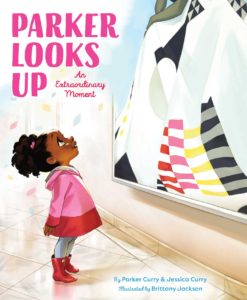
AN: Parker Looks Up.

RVC: The responsibility of the picture book writer is…

AN: To write well.

RVC: Recent picture book biography you wish you’d thought of first.

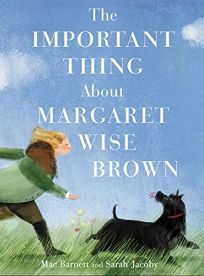
AN: The Important Thing About Margaret Wise Brown.

RVC: The three most important characteristics that lead to picture book success.

AN: An authentic voice, a compelling story, and a Hell Yes manuscript (Cameron Kids’ motto).

RVC: Thanks so much, Amy. And not that anyone’s keeping score, but I think I won on both counts regarding our challenges. Fun and excitement was indeed had by all. 100% of my pre-​pub focus group of 2 agree.

So, thanks for sharing a bit of your literary journey with us today. It was great having you stop by OPB. Best of luck with the new book, too!

Editor Interview: Sarah Rockett (Sleeping Bear Press)

The September 2020 Insider Interview is with…Sarah Rockett!
She’s an Editor for Sleeping Bear Press as well as for Cherry Lake Publishing and 45th Parallel school and library imprints. OPB knows all about her work because we’ve recently covered books she edited: Winged Wonders: Solving the Monarch Migration Mystery, Nature’s Friend: The Gwen Frostic Story, and The Boy Who Grew a Forest. (Yep—we enjoy Sleeping Bear books here at OPB!)

She’s a Michigan person through and through, and these days, she lives outside Ann Arbor with a husband, a son, and a cocker spaniel. And a whole bunch of books, one imagines!

Let’s get to the interview to learn a bit more about all Sarah does!


RVC: You earned a degree in journalism from Boston University. What turned you from a life of newspaper/​magazine writing toward the editorial side of things?

SR: News and magazine writing ultimately felt too fast paced for me. I found that I enjoyed spending more time on the text I was working with—to really be careful with language and more creative. I didn’t love the pressure of a news cycle.

RVC: What was your favorite piece of journalism you ever wrote?

SR: I did the Semester at Sea study abroad program in college and ended up writing a handful of pieces for my hometown newspaper while I was traveling. They were writer-​at-​large type stories—and rightfully buried in the paper—but they were a lot of fun to research and write.

RVC: Sounds like a nautically cool time! I wish I’d investigated such interesting off-​campus experiences like that as an undergrad.

Now, working in NY publishing is the dream for many. What were some of the unexpected benefits/​joys of being part of it?

SR: The big budgets were great. Knowing you had some frontlist “season makers” like a new Llama Llama book by Anna Dewdney or the latest John Green YA, as well as a really strong backlist with a good number of classics, meant we could take some additional risk with other projects. The publishing community in NYC was also really wonderful. I was always running into people from other companies—and it was really nice to talk with them about issues facing the industry and trends.

RVC: What was the biggest issue facing the industry at that time?

SR: When I was with Penguin, ebooks were just really taking off and it was so interesting to see how the industry was feeling out the best way to work with the technology. For adult books, the link to ebook is easy/​obvious. But for children’s books, there are so many more issues around the benefits of books vs ebooks. Many ebook developers wanted to include a lot of interactive features and animations–which can be great, but when does it become a game or cartoon and no longer a book? I don’t think the industry (or consumers) have figured it out yet, but it was really interesting to be in the hub of publishing when the initial ebook frenzy started.

RVC: If you had to summarize the most important thing you’ve learned about editing books for children, what would it be?

SR: I think brevity and specificity are the two most important elements to creating wonderful picture books. There’s something magical about leaving space in the text for a child’s imagination. And if you’re keeping text really tight, you have to be sure each word is working really hard for you—it has to mean exactly what you want it to mean.

RVC: About seven years ago, you left NY publishing and worked as a freelance writer/​project manager for ProQuest  for a year. 

SR: When I moved back to Michigan, there weren’t a lot of children’s publishing companies to work with. In fact, there’s exactly one in about a 500-​mile radius—Sleeping Bear Press. Working freelance let me keep my skills fresh while I nudged the owner of Sleeping Bear about an informational interview and waited for a position to open.

RVC: In 2013, you landed that coveted job. What were some of the differences between working at Sleeping Bear versus a large outfit like Puffin/​Penguin Young Readers?

SR: I love working with a smaller company. The doors to the owner and publisher are always open for questions and advice. And I love that there aren’t a ton of steps to project approval. If I’m passionate about a title or project, I can generally make my case to the owner or acquisition group and then move forward. There aren’t a lot of corporate hoops to jump through—which I think allows the editors (and everyone) to be more creative.

RVC: Let’s talk submissions. I know you like timely hooks (which right now probably means diversity, social justice, environmentalism, etc.), but it strikes me that Sleeping Bear leans toward picture books well-​suited to solid educational backmatter. Would you rather see a great-​for-​the-​classroom book, or one that’s a total laugh-​out-​loud good time?

SR: I don’t think I can choose! I really love working on books that have something important to say—whether that’s a biography of someone previously overlooked in history or a story that encourages kids to reduce their plastic waste, etc.—but books that are just pure fun are a delight! Truly funny, laugh-​out-​loud books are so hard to write, so they can be few and far between.

RVC: How many submissions do you see in a month?

SR: Probably 50–100.

RVC: What percentage of those is agented?

SR: I would guess about 20 percent of those are agented or submitted directly from an author I have a relationship with—the rest come in via email submissions per the guidelines on our website.

RVC: Help us understand what Sleeping Bear is really all about. What three picture books really capture the representative spirit of your press’ aesthetic and creative philosophy?

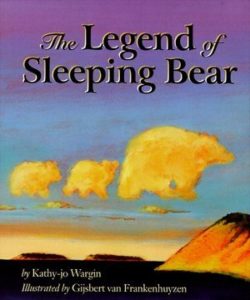
SR: The Legend of Sleeping Bear for its regional hook and unparalleled art. Memoirs of a Goldfish, which is funny and heartfelt. Winged Wonders: Solving the Monarch Migration Mystery, which is a great classroom title with really strong trade crossover—and the illustrations are just so lovely.

And I have to add A Boy Like You—a story with a really important social emotional message.

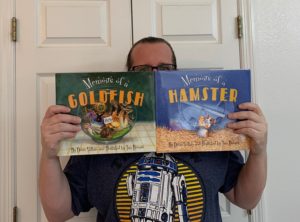
RVC: It’s interesting that you mention Memoirs of a Goldfish, because that’s how I learned about your press. I was at Book Expo America in NYC back in 2010 or so, and that book was a giveaway from your press. My kids enjoyed it so much that we eventually picked up the sequels–witness the photographic evidence (minus the Elf and Parrot ones, which my kids have hidden somewhere special, and they won’t share where)!

SR: Oh gosh! I love coincidences like that!

RVC: In many ways the publishing world is a small one, and kids really latch onto their favorites.

Back to the regularly scheduled interview…I’ve heard that you appreciate when an author sells themselves in a pitch letter. But there’s the flip side, which is when a not-​yet-​debut author might say, “Hey, I’m going to be the next Jane Yolen, only faster!” What are some examples of how to manage the middle ground between self-​promotion (the good version) versus SELF-​PROMOTION (the icky version)?

SR: It’s important for editors to have the facts on our authors. So writing groups you’re involved with, social media platforms, relevant professional experience, existing school or conference presentations, etc. But authors should stay away from subjective and/​or grandiose claims. If you/​your story is as good as you think it is (i.e. “the next Where the Wild Things Are”), we’ll see it—don’t force it on editors.

RVC: Great advice. And speaking of advice, what do you say about art notes?

SR: In general, I strongly advise against them. A submitting author’s goal is to have the acquiring editor feel personally and passionately about their story. It’s hard to feel an attachment to a story if every other line the author is telling you what you’re seeing. The beauty of publishing a picture book is that everyone involved brings something to the project (author, editor, illustrator, and designer) that makes it stronger. Let editors have that moment to really be engaged in the story.

RVC: One final question for this part of the interview. Rumor has it that you’re a mega-​fan of Gwen Frostic. Actual news or fake news?

SR: Yes! Love her. I grew up with her art and going to her studio in Northern Michigan—I even met her a couple time before she passed and I have a tattoo of one of her pieces!

When I received the submission for Nature’s Friend, I was SO floored!

RVC: Alrighty, it’s time for the Lightning Round! And that means the questions are zippy, the answers are zappy, and the fun is totally electrified. Are you ready?

SR: Let’s do it!

RVC: Which picture book character would you love to be for a day?

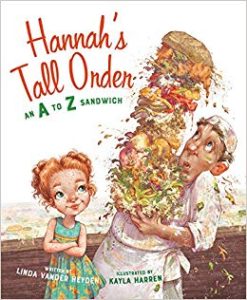
SR: Hannah, from Hannah’s Tall Order. She’s got an appetite and knows what she wants.

RVC: Best place in Northern Michigan to get a cherry pie?

SR: King Orchards on US-​31.

RVC: Pick a theme song for where your life is at right now.

SR: “You’ve Got a Friend” by James Taylor.

RVC: What’s your dream project?

SR: Something lyrical and important.

RVC: Favorite non-​Sleeping-​Bear picture book of 2020 (so far)?

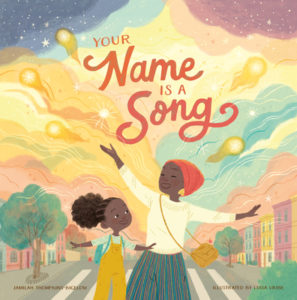
SR: Your Name Is a Song by Jamilah Thompkins-​Bigelow.

RVC: Three words that sum up what picture books mean to you?

SR: Growing little minds.

RVC: Thanks so much, Sarah! Next time I’m up in Ann Arbor, the Vernors ginger ale is on me!

Editor Interview: Christy Ottaviano (Christy Ottaviano Books/​Macmillan)

This month’s Editor Interview is with publisher Christy Ottaviano, who runs a boutique imprint at Henry Holt and Company/​Macmillan that specializes in making children’s books that “encourage imagination and free-​thinking, foster a sense of family and community, target the feelings of children, and speak directly to young people’s interest as they explore various milestones.”
If that’s not reason enough to get her onboard for an Industry Insider interview @ OPB, then try these three facts.

  1. She’s edited a handful of New York Times bestsellers.
  2. She’s edited books that have won the National Book Award, the Ezra Jack Keats Award, the E.B. White Award, and the Coretta Scott King Award, among others.
  3. She has graduate degrees in English and American Literature (Boston College) and Education (Columbia University).

Clearly Macmillan knows what she brings to the table because Christy’s been working for them since 1992! In a publishing world where the only constant seems to be change and transition, that’s a fact that’s nearly impossible to believe. But read on, OPB fans, to find out for yourself what Christy’s secret to success might be.


RVC: Let’s start with a question I’ve never asked before. How did it feel the moment you realized you were going to have your own named imprint at a major publishing house? I’m going to guess that the primary emotion back in 2008 when Christy Ottaviano Books was formed might’ve been…WAHOOO!!!! Am I close?

CO: Haha. Yes, it was a great day. I remember making a conscious decision not to call my partner Kevin with the good news as I wanted to share it in person. I have a long commute, and that night when Kevin picked me up from the train station, I opened the car door, saw my three kids smiling from the backseat (they were very young at the time), and happily jumped in and shared the news. My kids, of course, had no idea what any of it meant but it was a special moment to share with my family.

RVC: When Publisher’s Weekly announced the new imprint, they said it’s going to be 50% picture books, 45% MG and YA, and 5% nonfiction. What’s the ratio look like today? Is there a percentage commitment to certain areas, or is it all about what comes across the transom?

CO: Over the years, I have shifted a bit in some genres. I would say my list is about 45% picture books, 45% middle grade, and 10% YA. I definitely publish more nonfiction these days in both the picture book and middle grade genres–probably by at least 25%. I love nonfiction so this has been a natural step especially now with the market embracing nonfiction much more due to the educational emphasis on STEM.

RVC: Let’s back up a moment to the start of your career. From your college degrees (English/​American lit, a French minor, and Education credentials), it seems like you had a different career path in mind. What happened? When did the kidlit bug get you?

CO: I think my career path organically led me to where I am. I always loved reading and writing, and graduated college with an English degree. I went on to pursue a graduate degree in literature with the plan to become a college professor. After getting my master’s in English and American Literature, I taught high school for a year and realized how much I loved teaching creative writing. Around that time I was taking some children’s literature classes at Simmons College and heard an editor speak about her career. Her job’s requirements as an editor seemed like a perfect match for my skills and interests, so I enrolled in a publishing program at Radcliffe College and got my first job in publishing working as an editorial assistant at Henry Holt. But I wasn’t entirely sure it would work out given the competition in the field, so for many years, I took classes after work and obtained a second master’s degree from Teachers College with a plan B to return to education, just in case.

Ironically, this plan proved incredibly formative as I took classes in writing, children’s literature, art history, and painting. All the years I spent in graduate school evaluating text and art definitely helped me grow as an editor. And I credit Macmillan for supporting me in my ascent from editorial assistant to Publisher of my own imprint.

RVC: Why picture books? What about them appeals to you so much?

CO: From an early age, first impressions about story and art are formed by way of this inspiring genre. Picture books are the gateway to reading for young children. It’s a powerful art form and one I feel transcends age as picture book readers tend to be readers for life. It’s a format that I feel can perfectly encapsulate a feeling, a moment, a subject, a place and time.

As cliché as it may sound, picture books have a true magic about them.

RVC: If someone were going to read three of your titles to get a good handle on your picture book sensibility, what three would you recommend?

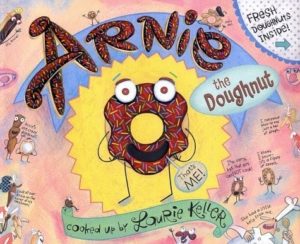
CO: Arnie the Doughnut by Laurie Keller, Same, Same But Different by Jenny Sue Kostecki-​Shaw, and Counting on Katherine: How Katherine Johnson Saved Apollo 13 by Helaine Becker, illustrated by Dow Phumiruk.

RVC: One of the things I see in your imprint’s lineup is a strong sense of diversity of character, theme, and style–and that’s not even taking account Arnie and his awesome donut-ness. 

How do you handle when someone’s writing outside of their own direct experiences? 

CO: That’s a difficult question to answer because the circumstances differ for each author and with each book. Using sensitivity readers and outside experts has been an important part of my process from the beginning of my career. But also vitally important–I’ve worked hard over the years to develop an aesthetic sense of what makes effective writing and what makes effective art. I use that sense to help me determine if I want to publish a book and how to work with an author in the revision process. As an editor, I bring both an intense closeness to the text as well as a bit of distance, which is crucial. The idea is to enable the author or artist’s work to shine in its best light.

RVC: Something people don’t typically appreciate about the role of an editor is how much research they have to do. How much digging-​around time do you put into a new author or manuscript?

CO: Ah, this is the fun part. As mentioned, I publish a good deal of nonfiction, and whenever I’m considering a subject–either pitching it to an author or responding to a submission–I love fully immersing myself in the material to learn as much as I can before I bring the project to the acquisition board. I’m an information junkie and I’m eager to soak up as much as I can on a particular subject. I may not always be up on the newest Netflix shows, but I think I make up for that by reading widely across sources–newspapers, magazines, newsletters, and, of course books. I’m always reading books. Usually two at a time.

RVC: In all of your experience in kidlit publishing, what has surprised you the most?

CO: The talent of writers and artists. I never get tired of reading wonderful words and looking at beautiful images. The talent keeps us all fresh and young and on our toes.

RVC: What’s a current picture book project that’s got you super jazzed?

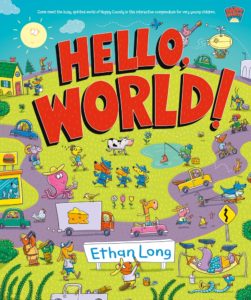
CO: Ethan Long’s Hello, World–the first book in the Happy County series. This is a modern day Richard Scarry-inspired world full of early childhood content that speaks directly to preschoolers. Ethan is a hugely talented storyteller and artist who is also naturally funny. He taps into a child’s mind as he explores many milestone concepts for this age range.

On a personal note, Richard Scarry was my co-​pilot when my children were young–his books were able to appeal to all three of my kids when they were between the ages of 1 and 6. Whenever we traveled on vacation I would bring a Busy Book as it would keep all three kids content. Ethan Long’s Hello, World is off to a great start with starred reviews, and we have three more in the pipeline with a plan to publish two a year.

RVC: Richard Scarry was a big hit in my family’s reading repertoire, too. If Ethan’s on that same track, sign me up as a fan.

Okay, this next bit comes with a warning. What’s coming next might just be the most important thing you’ve been asked all week. With that in mind…what’s the update on your beloved 1950s red pool chair from the Flatiron Building? Is retirement on your porch all it dreamed it’d be?

CO: I’m sorry to say it’s still sitting in my sister’s NYC apartment. I brought it there by way of a cab (tight fit!) back in May and I still haven’t gotten myself over to pick it up and drive it back to Connecticut where I live. There is a spot waiting for it on our porch so I need to get on that.

Thanks for the reminder, Ryan!

RVC: Let’s shift gears and jump into the final part of the interview—THE SPEED ROUND! Pithy questions and zip-​zappy answers, please. Are you ready?

CO: Bring it on.

RVC: Worst day ever—no social media, no TV, or no books?

CO: Being far away from my family. But, if I’m limited to the choices above—it would be no reading material. When my boys were younger and adored LEGO, they used to say that if I was a mini fig, my accessories would be a cup of tea in one hand and a manuscript or a book in the other. I think that’s pretty accurate.

RVC: If your literary mascot was from the world of picture books, which would it be?

CO: Harry the Dirty Dog.

RVC: Weirdest job you ever had?

CO: I’m a collector and love affordable antiques and flea market finds. In grad school, I got a job working at the Cambridge Antique Market and loved getting to know all of the dealers. It was intriguing to see the different pieces that came in– such a selection of offbeat finds–everything from Bakelite jewelry from the 1930s to old board games of the 1970s like Clue and Operation, to vintage books, which I love and collect. It was a weird job in the best of ways as I never knew what a day at the market would bring in terms of what pieces would come in–a bit like “Antiques Roadshow.” We would have a lot of fun researching the find, and this was before Google so we had to do lots of digging. I loved it all.

RVC: Coolest picture book from the past year (not published by Macmillan)?

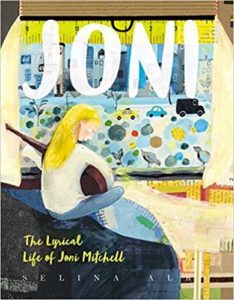
CO: Selina Alko’s picture book on Joni Mitchell. I love picture book biographies and publish widely in this genre. I also love music (who doesn’t?!) and Joni is someone whom I have read a lot about; she’s a fascinating subject. Selina spoke with me a bit about this project as she was working on it as we also publish books together. I’m eager to get my hands on a copy. The jacket is stunning.

RVC: If you could change one thing about the world of picture books, what would it be?

CO: I’d like to get picture books into the hands of more readers especially those with limited access.

RVC: Sum up your picture book philosophy in five words or fewer. 

CO: Books that make children grow, think imaginatively, and outside the box. Sorry, Ryan–that was double your word count!

RVC: That’s okay–it was worth it. Thanks so much, Christy!

Editor Interview: Andrea Spooner (Little, Brown Books for Young Readers)

It’s with great pleasure that I introduce Andrea Spooner, this month’s Industry Interview subject. Andrea’s the Vice President and Editorial Director of Picture Books at Little, Brown Books for Young Readers (LBYR). When I realized her imprint won a Caldecott Medal three years in a row, I knew I needed to find out a bit more about what kind of picture book magic they were cooking up there.

Here’s a bit about her. After joining LBYR in 2003, she’s worked with an amazing list of authors, including:

She’s also edited dozens of James Patterson’s books. What impresses me most of all, though, is how the people she works with rave about her. Consider this endorsement, from writer Crescent Dragonwagon: “Andrea took a lot of time finding just the right artist, and she is taking a lot of time working with him, and me. In 40 years of working with different publishers, I can remember no other children’s book editor who has ever involved me quite so much in the selection of the artists, and has engaged me so thoughtfully in discussing the pictures and my reactions to them.” And she adds that Andrea is “one of the most attentive and respectful editors I have ever had.”

Wow.

With that, let’s get on to the interview!


RVC: For some, working in the kidlit business seemed destined in the stars from the start. For others, it’s a curious accumulation of events that brought them to that future. Which was it for you? 

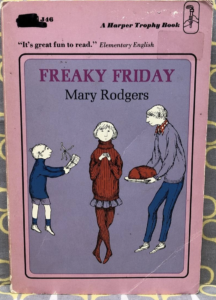
AS: Destined from the start! My mother was an artist and art historian, and my father was an English professor with a focus on writing short stories. I read voraciously and wrote prolifically as a child. The first long-​form story I wrote and illustrated, at age six, was called The Girl Who Hated School, followed up by an “illustrated novel” called Nancy and the U.F.O.! So, I always wanted to make books. I loved the interaction of picture and word… and nothing ever moved me like the books I read as a kid. I even wrote my college application essays about the Nancy Drew series as well as my favorite book of all time, Freaky Friday by Mary Rodgers. I guess it was a clear sign I took kidlit seriously from the beginning.

RVC: My kids wore out the DVD version of Freaky Friday with Jamie Lee Curtis, Mark Harmon, and Lindsay Lohan. But prior to that, I recall liking that book a great deal myself!

What were some of the key elements/​choices of your life that prepared you to be an editor?

AS: The most significant choice leading me toward my career might have been the day in seventh grade when I decided to join Yearbook Club, even though I was told it was only for eighth graders. Turns out just showing up with genuine commitment was more important than my age, and before the year was out I was editor-in-chief.

RVC: As former Prime Minister Benjamin Disraeli famously said, “History is made by those who show up.”

AS: Editing the yearbook took over my life all the way through college. And perhaps choosing to go to Smith College, known for breeding kidlit folk, prepared me for this editing life! At Smith, I was a studio art major and writing minor, and there’s nothing quite like all those group critique sessions to prepare you for the task of gently sharing feedback.

RVC: Let’s talk recent picture book projects. What’s on the docket for 2020 that has you excited?

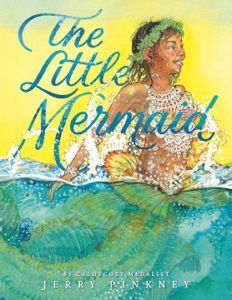
AS: Oh dear, it’s like you’re asking a mother to talk about her favorite child—it’s inherent betrayal not to speak of all of my books! I’m asking the universe to forgive me in advance for not mentioning the entire LBYR picture book list. But I don’t think anyone would begrudge me for sharing my intense excitement for Jerry Pinkney’s next brilliantly-​illustrated retelling! It’s The Little Mermaid… and it’s the first major picture book version that reinvents the story as a friendship story instead of a romance, and that features a cast of mermaids with brown skin. It also leaves readers with the critical message that you should never give up your voice for anything. I think it has potential to become the most definitive contemporary reimagining of the story.
RVC: With books like that coming out from LBYR, I get a real sense why you’ve got that incredibly impressive 3‑peat of Caldecotts going. But I’ll ask anyway–to what do you attribute that streak of success?

AS: Do you mean when LBYR won a Medal three years in a row in 2015–2017? Or… do you mean last year in 2019 when we took three out of the five stickers?

Okay, okay, I don’t mean to sound smug, but yeah, we’re kind of proud of the track record. What I’m most proud of is that these stickers are on books with many different artists and editors and art directors. There’s not just one superstar on the list. It’s really about strong teamwork, I think. There are a lot of eyes on the project, from acquisition through creative development, and everyone on the team is very invested from day one. We also have a fantastic school & library division making sure the books get in front of all the right people at the right time.

RVC: Speaking of 3s, you personally edited three Caldecott winners as well. Coincidence?

AS: I’m exceptionally lucky! It helps when you’re working with bona-​fide geniuses like Jerry Pinkney, Patrick McDonnell, and Oge Mora, who all have pretty powerful and sophisticated creative muses. And I wouldn’t be working with them if it weren’t for the intercession of my former mentor David Reuther, former LBYR editor Amy Lin, and art director Sasha Illingworth, so I can’t take credit for actually discovering this incredible talent.

If I ever make a difference in elevating work to a sticker-​worthy level, it’s likely derived from my willingness to question a choice that’s being made and to push the author or artist to justify it, even the seasoned people. But I’m also willing to step back and let the artist’s muse be the voice in charge. The trick is figuring out when the time is right for each!

RVC: I was pleasantly surprised to find that you edited one of my fav picture books of 2018, Thank You, Omu! How did that project come into being?

AS: It’s such a happy story! One of our art directors, Sasha Illingworth, was providing critiques at the Rhode Island School of Design in a picture book-​making class, and she came back recommending that editors take a look at several of the students’ final projects, which really impressed her. Oge’s project, Omu’s Stew, was at the top. It was clear from the start that Oge had a remarkable handle on the totality of what makes a great picture book, and that it came naturally to her. We offered her a two-​book deal while she was still a senior in college.

RVC: That’s an inspiring story for sure! What’s it like working with such an early-​career talent? What kind of different considerations do you have with them versus, say, working with a mid-​career or senior-​level creative?

AS: I think the way I work is mostly unrelated to how long the creator has been in the business. Of course, with debut talent I try to make sure that I take more time to explain the stages of the publishing process, and the vocabulary and quirks of it. Ultimately, though, each creator has individual needs that aren’t related to where in their career they are. I first try to get a sense of what their goals for the project are, figure out what makes their creative heart ticks, and learn what kind of managing or mentorship they need to generate their best work. Sometimes that involves trial and error, for sure. For me, with a new author it can take longer to figure out the key to a smooth creative process. After I’ve worked with someone once or twice, it’s easier to keep the author or artist happily engaged, productive, and open to feedback.

RVC: You’ve talked about how one of the many tasks of an editor is to improve the read-​aloud experience. What are some specific ways that can happen?

AS: We start by reading that manuscript aloud. Authors can do this too as they write and self-​edit. If you find yourself tripping on certain word/​sound combinations or sentences, rewrite it or cut it. Better yet, have a few others read the manuscript aloud and flag any patterns of stumbling. Reading the text aloud also gives you a sense of where the pacing feels too slow. Sometimes I find myself looking forward to the end of a sentence, paragraph, or page. That might be the sign of an area that can be tightened. I want to feel like I’m relishing each word.

RVC: With my fav picture books, that’s exactly it. “Relishing each word.”

AS: And, of course, we think about the page turns—they’re an essential part of the read-​aloud experience. Those dramatic pauses should be intentionally placed. They propel you through the narrative, and can leave you with an underlying question about what’s going to happen next. I always start editing by paginating a text, since helps me focus on the read-​aloud experience.

RVC: At LBYR acquisitions meetings, are picture book manuscripts actually read aloud? Does everyone have a copy in front of them, too?

AS: Reading the book aloud would be part of my fantasy vision of an acquisitions meeting—I’d love to know if any houses actually do that! But, it’s essential that everyone reads and thinks about acquisitions materials ahead of time; there would rarely be time to perform the books live in such meeting. At LBYR, editorial directors for each genre under consideration are expected to have vetted the manuscript for its viability prior to putting it on the agenda. And sometimes, read-​aloud quality emerges later in the editing and polishing process. So, the manuscript might not even have a perfect “mouthfeel” at acquisitions stage, but it has enough other exciting qualities to motivate us to make an offer.

RVC: So much of the submission process is a matchmaking game that can feel like blind luck, at times. Let’s help some people out here. What are a few likes/​dislikes of yours in terms of themes, subjects, and/​or styles?

AS: As an editorial director, I’ve trained myself to look beyond my own personal likes and dislikes when considering if a project is right for the LBYR list. We need a diverse portfolio in all respects in order to survive and thrive. As an example, I used to say “don’t send me lovey-​dovey books”, but nowadays, I’m totally open to them. I’m better able to look beyond the genre and think “are there audiences out there that like this and want this? Is the market for this kind of thing underserved, or do we have a gap on our list for it?” Some people might say it’s freeing to get to the point in your career when you’re at liberty to only work on the books you personally adore. For me it’s been the opposite–it’s actually been really freeing to embrace things I wouldn’t have necessarily purchased for my own collection.

Is that a cop-​out answer?

RVC: Well…

AS: Okay, okay, I’ll give you this much: For personal projects, right now I’m dreaming of silly-​but-​smart stories that scratch the itch we all have to laugh more in our increasingly troubled world. I tend to be drawn to absurdist humor. Science and nature/​environmental themes often resonate with me. I’m also keen on books that address important moments of child development, and I’m currently seeking more stories that feature differently-​abled characters from authentic perspectives. I’m also always looking for substantive stories with strong voice, re-​readability, and emotional resonance. For art, I look for work with a “signature style.” Once a style becomes trendy and ubiquitous, I’m less stimulated by it.

RVC: Beyond any issue of theme, subject, or style, what are your submission pet peeves?

AS: Manuscripts accompanied by an eternally long pitches and story summaries that are longer than the story itself. Give me one really strong paragraph about the market viability and comparative titles, and if there’s an interesting backstory to the story or connection to the author’s life, that can be another tight paragraph. Also, if we want to get petty for a moment, I’m put off by manuscripts that are single-spaced!

RVC: I’m so glad you said that. I’ve been telling students for years to keep on double-​spacing their submissions, and I’m not sure they believe me. Now I have proof!

AS: By the way, including art notes in a picture book text is absolutely not a pet peeve of mine. So many picture book writers have been told not to do this. But to me, I like to know that a writer has a sense of how visual storytelling impacts a narrative and how they intrinsically work together. A writer shouldn’t be wedded to their proposed vision, but they could convey it at pre-​acquisition for the sake of transparency, and sense. You have to remember that the non-​editorial folks like sales and marketing who are a part of the acquisition conversation may not have the same visual literacy or imagination as an author—and even the best editors aren’t capable of reading an author’s mind! But I am perfectly capable of removing art notes from a manuscript after acquisition if I think they’ll impede an artist’s own personal vision.

RVC: Lots of kidlit industry folks spend a lot of time on social media and their web presence. You seem less concerned about that. Is that a choice or the effects of being so busy with work that it’s on the perpetual back burner?

AS: Thanks for shooting that arrow right into my Achilles heel, Ryan!

RVC: Is it really an Achilles heel?

AS: Sometimes I think it is, but I have complicated feelings about it. I unequivocally admire with awe and wonder those many editors who consistently produce high-​quality books, manage robust lists, and maintain a vibrant social media presence. I’ll never be one of them, and it’s probably a personal failing of mine, but I have to embrace what I’m best at and make the most of it. We have a fantastic marketing department to publicize the authors and books. My “brand,” if I must have one in this day and age, is about what I do behind the curtains rather than what I’m saying on the public stage.

RVC: Let’s talk about that behind-​the-​curtains stuff.

AS: Here’s the thing: I spend or eleven or twelve hours a day largely in front of a screen. I don’t want to spend one minute more. This time and energy, for me, is best spent working for my authors, managing projects as seamlessly as possible, shaping the list and mentoring staff. I consider myself not just an editor, but a customer service representative—and I say that in all seriousness! My number one goal is for everyone, externally and internally, to feel like the process went off as smoothly as possible, and that we made a book we couldn’t have done better… without the benefit of hindsight, anyway.

I haven’t yet found a way to do all that and spend time sorting through the daily mess of social media and maintain my own polished social presence in a way that would meet my own standards. Frankly, I’m really not good at expressing any worthwhile thought in 140 characters or less, as you can see from this interview! There’s too much unnecessary chatter out there as it is. I see myself doing the world a service by not adding to it.

RVC: I typically keep my questions focused on picture books, but my kids LOVED the Patterson Middle School series, so I have to ask something about him. He’s so prolific that I’m inclined to ask how many James Pattersons there are! But I’ll assume there’s just one (unless you secretly tell me otherwise). 

Here’s an actual question about him, though–in all your experience in working with him, what has surprised you the most?

AS: That he is the real deal in every respect. He’s just one person, yes, who’s deeply connected to every book with his name on it—he’s not rubber-​stamping anything. There’s no team of people inventing the core stories; he drafts every single outline, and even the kids’ book outlines we worked on together were about 50 pages long, so there’s a lot of detail. He’s always at his desk working. Over the course of a dozen years of working together I could probably count on one hand times I called him that he didn’t pick up the phone. He’s genuinely passionate about writing, and promoting the pleasure and excitement of reading, which is what motivated his move into kids’ books. There’s nothing he’d rather being doing than writing. Except occasionally playing golf or watching a movie. I also learned a lot from Jim about the craft of commercial writing, especially when it comes to the emotional experience of reading. But those are trade secrets I can’t give away!

RVC: Alright, it’s time for the final part of the interview. The always-​surprising, often-​quippy, ever-​zippy LIGHTNING ROUND. Are you ready?

AS: Of course not! Have you not yet noticed that quips are not my specialty? Remember what I said about being able to say anything in 140 characters or less?

RVC: Don’t overthink it.

AS: That’s what my bosses always say on my performance reviews. Okay, let’s try it!

RVC: Star Trek, Star Wars, or Stargate?

AS: Star Trek! I mean… Leonard Nimoy, George Takei, Nichelle Nichols… and quantum teleportation!

RVC: Secret hobby you have that no one would suspect?

AS: Will anyone know what pysanka is?

RVC: Probably not. Let’s save them from having to Google it, though.

AS: It’s the art of making Ukranian Easter eggs with old-​world tools like a wooden/​metal stylus, beeswax, an open flame, and dyes. Mine are not anywhere near as good as what you see on Wikipedia.

RVC: What four picture book characters do you invite over for Sunday afternoon smoothies at the Spooner house? What’s your dream lineup?

AS: Well, if it’s Sunday afternoon in our little apartment, they’d have to be very well-​behaved! So I think Rosie Revere, Ada Twist, Sofia Valdez, and Iggy Peck would fit make for some very scintillating conversation. My other favorites are way too naughty.

RVC: Hardest venue to get a starred review?

AS: I can’t remember the last time I got a star from The Bulletin of the Center for Children’s Books. I don’t lose sleep over it.

RVC: Coolest non-​LBYR picture book of 2019?

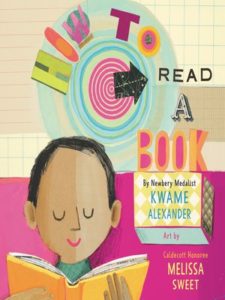
AS: Hmmm, when it comes to “cool” I think the Melissas have it, for me—I’m debating between The Balcony by Melissa Castrillon and How to Read a Book by Kwame Alexander and Melissa Sweet. The art for both books just vibrates with energy, passion, and endless detail.

RVC: Three words that sum up your picture book philosophy.

AS: Aw, that’s just cruel. I am not a woman of brevity…

RVC: Give it a shot!

AS: Read. It. Again.

RVC: Thanks so much, Andrea! 

And for you artistic OPB fans out there, here’s a LBYR public service announcement. They’re starting their fourth year of the Emerging Artist Award. Their first winner just had their book published and it won a New York Times Best Illustrated Book of 2019 honor, so the future seems bright for these winners. Consider applying–perhaps you’ll soon be working with Andrea or one of her amazingly cool colleagues!

Editor Interview: Carol Hinz (Millbrook Press & Lerner Publishing)

OPB readers, friends, and fans, what better way to wrap up 2019 than getting to know Carol Hinz, Editorial Director of Millbrook Press and Carolrhoda Books at Lerner Publishing Group? Her Twitter bio gives a lot of extra insight into who she is and what she’s about: “Also knitter, baker, ballerina, and wrangler of two small humans.” Talk about some pithy bio data, right?

Since OPB is all about underpromising and overdelivering, here are three more Carol Facts to enjoy.

  1. First book publishing job was an internship at Graywolf Press.
  2. Favorite color? Blue (in all shades and hues).
  3. Most unusual airplane carry-​on item? She brought her figure skates to the NCTE conference in Baltimore at the end of November so she could skate at the rink that’s along the harbor. Carol says, “It was totally worth the effort—and all the funny looks I got when people at the conference found out I’d done it!”

With that, let’s get to the Qs and As!


RVC: You ran into a pre-​career crossroads in high school—science and English. We know which choice you made (obviously!), but what appealed to you so much about science?

CH: I’ve always been a curious person, and I think my science classes and my English classes fed my curiosity in different ways. With science, I loved finding out more about the ways the world—and the universe—works, and at least at the high school level, I liked that the questions I was grappling with had definitive answers. There’s something comforting about being able to follow a procedure or a certain line of thinking and come up with a consistent result.

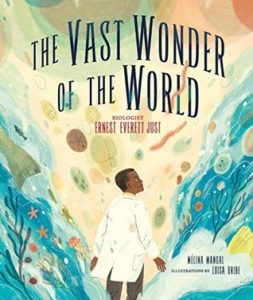
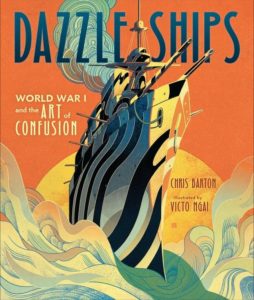
RVC: An example of that scientific curiosity appears in the range of books you’ve edited, like The Vast Wonder of the World: Biologist Ernest Everett Just and If You Were the Moon, or Dazzle Ships: World War I and the Art of Confusion and One Plastic Bag: Isatou Ceesay and the Recycling Women of the Gambia. What’s an unexpected topic or two you’d love to deal with via a book at some point?

CH: I like to be surprised by books—whether that surprise comes from encountering a topic I was previously unfamiliar with or from encountering an innovative presentation of a familiar topic. And I think many reviewers, educators, parents, and kids (especially kids!) enjoy being surprised as well.

I’m not someone who has a running list of super specific topics I’m looking for, but here are some things that have been on my mind lately:

  • Books that incorporate antiracist concepts and work toward dismantling white supremacy in ways that are engaging and meaningful for children (and adults).
  • Books that present science topics other than biology. Kids in the typical picture book age range often love animals, but I’d love to see some innovative, kid-​friendly approaches to other areas, including technology, mathematics, and engineering.
  • This last one isn’t a specific topic, but I’m looking for BIPOC authors and authors from other marginalized backgrounds to write about all manner of topics. Particularly in nonfiction, the vast majority of authors are white, and I would love to see a greater diversity of voices and perspectives represented.

RVC: I share that BIPOC wish, as well, and I’m doing what I can here with my cadre of students at Ringling College of Art and Design’s Creative Writing program. (Watch for their manuscripts in about three years!)

But let’s talk directly about where you work. One of the things I like about Lerner is that they take the time to carefully brand their products via imprints. I think of Millbrook as being curriculum + engagement. With Carolrhoda, it’s more imagination + inspiration. 

CH: Yes, that’s a great way of putting it! I typically say that for Millbrook, I’m looking for books that present curricular concepts in playful or unusual ways. And in Carolrhoda, I’m looking for quirky humor and books that give children an opportunity to see the world (or themselves) in new ways.

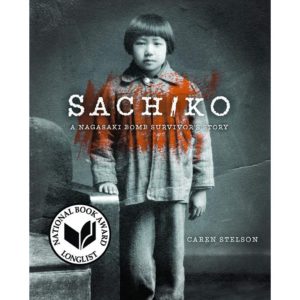
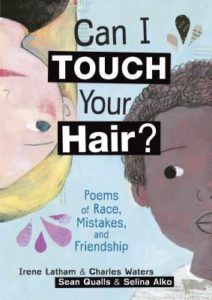
RVC: One of the things I admire about your work as an editor is how you’re not afraid of going right after tough topics, as readers encounter in Can I Touch Your Hair? Poems of Race, Mistakes, and Friendship, and Sachiko: A Nagasaki Bomb Survivor’s Story, to name just two examples. How do you negotiate the balance between what readers NEED and what readers WANT? And while we’re at it, let’s add in the challenge of what parents, teachers, and librarians think, too, right?

CH: Thank you, Ryan. With the books you mention, a couple of key things were not rushing the editorial process and incorporating the feedback of other people—both colleagues at Lerner and expert readers. I don’t think any one person is going to have perfect instincts for how to handle a challenging topic on the first draft or on the first read through a manuscript. But having time to sit with it, to read other, relevant writing on the topic, and to get feedback from fellow editors or consultants is enormously helpful.

Beyond that, we also need to be humble—the authors and I are going to do our best, but all books, especially those that grapple with topics not traditionally covered in children’s books, will still be criticized. Not every reader is going to be looking for the same thing from a book on a given topic, and we have to be okay with that, whether or not we agree with the criticism.

RVC: While Can I Touch Your Hair? has received a lot of critical praise, some readers are uncomfortable with parts of it—most specifically the poem called “The N‑Bomb.” That’s a prime example of what we’re talking about here, isn’t it?

CH: Definitely. I think adults (particularly white adults) don’t give kids enough credit for what they can handle. This often comes out of a desire to protect kids from all the terrible things that are a part of our world. But we need to keep in mind that not all kids receive that protection, and we can’t control when a kid is going to first encounter something biased, racist, or hateful. To those adults who feel uncomfortable, I say: Isn’t it far better for a kid to encounter the N‑word (or some other “difficult” subject matter) for the first time in the pages of the book, when there’s time and space for a kid to think about it and talk with a trusted adult about it, rather than encountering it first in some other way when there might not be opportunity for thought and conversation?

For more, check out a blog post that Irene Latham, Charles Waters, and I wrote about this very topic.

RVC: Thanks for extending our conversation with the link to that informative post. Much appreciated!

Let’s move back into your work as an editor in general by asking a question few editors get asked. How do you measure success?

CH: Ultimately, success is a book reaching a young reader who appreciates it. And I want our books to get into the hands as many of those young readers as possible, which means connecting with the people who put books into kids’ hands—booksellers, educators, librarians, and parents.

RVC: How do you achieve such a thing?

CH: There are different routes to achieving this goal. It could be getting multiple starred reviews, winning one or more awards, getting on state reading lists, having an author who does a lot of school visits and events, or some other combination of things. Success isn’t always the moments we see on social media—and a whole lot of work and revision and doubt and hope go into every single book we make, with the goal of each book finding its own path to readers.

RVC: Since you brought up the idea of writers/​books finding a path to readers … a lot of writers come to OPB to gain insight into how to improve their chances of selling a picture book manuscript, and sometimes that means investigating the submission process itself as much as talking about issues of craft. So, let’s help them out. Plenty of editors encounter phrases and words in cover letters and queries that are an absolute turn off. Got any to warn writers away from using with you?

CH: Ultimately, I’m a lot more interested in the manuscript than I am in the cover letter or query. That said, I’m turned off by bashing an entire category or genre because an author thinks their work is better than all of it, comments that the author’s child/​neighbor/​grandchild loves the story (because I need people who don’t already know and love the author to also love the story), and an obvious lack of knowledge about a certain genre or category (e.g. a 3,000-word picture book).

RVC: Let’s go with one more writer-​friendly question. How has nonfiction changed over the years of your editing career, and what trends/​shifts might we expect in 2020 and beyond?

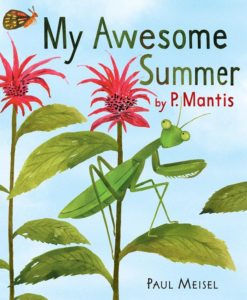
CH: Oooh, interesting question. There’s definitely more interest in STEM and STEAM topics and less interest in historical topics (unless the book is about a historical “hidden figure” of some sort). Animal life cycle books used to be a nonfiction staple, but I almost never see them anymore unless they have an innovative approach (such as My Awesome Summer by P. Mantis by Paul Meisel.)

The last few years I’ve been thinking a lot about the different categories of nonfiction, as described by Melissa Stewart. For picture books, I’m seeing lots of narrative nonfiction, some really great expository literature, and a small amount of traditional nonfiction. (For more about nonfiction categories, check out Melissa’s blog and read her School Library Journal article on the topic.)

I’m also seeing a lot of interesting approaches to blending nonfiction and fiction. For instance, Flower Talk: How Flowers Use Color to Communicate by Sara Levine, illustrated by Masha D’yans is narrated by a cantankerous cactus, but the information conveyed is all true. I realize books like this can pose a challenge for librarians—where to shelve them?—but I also expect to be seeing more in this vein.

Word counts remain higher than for fiction. With narrative nonfiction, I generally go for 1,000 or fewer words in the main text, though Dazzle Ship: World War I and the Art of Confusion by Chris Barton is about 1,400 words and Let ’Er Buck!: George Fletcher, the People’s Champion by Vaunda Micheaux Nelson is 1,500 words. Expository literature typically has a lower word count, though a book with multiple levels of text (such as those in Jess Keating’s World of Weird Animals series) may go higher.

Including back matter and providing sources has become increasingly essential, and I’m enjoying just what a wide range of elements authors are including in back matter. Different topics will necessarily be served by different back matter.

Incremental but important progress has been made in publishing picture books by and about BIPOC and people from other marginalized backgrounds (and those books being recognized with starred reviewed and awards), and it’s my belief that this is not a trend but rather part of a permanent, ongoing shift.

Overall, I believe it’s a great time to be making nonfiction. There’s so much room for creativity and experimentation in terms of both format and topic, and I am inspired by all the great nonfiction I’m seeing out there!

RVC: A few years back, you (delightfully) interviewed your own kids on the Lerner Books blog. I’d like to wrap up the first part of this interview with variations on three of the questions you asked them. Here we go. 

#1—What do you like best about being a mom who is a children’s book editor? 

CH: I love that what I do in my job has such a meaningful connection with being a parent: my experiences with my kids inform my work and my experiences with making books inform the way I raise my children. I also think that the act of reading picture books aloud is incredibly powerful, and doing so night after night after night can’t help but shape my understanding of how to make a great picture book.

RVC: #2—What’s your favorite picture book to have worked on?

CH: All of them! That’s a valid answer, right? Truly, I love the books we publish and feel so lucky to be able to work with such incredible authors and illustrators.

If I had to pick a picture book that has had particular meaning for both me and my kids this year, I would choose A Map into the World by Kao Kalia Yang, illustrated by Seo Kim. My 6‑year-​old son loves it [OPB Note: Carol was kind enough to provide a snapshot of her and the aforementioned son enjoying that very book!], and we’ve been reading it multiple times a week for months now. Although it’s a book I completely adore, I was surprised to see it have such staying power for him. This blog post shares more of the story behind the book and how it has led to some very meaningful connections for both of my kids.
RVC: #3—How many picture books have you read them in their lives?

CH: Oh, probably a couple thousand.

RVC: That’s a good answer, Carol, but it’s wrong. According to child #2, it’s 5,952. But you were close!

And now, we move on to the SPEED ROUND where the point values are doubled, and the answers will zing as fast as the answers zoom. READY?

CH: You betcha!

RVC: Best place in Minneapolis to get hot dish?

CH: Probably in a church basement or at someone’s home! Instead, I’d like to recommend the fantastic fry bread tacos at the Four Sisters Farmers Market. I went there on a day last fall when illustrator Marlena Myles was signing copies of Thanku: Poems of Gratitude with the Hennepin County library system, and there I discovered that books and fry bread tacos are a great combination! (Though you do need to be careful not to spill on your book…)

RVC: Favorite late-​night reading beverage?

CH: Water.

RVC: Who’d you most like to edit a picture book from? LeBron James, Kim Kardashian, or Ariana Grande? 

CH: Hahaha! Whichever one of them has spent the last 5+ years reading recently published picture books, drafting multiple manuscripts, and working with a critique group as they honed their writing skills—and would respect my editorial input. 😉

RVC: A Lerner picture book that’s totally awesome yet somehow underappreciated?

CH: Love, Agnes: Postcards from an Octopus by Irene Latham, illustrated by Thea Baker. It’s an innovative look at the giant Pacific Octopus life cycle as portrayed via a series of postcards exchanged by Agnes, various other sea creatures, and a boy on land. It’s clever and charming, whether you’re primarily interested in the storyline or in the octopus facts!

RVC: The coolest picture book of 2019 that wasn’t edited by someone named Carol is …

CH: Gah, this is so hard! I’m going to cheat and break this into a few categories.

For fiction, I’d have to say Home in the Woods by Eliza Wheeler. Every aspect is so well done, and the text, the illustrations, and the design work wonderfully together to create a cohesive whole. Both of my kids also love it!

For nonfiction, I’m going to go with The Undefeated by Kwame Alexander, illustrated by Kadir Nelson. When I first saw the book, I thought it was gorgeous but perhaps too sophisticated for a young audience. But when I brought it home and read it to my younger son, he was very engaged. While he and I had previously talked about race in different ways, we’d not talked much about systemic racism and the long history of racial injustice in the United States, and this book opened the door to some really powerful conversations.

For a science-​themed picture book, I’d say Moth: An Evolution Story by Isabel Thomas, illustrated by Daniel Egnéus. I’d been hearing good things about it and finally got it from the library. My 6‑year-​old son  and I both learned a lot! It is such a clear presentation of a complex idea, and the illustrations are fantastic as well.

RVC: Sum up your picture book philosophy in three words.

CH: Make me care.

(By which I mean that you the author start off invested in the story you’re telling or the topic you’re writing about. But your readers may not be invested in the same way, so you need to find a way to make me–and all readers–care about it.)

RVC: Thanks so much, Carol! This was a sincere pleasure.