
September’s just around the corner, and that means we’ve still got a few long afternoons left. So it seems like a fine time to dig out the cardboard, masking tape, pipe cleaners, markers, and whatever else you’ve got in the craft drawer and then..unleash the kiddos.
To provide inspiration for a Maker Monday Afternoon (any day will do, though!), here are a dozen picture books that celebrate and champion kids who build, construct, tinker, test, dream, and occasionally make an awesome mess.
If one of your faves somehow didn’t make this totally subjective list, add it to the comments.
**Since so many teachers visit OPB, I’m adding a “Good for” list for each title, so it’s super easy to know how someone might use these books in the classroom.
 Ada Twist, Scientist by Andrea Beaty, illustrated by David Roberts (September 2016)
From the publisher: “Ada has always been endlessly curious. Even when her fact-finding missions and elaborate scientific experiments don’t go as planned, Ada learns the value of thinking through problems and continuing to stay curious.”
- 32 pages
- Reading Age: 3–7 years
- Good for: scientific questions, curiosity, observation, perseverance, women-in-STEM conversations
 The Book of Mistakes by Corinna Luyken (April 2017)
From Goodreads: “As one artist incorporates accidental splotches, spots, and misshapen things into her art, she transforms her piece in quirky and unexpected ways, taking readers on a journey through her process.”
- 48 pages
- Reading Age: 4–8 years
- Good for: art class, creative confidence, revision, turning mistakes into opportunities
 Boxitects by Kim Smith (January 2020)
From Goodreads: “A STEAM-centered, adorably illustrated picture book about Meg, a brilliant and creative boxitect who creates extraordinary things out of ordinary cardboard boxes.”
- 40 pages
- Reading Age: 3–7 years
- Good for: cardboard engineering, makerspace projects, design challenges, teamwork
 The Curious Garden by Peter Brown (April 2009)
From Goodreads: “While out exploring one day, a little boy named Liam discovers a struggling garden and decides to take care of it. As time passes, the garden spreads throughout the dark, gray city, transforming it into a lush, green world.”
- 40 pages
- Reading Age: 3–6 years
- Good for: garden projects, environmental stewardship, urban greening, community change
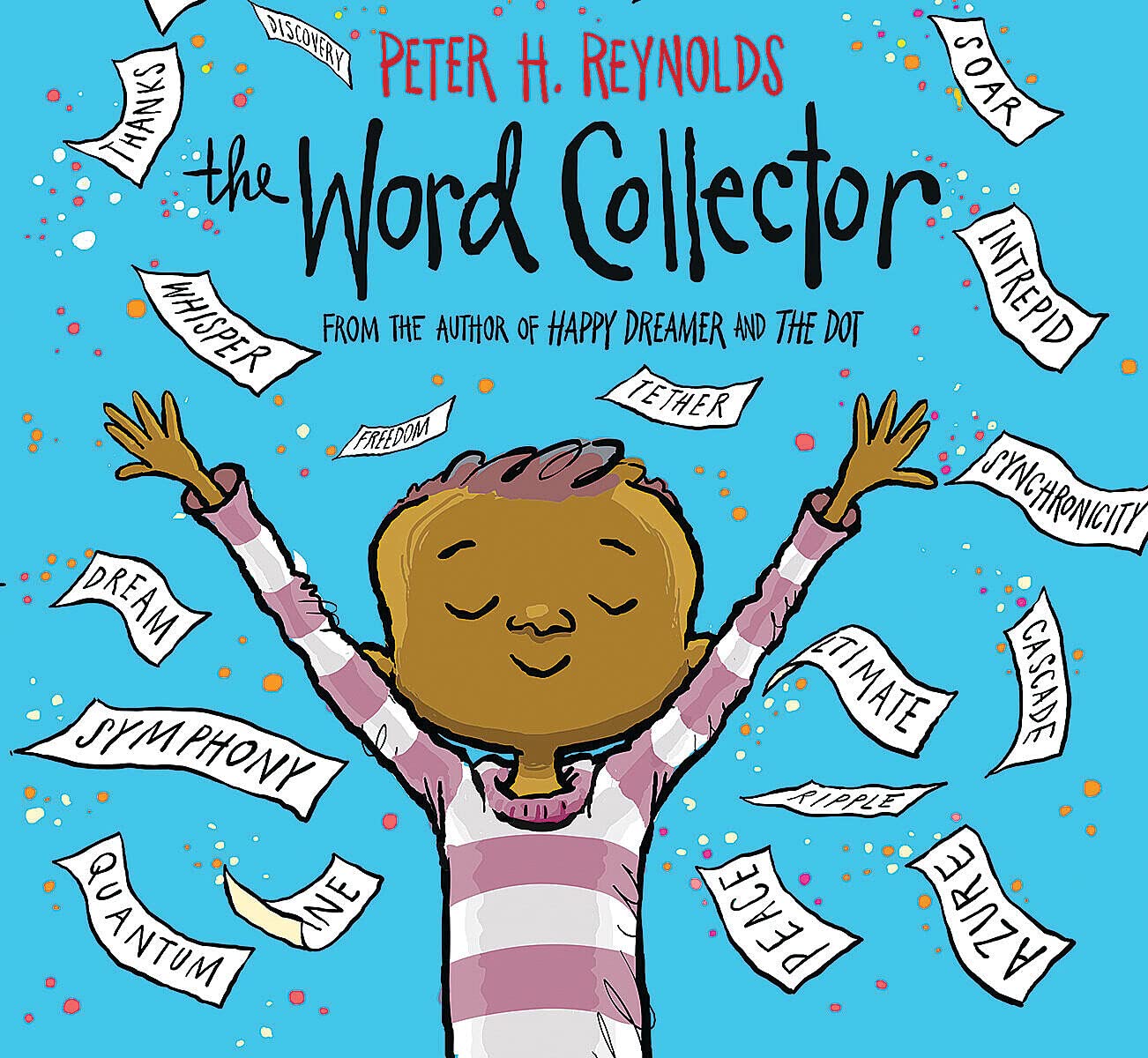
 The Dot by Peter H. Reynolds (September 2003)
From Goodreads: “Art class is over, but Vashti is sitting glued to her chair in front of a blank piece of paper. The words of her teacher are a gentle invitation to express herself. But Vashti can’t draw — she’s no artist. To prove her point, Vashti jabs at a blank sheet of paper to make an unremarkable and angry mark. ‘There!’ she says.”
- 32 pages
- Reading Age: 4–8 years
- Good for: art class, creative confidence, first marks, International Dot Day
 Dreaming Up: A Celebration of Building by Christy Hale (October 2012)
From Goodreads: “A collection of illustrations, concrete poetry, and photographs that shows how young children’s constructions, created as they play, are reflected in notable works of architecture from around the world.”
- 40 pages
- Reading Age: 4–10 years
- Good for: architecture, building units, concrete poetry, comparing kid-made structures to real buildings
 The Magical Yet by Angela DiTerlizzi, illustrated by Lorena Alvarez Gómez (April 2020)
From Goodreads: “Each of us, from the day we’re born, is accompanied by a special companion–the Yet. Can’t tie your shoes? Yet! Can’t ride a bike? Yet! Can’t play the bassoon? Don’t worry, Yet is there to help you out.”
- 32 pages
- Reading Age: 5–8 years
- Good for: growth mindset, trying again, frustration tolerance, SEL conversations
 Mud Book by John Cage, illustrated by Lois Long (April 2017)
From Goodreads: “In the mid-1950s, legendary avant-garde composer John Cage and artist Lois Long created a truly marvelous object. Part artist’s book, part cookbook, and part children’s book, Mud Book is a spirited, if not satirical, take on almost every child’s first attempt at cooking and making. Through the humble mud pie—add dirt and water!—Cage and Long encourage children to explore their imagination and to get their hands dirty, and they offer this ‘Mud pies are to make and look at, not to eat.’ ”
- 36 pages
- Reading Age: 3–5 years
- Good for: sensory play, outdoor making, process art, messy creativity
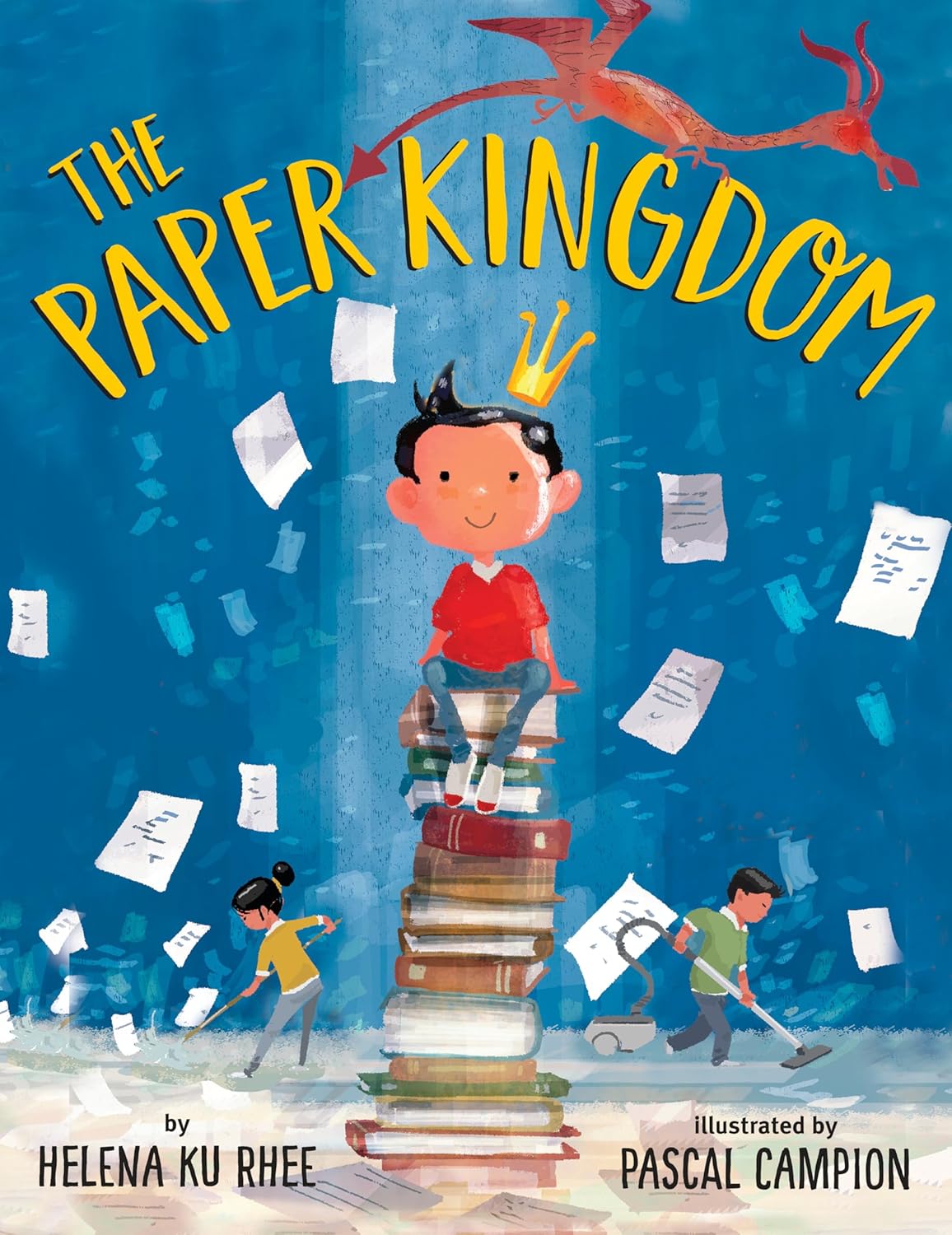 The Paper Kingdom by Helena Ku Rhee, illustrated by Pascal Campion (February 2020)
From Goodreads: “When the babysitter is unable to come, Daniel is woken out of bed and joins his parents as they head downtown for their jobs as nighttime office cleaners. But the story is about more than brooms, mops, and vacuums. Mama and Papa turn the deserted office building into a magnificent kingdom filled with paper. Then they weave a fantasy of dragons and kings to further engage their reluctant companion–and even encourage him to one day be the king of a paper kingdom.”
- 40 pages
- Reading Age: 3–7 years
- Good for: imaginative play, paper crafts, family storytelling, transforming ordinary spaces
 What Do You Do with an Idea? by Kobi Yamada, illustrated by Mae Besom (February 2014)
From Goodreads: “This is the story of one brilliant idea and the child who helps to bring it into the world. As the child’s confidence grows, so does the idea itself. And then, one day, something amazing happens. This is a story for anyone, at any age, who’s ever had an idea that seemed a little too big, too odd, too difficult. It’s a story to inspire you to welcome that idea, to give it some space to grow, and to see what happens next. Because your idea isn’t going anywhere. In fact, it’s just getting started.”
- 44 pages
- Reading Age: 5–8 years
- Good for: brainstorming, creative courage, project launches, nurturing big ideas
 What to Do with a Box by Jane Yolen, illustrated by Chris Sheban (February 2016)
From Goodreads: “If you give a child a box, who can tell what will happen next? It may become a library or a boat. It could set the scene for a fairy tale or a wild expedition. The most wonderful thing is its seemingly endless capacity for magical adventure, a feature imaginatively captured in cardboardesque art by Chris Sheban and rhythmically celebrated in this poetic tribute by renowned children’s author Jane Yolen.”
- 32 pages
- Reading Age: 6–8 years
- Good for: cardboard builds, imaginative play, loose-parts play, poetic read-alouds
 With My Hands: Poems About Making Things by Amy Ludwig VanDerwater, illustrated by Lou Fancher & Steve Johnson (March 2018)
From Goodreads: “For young makers and artists, brief, lively poems illustrated by a NYT bestselling duo celebrate the pleasures of working with your hands. Building, baking, folding, drawing, shaping … making something with your own hands is a special, personal experience. Taking an idea from your imagination and turning it into something real is satisfying and makes the maker proud.”
- 32 pages
- Reading Age: 4–7 years
- Good for: maker activities, poetry, art rooms, hands-on creativity