
Picture Book List: 12 Books for Kids Who Love to Make Things

September’s just around the corner, and that means we’ve still got a few long afternoons left. So it seems like a fine time to dig out the cardboard, masking tape, pipe cleaners, markers, and whatever else you’ve got in the craft drawer and then..unleash the kiddos.

To provide inspiration for a Maker Monday Afternoon (any day will do, though!), here are a dozen picture books that celebrate and champion kids who build, construct, tinker, test, dream, and occasionally make an awesome mess.

If one of your faves somehow didn’t make this totally subjective list, add it to the comments.

**Since so many teachers visit OPB, I’m adding a “Good for” list for each title, so it’s super easy to know how someone might use these books in the classroom.


Ada Twist, Scientist by Andrea Beaty, illustrated by David Roberts (September 2016)

From the publisher: “Ada has always been endlessly curious. Even when her fact-​finding missions and elaborate scientific experiments don’t go as planned, Ada learns the value of thinking through problems and continuing to stay curious.”

  • 32 pages
  • Reading Age: 3–7 years
  • Good for: scientific questions, curiosity, observation, perseverance, women-​in-​STEM conversations

The Book of Mistakes by Corinna Luyken (April 2017)

From Goodreads: “As one artist incorporates accidental splotches, spots, and misshapen things into her art, she transforms her piece in quirky and unexpected ways, taking readers on a journey through her process.”

  • 48 pages
  • Reading Age: 4–8 years
  • Good for: art class, creative confidence, revision, turning mistakes into opportunities

Boxitects by Kim Smith (January 2020)

From Goodreads: “A STEAM-​centered, adorably illustrated picture book about Meg, a brilliant and creative boxitect who creates extraordinary things out of ordinary cardboard boxes.”

  • 40 pages
  • Reading Age: 3–7 years
  • Good for: cardboard engineering, makerspace projects, design challenges, teamwork

The Curious Garden by Peter Brown (April 2009)

From Goodreads: “While out exploring one day, a little boy named Liam discovers a struggling garden and decides to take care of it. As time passes, the garden spreads throughout the dark, gray city, transforming it into a lush, green world.”

  • 40 pages
  • Reading Age: 3–6 years
  • Good for: garden projects, environmental stewardship, urban greening, community change

The Dot by Peter H. Reynolds (September 2003)

From Goodreads: “Art class is over, but Vashti is sitting glued to her chair in front of a blank piece of paper. The words of her teacher are a gentle invitation to express herself. But Vashti can’t draw — she’s no artist. To prove her point, Vashti jabs at a blank sheet of paper to make an unremarkable and angry mark. ‘There!’ she says.”

  • 32 pages
  • Reading Age: 4–8 years
  • Good for: art class, creative confidence, first marks, International Dot Day

Dreaming Up: A Celebration of Building by Christy Hale (October 2012)

From Goodreads: “A collection of illustrations, concrete poetry, and photographs that shows how young children’s constructions, created as they play, are reflected in notable works of architecture from around the world.”

  • 40 pages
  • Reading Age: 4–10 years
  • Good for: architecture, building units, concrete poetry, comparing kid-​made structures to real buildings

The Magical Yet by Angela DiTerlizzi, illustrated by Lorena Alvarez Gómez (April 2020)

From Goodreads: “Each of us, from the day we’re born, is accompanied by a special companion–the Yet. Can’t tie your shoes? Yet! Can’t ride a bike? Yet! Can’t play the bassoon? Don’t worry, Yet is there to help you out.”

  • 32 pages
  • Reading Age: 5–8 years
  • Good for: growth mindset, trying again, frustration tolerance, SEL conversations

Mud Book by John Cage, illustrated by Lois Long (April 2017)

From Goodreads: “In the mid-​1950s, legendary avant-​garde composer John Cage and artist Lois Long created a truly marvelous object. Part artist’s book, part cookbook, and part children’s book, Mud Book is a spirited, if not satirical, take on almost every child’s first attempt at cooking and making. Through the humble mud pie—add dirt and water!—Cage and Long encourage children to explore their imagination and to get their hands dirty, and they offer this ‘Mud pies are to make and look at, not to eat.’ ”

  • 36 pages
  • Reading Age: 3–5 years
  • Good for: sensory play, outdoor making, process art, messy creativity
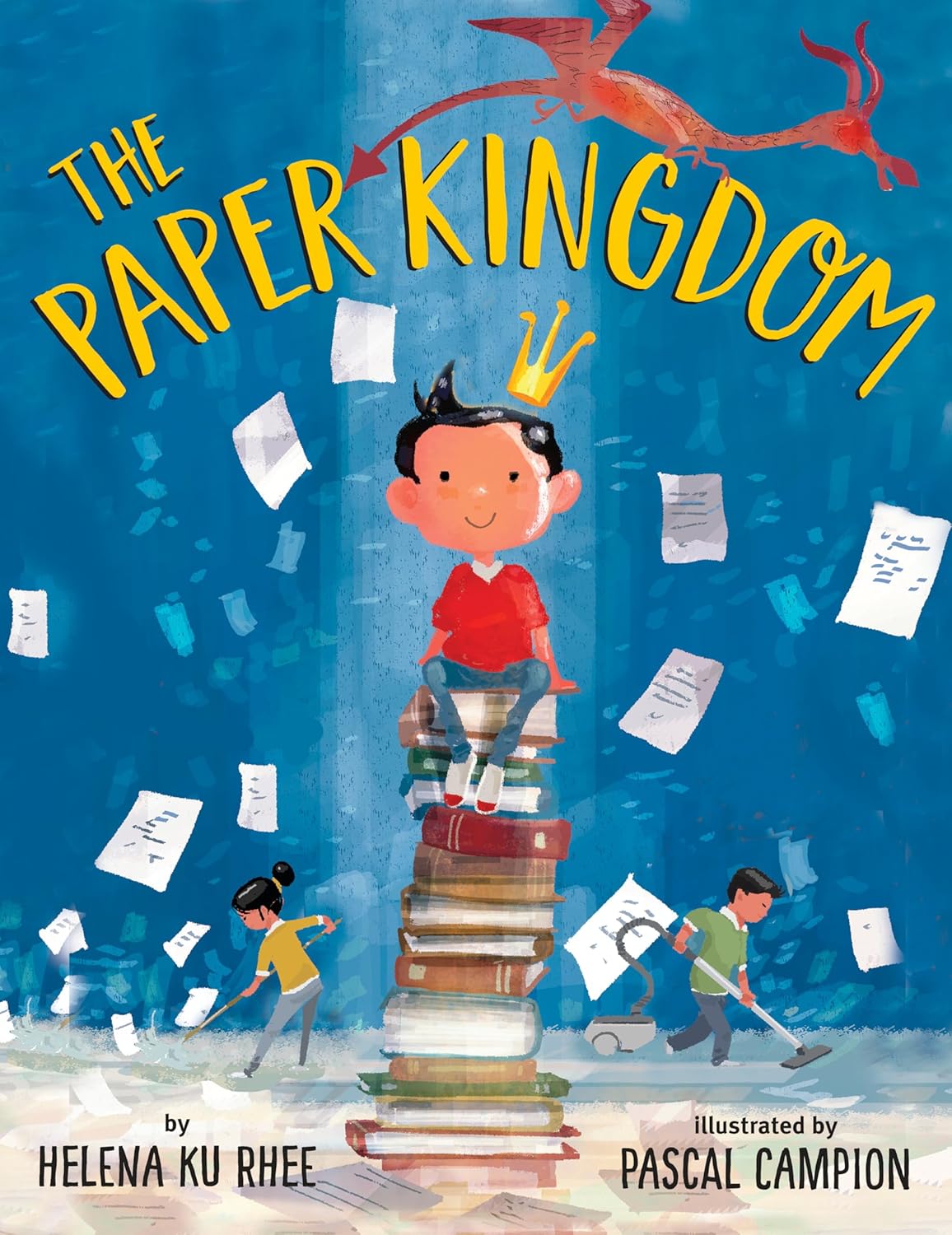
The Paper Kingdom by Helena Ku Rhee, illustrated by Pascal Campion (February 2020)

From Goodreads: “When the babysitter is unable to come, Daniel is woken out of bed and joins his parents as they head downtown for their jobs as nighttime office cleaners. But the story is about more than brooms, mops, and vacuums. Mama and Papa turn the deserted office building into a magnificent kingdom filled with paper. Then they weave a fantasy of dragons and kings to further engage their reluctant companion–and even encourage him to one day be the king of a paper kingdom.”

  • 40 pages
  • Reading Age: 3–7 years
  • Good for: imaginative play, paper crafts, family storytelling, transforming ordinary spaces

What Do You Do with an Idea? by Kobi Yamada, illustrated by Mae Besom (February 2014)

From Goodreads: “This is the story of one brilliant idea and the child who helps to bring it into the world. As the child’s confidence grows, so does the idea itself. And then, one day, something amazing happens. This is a story for anyone, at any age, who’s ever had an idea that seemed a little too big, too odd, too difficult. It’s a story to inspire you to welcome that idea, to give it some space to grow, and to see what happens next. Because your idea isn’t going anywhere. In fact, it’s just getting started.”

  • 44 pages
  • Reading Age: 5–8 years
  • Good for: brainstorming, creative courage, project launches, nurturing big ideas

What to Do with a Box by Jane Yolen, illustrated by Chris Sheban (February 2016)

From Goodreads: “If you give a child a box, who can tell what will happen next? It may become a library or a boat. It could set the scene for a fairy tale or a wild expedition. The most wonderful thing is its seemingly endless capacity for magical adventure, a feature imaginatively captured in cardboardesque art by Chris Sheban and rhythmically celebrated in this poetic tribute by renowned children’s author Jane Yolen.”

  • 32 pages
  • Reading Age: 6–8 years
  • Good for: cardboard builds, imaginative play, loose-​parts play, poetic read-alouds

With My Hands: Poems About Making Things by Amy Ludwig VanDerwater, illustrated by Lou Fancher & Steve Johnson (March 2018)

From Goodreads: “For young makers and artists, brief, lively poems illustrated by a NYT bestselling duo celebrate the pleasures of working with your hands. Building, baking, folding, drawing, shaping … making something with your own hands is a special, personal experience. Taking an idea from your imagination and turning it into something real is satisfying and makes the maker proud.”

  • 32 pages
  • Reading Age: 4–7 years
  • Good for: maker activities, poetry, art rooms, hands-​on creativity

Reading Activities: Something Good by Kenneth Kraegel

Something Good
Author: Kenneth Kraegel
Illustrator: Kenneth Kraegel
11 February 2025
Candlewick
40 pages

Book description from Goodreads: “In need of a bad day remedy? One girl’s terrible day takes an unexpected—and extraordinary—turn when she comes upon a pair of magic socks.

Blah. Nothing good ever happens to me.

This morning a little girl wakes up with a chicken on her head. (Ouch.) Then she finds worms in her cereal (after she’s had a few bites—yuck!). Then she realizes, too late, that her boots are full of mud. Ack! Then her best friend ignores her, a big hole appears where it wasn’t yesterday, and it starts to rain—cold rain, of course. Could this day get any worse? When a mysterious gift shows up out of nowhere, wrapped in a bow, the girl dares to wonder if it could finally be something good. Get ready for a high-​flying tale as the beloved creator of Wild Honey from the Moon brings his signature deadpan humor, quirky charm, and appealingly simple text to a fantastical adventure sure to turn even the worst days around.”


Need some reviews of Something Good?


Reading Activities inspired by Something Good:

  • Before Reading–From looking at the front cover: 
    • What do you think this book will be about?
    • What kinds of things do you think count as “something good”?
    • What kind of mood does the cover character seem to be in? Why do you think that?
    • Have you ever had a day that started out really bad? How did it make you feel?
    • What are some small things that can help turn a day around?
    • What questions would you like to ask the author before reading the book?
  • After Reading–Now that you’ve read the story: 
    • What questions would you like to ask the author before reading the book?
    • Why did the gift of socks feel disappointing at first?
    • How did the socks change the character’s day—and mood?
    • Why do you think Zoe ignored the main character at the beginning? What was really going on?
    • How did the main character’s feelings change throughout the story? What caused those changes?
    • Why do you think they decided to give the socks to someone else at the end?
    • What message do you think this book is trying to share?
    • Would you recommend this book to a friend? What part would you tell them about first?
  • Blah-​Day Bingo: Make one bingo board with silly bad-​day moments like “stepped in something squishy,” “ran out of cereal,” or “lost your sock.” Then, during the day or while reading the book, see how many squares you can check off. Now make a second board filled with cheerful things like “someone smiled at me,” “found a cool rock,” or “heard a funny joke.” The goal? Try to fill your “something good” board faster than your “blah” one—and see how your mood shifts as you look for the good stuff!
  • Chicken Hat & Magic Socks Craft: Create your own ridiculous chicken hat using paper, feathers, and imagination, just like the one from the beginning of the book. Then make a pair of “magic socks” using cardstock or paper. Decorate them with drawings of the adventures you would go on if your socks could fly. What powers would they give you? Who would you share them with?
  • Mood Meter Map: Draw a line across a page and mark one end as “Total Blah” and the other as “Amazing!” As you reread the story, track the main character’s mood on this line. What made things worse? What helped? Then make your own mood meter for a recent day and chart what affected your feelings. Did something small help shift your mood in a big way?
  • The Gift You Didn’t Expect: In the story, a plain pair of socks turns out to be the best surprise of all. Think of something simple—like a pencil, a pebble, or a balloon—and invent a story where it becomes magical. What does it do? How does it change your day? Write a short paragraph or comic strip to show how an ordinary object became something good.
  • From Blah to Hooray! Mini Book: Fold a piece of paper into a tiny book. On the first page, draw or write about a “blah” thing. On each following page, draw or write what helps that mood shift—maybe a friend shows up, a silly animal appears, or magic socks arrive! End your mini book with a big “Hooray!” moment to show how things got better.
  • Share Something Good Challenge: The character realizes that sharing something good makes it even better. Try it yourself! Choose one small, good thing to share today: a compliment, a snack, a toy, or a funny story. What happened when you shared it? Did someone smile? Did it change their day, or yours? Write or draw what you noticed.
  • Peanuts Vibes Soundtrack
    This story has been compared to Peanuts comics—funny, moody, and full of charm. Imagine this book had a soundtrack. What kind of music would you play at the beginning when everything is going wrong? What about when the magic socks appear? Make a playlist or just describe the sounds. Slow and rainy? Bouncy and silly? Dreamy and floaty?
  • Books, Books, and More Books! Check out these real-​world books about bad days, surprising joys, and learning to see the good:


Alexander and the Terrible, Horrible, No Good, Very Bad Day by Judith Viorst, illustrated by Ray Cruz

The ultimate bad-​day picture book. Alexander has one frustrating moment after another—but readers come to see that some days are just like that, and they still end with love.


A Bad Case of the Stripes
by David Shannon

Camilla is worried about fitting in, and it causes her to literally break out in stripes—and then polka dots, and even worse! A story about staying true to yourself, even when things feel weird or overwhelming.


The Magical Yet by Angela DiTerlizzi, illustrated by Lorena Alvarez

For anyone feeling frustrated about what they can’t do yet, this book shows that hope, patience, and persistence can turn almost any day around. A great reminder that something good might be just around the corner.


Rain! by Linda Ashman, illustrated by Christian Robinson

One rainy day is seen two totally different ways by two characters. This joyful story reminds us that perspective shapes how we experience the world—and a “blah” day for one person might be a magical one for someone else.


What If, Pig?
by Linzie Hunter

Pig is having a worry-​filled kind of day, but thanks to a kind friend, things start to look brighter. A great book about friendship, anxiety, and noticing when we need support—and when others might, too.

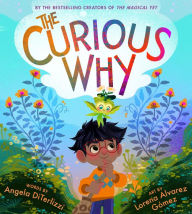
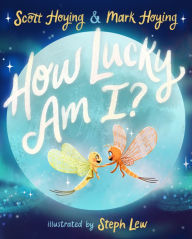
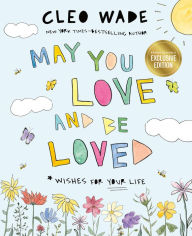
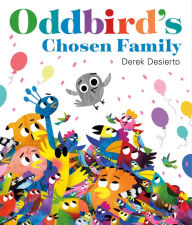
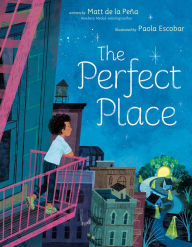
Five Five-​Word Reviews: The Curious Why; How Lucky Am I?; May You Love and Be Loved; Oddbird’s Chosen Family; The Perfect Place

For reasons, we’re going to roll with another Five-​W0rd Review post for this month. Enjoy!


Little, Brown Books for Young Readers
7 May 2024
40 pages

Ryan’s five-​word review: Sequel? Curiosity cures blah-​blah blues.

4.25 out of 5 colorful questions


Author: Scott Hoying & Mark Hoying
Illustrator: Steph Lew
Henry Holt and Co. Books for Young Readers
21 May 2024
40 pages

Ryan’s five-​word review: Bittersweet song of one-​day love.

4 out of 5 mayfly wings


Author: Cleo Wade
Illustrator: Cleo Wade
Fiewel & Friends
7 May 2024
40 pages

Ryan’s five-​word review: Words like sunshine–wishes bloom.

4.25 out of 5 gentle whispers


Author: Derek Desierto
Illustrator: Derek Desierto
Feiwel & Friends
24 May 2024
32 pages

Ryan’s five-​word review: Love paints a wonderful world.

4 out of 5 bright feathers


Author: Matt de la Peña
Illustrator: Paola Escobar
G.P. Putnam’s Sons Books for Young Readers
7 May 2024
32 pages

Ryan’s five-​word review: Home’s warmth beats shiny perfection.

4.75 out of 5 cracked sidewalks

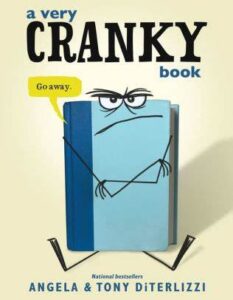
Educational Activities: A Very Cranky Book by Angela & Tony DiTerlizzi

A Very Cranky Book
Author: Angela DiTerlizzi
Illustrator: Tony DiTerlizzi
19 September 2023
Quill Tree Books
40 pages

Book description from Goodreads: “The first picture book collaboration from bestselling husband-​and-​wife team Tony and Angela DiTerlizzi is the charmingly irreverent tale of a very cranky book … who might not be so cranky after all.

Are you ready to meet the world’s crankiest book?

Cranky doesn’t want to be read. He just wants you to leave him alone. After all, there are so many other things you can do–ride a bike, play a game, or draw a picture. There’s no reason for you to be bothering him! But when other books show up for story time, will Cranky change his mind?”


Educational Activities inspired by A Very Cranky Book:

  • Before Reading–From looking at the front cover: 
    • What do you think the story might be about, based on the title and cover?
    • The book character on the front cover says “Go away!” What makes you want to NOT go away and read this book instead?
    • What do you know about crankiness? What does it mean to be cranky? What makes you cranky?
    • What emotion is the book character on the back cover feeling? Is that crankiness or something else?
    • What questions would you like to ask the author–or the illustrator!–before reading the book?
  • After Reading–Now that you’ve read the story: 
    • Was reading this book the “worst idea in the history of ideas?” Why/​why not?
    • How serious is the book character when he tells you to walk away, keep walking, and don’t come back? How can you tell?
    • How did you react when so many book friends showed up for story time?
    • Why did the cranky book finally choose to join story time?
    • Was there a moment in the book that surprised you?
    • What was your favorite part of the story, and why?
    • Do you believe the cranky book will be more cheerful in the future? Why/​why not?
    • Would you suggest this book to a friend? Why/​why not?
  • Cranky Book Storyboard: Using large paper, draw a sequence of scenes from the book, capturing its key moments. In each scene, focus on the emotions of the characters, especially the cranky book. Use speech bubbles to add dialogue from the story or create your own!
  • Emotion Wheel Craft: Make an emotion wheel showing different feelings like cranky, happy, scared, and excited. Use the cranky book’s face as a model/​guide and draw expressions for each emotion. Spin the wheel and act out or discuss times you’ve felt each emotion.
  • Story Retelling with a Twist: Retell the story from the point of view of a different character, like the green book with the monster face or the pink fairy-​tale book. How might they have seen the events differently?
  • A Cranky Book Cover: Design a new cover for A Very Cranky Book. Think about how you would represent the cranky book and other characters, and what elements you’d include to show the story’s theme.
  • Further Reading: A Very Cranky Book deals with the important topic of emotions. Here are some other picture books that also explore emotions in various ways. Which of these have you already read? Which of the others would you want to read first? (Click on any book cover for more information on these titles!)