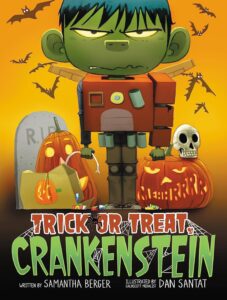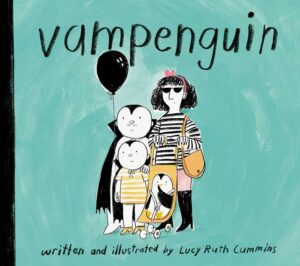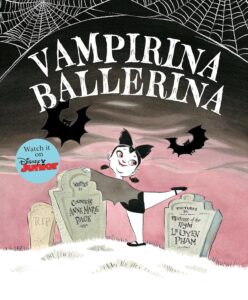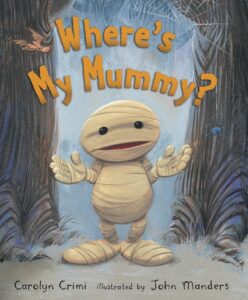
Educational Activities: Bitsy Bat, School Star by Kaz Windness

Bitsy Bat, School Star
Author: Kaz Windness
Illustrator: Kaz Windness
6 June 2023
Simon & Schuster/​Paula Wiseman Books
48 pages

Book description from Goodreads: “A little bat struggles to fit in only to learn to celebrate differences in this heartfelt picture book from an autistic perspective about starting school, making friends, and seeing what makes each person special.

Bitsy is a little bat with big star dreams of making friends at her new school. But when she arrives, Bitsy doesn’t feel like she fits in. The other kids sit on their chairs, but being right-​side-​up makes Bitsy dizzy. The other kids paint with their fingers, but Bitsy would rather use her toes. Everyone tells Bitsy she’s doing things wrong-​wrong-​wrong, so she tries harder…and ends up having a five-​star meltdown.

Now Bitsy feels like a very small star and doesn’t want to go back to school. But with help from her family, Bitsy musters her courage, comes up with a new plan, and discovers that being a good friend is just one of the ways she shines bright!”


Need some reviews on Bitsy Bat, School Star?

Enjoy this interview with Kaz about her book at The Children’s Book Review.


Educational Activities inspired by Bitsy Bat, School Star:

  • Before Reading–From looking at the front cover: 
    • Can you predict what the story might be about based on the cover?
    • Does this seem like it’s going to be a scary story? Why/​why not?
    • What emotion does the bat seem to be feeling?
    • What do you know about bats? How do they live? What do they eat? How do they see at night?
    • What does it mean be a “star”? How might that be different from a “school star”?
  • After Reading–Now that you’ve read the story: 
    • Would you recommend this book to your friends? Why/​why not?
    • How did Bitsy Bat feel at school? Why do you think she felt that way?
    • What were some of the things that Bitsy found difficult to do? How did she manage these difficulties?
    • How did Bitsy’s friends and family help her when things got tough?
    • How did Bitsy feel when her father told her she was a special star? How do you think this helped her?
    • What is something new you learned about autism from reading this book?
    • How did the other animals in the story react to Bitsy’s differences?
    • How do you think Bitsy’s experiences might be similar to those of a child with autism?
    • What can we learn from Bitsy about embracing our differences and those of others?
  • Create Your Own Cave: Like Bitsy Bat, you can create your own cozy and calm space. Find a quiet corner in your room and build a fort with pillows and blankets. Make it a place where you can retreat when you need some quiet time. This can be your “Bat Cave,” just like Bitsy’s! How do you feel when you’re in your quiet space?
  • Sound and Light Exploration: Bitsy sometimes finds things too bright or too loud. Explore your surroundings to find places or things that are too bright or too loud for you. What could you do to make those situations more comfortable? Discuss these findings with your friends or family members.
  • What Makes You a Star: Bitsy is a special star because of her uniqueness. What makes you a star? Draw a picture or write a story about what makes you special. Remember, everyone has unique strengths, and it’s our differences that make us shine brighter!
  • Design a Squishmallow: Bitsy has stuffies that help comfort her. If you could design your own comfort toy or “Squishmallow,” what would it look like? Draw a picture or describe it in writing. Remember, it’s okay to seek comfort in the things we love, just like Bitsy does!
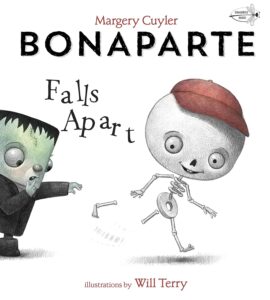
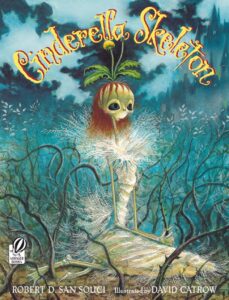
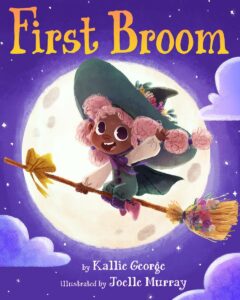
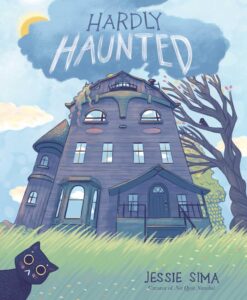
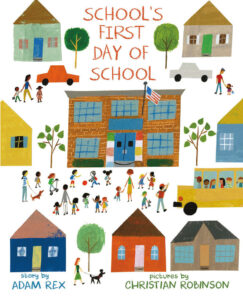
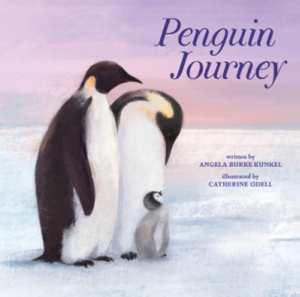
  • Further Reading–As the author explains in the back matter, the main character in this story has autism. Let’s look at some other picture books that include characters with autism to compare and contrast with Bitsy Bat, School Star. Which of these have you already read? Which of the others would you want to read first? (Click on any book cover for more information on these titles!)

Author/​Illustrator Interview: Merrill Rainey

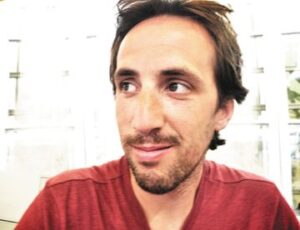
This month’s Author/​Illustrator is Merrill Rainey, a self-​described “cowboy-​boot wearing, picture book creator and paper toy maker.”

With a bio line like that, what else do you need? Well, he offers more, saying that he lives in the village of Whitehouse, Ohio, with his editor (his wife), subject matter experts (his kids), and very opinionated coworkers (a very hungry toad, and some crabby hermit crabs).

What he doesn’t say in his bio is how those subject matter experts—his kids—are PR geniuses. Witness for yourself!


With that kind of lead-​in, we have to jump straight to the interview to learn more right now!

Merrill’s Website
Merrill’s Etsy
Merrill’s Facebook
Merrill’s Instagram
Merrill’s Pinterest
Merrill’s Twitter


RVC: I realize this can be a chicken-​egg question, but I’m going to ask it anyway. What came first—the writing or the art-making?

MR: Good question. I’ve always been a storyteller, or at least I think so, but it was definitely the art-​making that came first. It’s just something I’ve always done, from drawing whenever I could, to crafting with my mom. This past year, I’ve talked a lot with students about the word “boredom” and how boredom is truly the catalyst of creativity.

These quiet calm moments are so, SO important!

RVC: I totally agree–boredom done well = creative wonders. Now, how did growing up in a large family inform your creative efforts?

MR: There was never a dull moment in my childhood–it was full of moments of creation and imaginary play. When we got bored (see there’s that word again!) we always found something to do. Looking back at it now, the time I spent with my family, these childhood moments, are what laid the foundation for the things I am creating today!

RVC: What was your intended career plan when you attended Kent State University?

MR: When I decided to attend Kent State, I didn’t really know what the intended career plan was going to be other than getting better at making art. During my Freshman registration with a counselor, she asked me what type of art I wanted to focus on, fine arts or illustration. Since I didn’t know the difference between the two at the time, the counselor sent me down to the art building where the VCD senior art show was being displayed. I walked through the gallery and what caught my eye was a piece of work where one of the graduating students had re-​illustrated the Super Fudge series as a Senior art project. I remember thinking in that moment that illustrating books is what I wanted to do.

I did almost minor in technical theater, too. I took a few set design classes but ended up not being able to continue in this path as the workload for the VCD program was pretty intense on top of working a full-​time job.

RVC: During your final summer at Kent, you had an internship that changed
everything.

MR: I interned at the Akron Beacon Journal in an art department of five other very talented illustrators/​designers. It was an amazing experience learning from each and every one of them. That art department prided themselves on the art they created for the newspaper and was known for doing so. During my time there, I worked not only on daily graphics for the paper, but I also had the opportunity to illustrate a few featured sections. Working for a paper doing editorial illustrations is where I thought I’d end up, but shortly after graduation, the newspaper industry took a turn for the worse and left me looking for work in other directions.

RVC: Talk about how you managed your early career, having a full-​time job as an in-​house graphic designer while also trying to build your own art career.

MR: For a while after graduation, I focused on the day job. Being the new person at work, I really wanted to make my mark. As I was moving up the ladder at my day job, I was losing track of what I really wanted to do, and that was to illustrate.

Around this time another illustrator by the name of Penelope Dullaghan started a blog called Illustration Friday where every week she would post a new illustration prompt. You would then illustrate your take on it, and post your creation to your own blog before the following Friday. Participating in Illustration Friday is what got me back into illustrating and rebuilding my portfolio. I would spend my evenings after work honing my craft and, long story short, in 2007 I signed with the Tugeau 2 agency working mainly on educational illustration assignments. Then in 2010, when my son Chase was born, I finally got my first big kids magazine assignment from Jack and Jill Magazine and this was the start of it all.

RVC: What went into the decision to quit the day job and launch Little Rainey
Illustration & Design LLC?

MR: A lot did go into planning this decision, but it also kind of happened organically. Shortly after Chase was born, I was working 8–10 hours at the day job then after work I would go home, we’d have dinner and put him to bed. Once he was asleep, I would go back to working on contract work until about 4 or 5 in the morning. Then, I would sleep a few hours and go back to my day job. This went on for a few years. I am not quite sure what the heck was I thinking, or how I managed this for so long, but what it came down to was that I truly wanted to succeed more than anything else! In 2012, I was eventually making enough income to quit my full-​time job and start working for myself.

RVC: That’s a bold choice. Many don’t risk it. Any tips?

MR: During this time, I was also talking with a few friends of mine who had recently started their own creative businesses. They guided me on the proper steps to creating things like an LLC, starting a business bank account, filing as a small business with the state of Ohio, and the biggest steps, finding a good tax accountant. Having a good accountant is pretty key and so worth it.

RVC: What was a regular day like in that new role?

MR: This is a good question. In all of the years I have been doing this, I have yet to figure out how to get on a normal schedule. Every time I think I can, a new project shows up and then I have to figure out how to manage multiple projects at one time. I think the key here is being as flexible as possible. Being a small business owner, you are always thinking about the current work, future projects, contracting, invoicing, and marketing of your next project.

What this change in my career path did allow me to do was to spend more time with my kids. From volunteering in their schools, being a Cub Scout Den Leader, to a Soccer Coach, I’ve loved being able to be a part of their childhood as much as possible.

RVC: How did SCBWI play into your creative journey?

MR: SCBWI has been a big part of my success. So many key moments and
opportunities in my career, like meeting mentors, art directors, and publishers, have happened because organizations like SCBWI exist and I will forever be thankful!

RVC: Please share the story of your first published book.

MR: My first illustrated published book was Asteroid Goldberga huge learning experience in so many ways. From learning about depicting cultural traditions, to designing dynamic page compositions, as well as ways to improve the process on how I now render my final art. It also taught me a lot about contracting, advances, and royalties. It was definitely a good project to get my publishing feet wet with.

RVC: What was the most useful lesson that book taught you?

MR: The most useful lesson going forward that I learned from this project, was to make sure I was involved with things like reviewing proofs, as well as making any edits to the art, and making suggestions towards the design of the book when needed. My goal in doing all of this is to ensure, to the best of my capabilities, that when my books hit the shelf, they are the best they can be!

RVC: You’re worked with a lot of children’s magazines. What are some of the
differences between that and illustrating kidlit books?

MR: They actually are very much the same, but the biggest difference is that a lot of my magazine work is geared toward interacting with the readers through activities. For a while I created a section called Color, Cut, Play! where you would have a themed set of paper toy characters and a play set to build. This featured section is what eventually turned into the concept behind the Color, Cut, Create books series.

RVC: How did you get into paper engineering?

MR: Paper engineering started as a hobby, something to do on the side between illustration gigs. It all started with me following a blog of a fellow creative, Matthew Hawkins. Matthew used to create a downloadable paper toy each week. I thought this was such a cool idea! He inspired me to start making my own creations and this is what got me hooked on cutting, gluing, and folding paper.

RVC: What’s the most common misconception about paper engineering/​toy making?

MR: This isn’t a misconception per se, but a good number of people have never heard the phrase “paper engineering” before, but once you mention pop-​up books and the process of how those types of books get created, it all clicks.

RVC: In all your experience with paper creativity, what has surprised you the most?

MR: What surprised me the most about paper creativity was not about how to do it, but how to get kids today seeing that they can do it too. One of my passions is educating students so that they can create anything with an idea and their hands. I am also an advocate for making sure that adults realize the importance of giving kids the opportunity to create and the benefits in doing so.

RVC: Talk a bit about your HarperCollins board book series, and how they’re both readable and playable.

MR: The Peek-​and-​Play series is definitely a book that you can play with. It does have words, but those words are meant to get kids up moving, making sounds, imagining and playing! They may not be the best books to quiet down a child at bedtime, but they are great books for read-​out-​loud times! If you haven’t heard it yet, check out the ROAR! I’m a Dinosaur song. It’s a pretty catchy tune! You can check it out here (be sure to scroll to the bottom of the web page).

RVC: What’s next for that series?

MR: There are no official plans yet, but there are always new ideas in the works.

RVC: What do you enjoy most about your Jack & Jill comic series that’s found
bimonthly in the pages of Jack and Jill magazine?

MR: Everything! How could you not enjoy having the opportunity to illustrate a comic for kids. It’s awesome to think that I have the opportunity to inspire future artist just like I was inspired by comics like Peanuts, Spider-​man, and Calvin and Hobbes!

RVC: You like to experiment with art tools. What are some of most awesome failures—and successes!—you’ve created?

MR: I guess I can say that my work is full of awesome failures and successes! I say this because I use moments of failure as learning experiences to help better my projects. When I talk with kids, I mention that when I start to create anything, I always start with a written or sketched-​out plan. Sometimes though, that initial plan doesn’t always work out and I have to do some problem solving to think through how I’m going to fix the issues that arise. I refer to this process as a trial-​and-​error phase. This phase is so important to the creation of anything.

For instance, I recently created a build-​your-​own 3D Haunted House craft for Highlights Press. I built 12 different prototypes of the same house before I had everything where I wanted it to be. I wanted to make sure that before this project went to press, the activity of building the house would give the end user a sense of accomplishment while having fun creating it.

RVC: Beyond creating the awesome promo copy we see in the photo at the top of this interview, what else have your kids contributed to your career?

MR: My kids are a HUGE part of my career! I consider my kids my subject matter experts. They are always inspiration for new projects, but they have also doubled as hand models, voice over actors, and product testers. My kids built every paper toy in the Color, Cut, Create series and watching them allowed me to witness where they had trouble in the building process. This allowed me to see firsthand what needed to be improved upon. My daughter even got the honor of modeling for the back cover of OINK! I’m a Pig.

RVC: One last question for this part of the interview. What new Merrill Rainey projects should we be on the lookout for?

MR: I am currently marketing my next illustrated picture book which is a reimagined Florence Parry Heide classic picture book titled Giants Are Very Brave People set to release on August 1st, published by Holiday House Books.

I am also working on two new projects. One is another paper craft book with Odd Dot titled Building Block Books: My First Town. This book is a take on the classic children’s building blocks where young builders will punch out, build, and stack a 3D city of their own. I am also working on a hybrid picture book/​graphic novel with Hippo Park currently titled On The Air With Dr. Doodle Bug.

RVC: Alright, Merrill. It’s time for the SPEED ROUND. Zippy questions and zappy answers, please. Are you ready?

MR: YES!

RVC: If you were a superhero, what would the superpower you’d tell everyone you’d want?

MR: To be able to fly! But let’s be real, as I get older, I don’t know if I could handle the extreme heights. 😉

RVC: What would be the ACTUAL superpower you’d wish to have?

MR: I always wanted to be a Ninja Turtle when I was growing up!

RVC: Five things you can’t do your job without?

MR: A pen, good music, color, my creativity, and of course my hands!

RVC: Most opinionated pet—a very hungry toad, or a crabby hermit crabs?

MR: Hermit Crab… my son has a bad habit of not giving his crab water frequently enough, and just the other night, the crab literally took his drinking sponge and threw it across the cage to get his attention!

RVC: A kidlit illustrator who doesn’t get as much attention as they deserve?

MR: Gosh… this is a good question as there is so much good art being created out there today that it’s hard to see all of it! But if I take a step back in time, I collect classic Little Golden Books…and there is a time where a lot of these books didn’t credit the illustrator but the art is fantastic!

RVC: Your paper engineering philosophy in five words or less?

MR: Anything can become a reality!

RVC: The best thing a child ever said about something you created?

MR: If I could only remember every comment made! But if I had to pick one, or maybe two, I think it’s my kids quotes shown in the picture above. The two of them are a big part of why I do what I do and the explanation for that I’ll save for another interview!

RVC: Thanks so much, Merrill!

MR: Thanks so much for having me, Ryan!

Picture Book Review: Hooked On Books by Margaret Chiu Greanias (illustrations by Kristyna Litten)

Peachtree
27 June 2023
32 pages

This month’s PB review is by Ryan G. Van Cleave (Owner/​Operator of Only Picture Books) and Connecticut-​based author/​illustrator Abi Cushman.

–Ryan’s Review of the Writing–

Hooked on Books dives deep into the heart of a bookworm named Pearl, an anglerfish who resides in the far reaches of the ocean’s twilight zone. With her glowing lure/​reading light, Pearl embarks on a journey that many readers will find relatable–she wrestles with finding the oh-​so-​perfect reading spot undisturbed by her sea creature buddies.

Pearl’s story begins with her anticipation to dive into a long-​awaited book about a kraken’s quest for happiness. However, her excitement is soon dampened by the constant interruptions from the underwater community (including eels, jellyfish, and mollusks), all eager to peek at her book. In her desperation for peace and quiet, Pearl explores the darkest corners of the sea, even braving the midnight zone where yeti crabs mistake her lure for a disco ball.

Finally, she finds solitude in the tranquil darkness of the abyss, a place untouched by the relentless interruptions. However, Pearl soon discovers that blissful silence can become a lonely place, leading to an unexpected realization: sharing her love for books might not be so bad after all.

In sum, Hooked on Books is a charming story that captures the frustration and the eventual compromise that comes with the territory of being an avid reader. Litten’s charming, whimsical illustrations breathe life into the narrative, illuminating the deep-​sea setting with captivating contrasts of light and dark–I’ll let Abi explain that a bit more. At the same time, Greanias’ adept storytelling provides a gentle reminder about the importance of setting healthy, appropriate boundaries while also appreciating the company of others.

This eye-​catching 32-​page picture book is likely to resonate with young readers, whether they live on land or fancy a life far under the sea.

4.25 out of 5 pencils


–Abi’s Review of the Illustrations–

In Hooked on Books, Kristyna Litten has created not only engaging and expressive characters, but also visually stunning scenes. This is quite a feat for a story that takes place deep down in the dark ocean with a main character that, in real life, let’s just say does not look very approachable.

But Litten accomplishes this by using a limited color palette of varying shades of blue for most of the sea creatures and scenery, and reserving a bright orange hue for the main character, an anglerfish named Pearl, paired with a burst of bright yellow to depict her lure/​reading light. In doing so, Litten skillfully evokes a deep sea atmosphere, but is still able to show details of other sea creatures, plant life, and scenery. The eye naturally follows the brightly-​colored Pearl on each spread, with her funny pouty face as she tries to get a moment alone to read her book.

One thing that I thought would be imperative in this book was the effective use of light and shadow because a lot of the magic of deep sea anglerfish is just how dark it is way deep down in the ocean, and just how bright the anglerfish’s lure is. Fortunately, Litten rose to this challenge, and depicts light and shadow beautifully. I especially enjoyed the spread where Pearl is swimming away from all the sea creatures leaving behind a trail of light. It is such a fun scene, and the light trail really boosts the humor of the situation.

Another challenge Litten had to solve was how to show what Pearl was reading. Litten chose to make the book look like a shell, and then the characters from the book emerge from it as simple outlined forms as opposed to fully-​rendered characters. This was a really clever way to distinguish the characters and action in Pearl’s book from what was really happening around Pearl.

I also really appreciated how Litten used creative layouts to effectively show Pearl’s vertical travel. For example, as Pearl journeys deeper, one spread has the reader flip the book on its side to make use of the full vertical double page orientation. As Pearl journeys up, Litten employs vertical panels to emphasize her ascent.

My favorite spread zooms out and shows a myriad of sea creatures fanned out from Pearl in a semicircle as she tries to hide in a shipwreck to get a moment of peace. Of course she’s illuminated by her burst of light at the bottom of the page. Kids will enjoy looking at the different fish and other creatures surrounding her.

In conclusion, it’s clear that Litten and the design team at Peachtree were very thoughtful in their choices about color, light and shadow, and design. The result is a book that flows wonderfully and will capture readers’ attention with every spread all the way through to the end.

5 out of 5 crayons


Abi Cushman is the author-​illustrator of funny picture books, including Animals Go Vroom! (Viking), Soaked! (Viking), and her nonfiction debut, Wombats Are Pretty Weird: A [Not So] Serious Guide (Greenwillow, 2023). She has also worked as a web designer for over 15 years, and runs two popular websites of her own: MyHouseRabbit.com and AnimalFactGuide.com, which was named a Great Website for Kids by the American Library Association. In her spare time, Abi enjoys running, playing tennis, and eating nachos. (Yes, at the same time.) She lives on the Connecticut shoreline with her husband and two kids.

For exclusive sneak peeks, wombats, and special giveaways, subscribe to Abi’s newsletter.

Conference Roundup: 2023 FL SCBWI Florida Conference Report

I gave a recap of the 2022 FL SCBWI conference last year and people liked it so much that I figured I’d try it again this time around. I’ll include a few snapshots, too, of this year’s event which happened earlier this month at the Embassy Suites in Ft. Lauderdale.

But make no mistake–reading about a conference is never the same as being there. If you like what you’re seeing below, plan to attend an event live when you can!

**Everything listed here came directly from my scribbled notes. Any mistakes or misunderstandings are likely mine. If you’re one of the folks I quoted below and you’d like me to amend my quote, please just let me know!**


Karen Grencik, Literary Agent and Co-​founder of Red Fox Literary

Be the kind of person others want to work with. Those are the people that really do find success.”


Carter Hasegawa, Editor at Candlewick Press

Mine your personal history. Fight for originality. Disrupt expectations.”


Winsome Bingham, Acquisitions Editor at Reycraft and Author of Soul Food Sunday

When we think about pacing, it’s the movement of the story, and the speed at which your story moves on the page. I always tell people that, for me, as a math person, pacing is mathematical as well as musical. Because when you’re thinking about pacing, you’re doing a lot of counting, you’re counting spreads, you’re counting beats.”

There’s a reason why dream is a noun and a verb. It is because you can do it. And you can also think about it as a tangible object of goals, something to get to. But it doesn’t really happen when you’re asleep. You can MAKE it happen.”


Leah Henderson, Author of The Magic in Changing Your Stars

I had to take a step back. And I had to say, first and foremost, we need to protect ourselves. We need to make sure that we are okay so that we can tell the stories that we really want to tell. So, for about a year and a half, I walked away from writing. And it was this thing where I was like, the thing that I love isn’t loving me back right now. So, I need to go find other ways to fill my well. At the beginning, it was not easy. I felt very guilty. And I did try to keep writing, but it just was not working. So, I said just take the time away. That’s what I did.”

Just lean into who you are, as a person. There is something about each and every one of us–there are probably more than one somethings about each and every one of us–that is, at the core, something a kid needs to hear, or needs to see, or needs to understand about someone else on this planet.”


Marcie Colleen, Author of Penguinaut!

I often say that kidlit is the one place I have found where a stranger really is a friend you haven’t met yet.”

It’s all about forward motion. When faced with the challenge of running 26.2 miles, the thing you absolutely don’t want to do is stand still or turn around and run in the wrong direction. Even if you must walk, even if you must skip or dance or limp, it’s all about forward motion. I think it’s the same in writing and illustrating. We set our sights on a goal such as completing a book or a portfolio, or getting to a certain milestone in our career. Progress is progress no matter how slow.”

Run the first third with your head–that’s your craft. Run the second third with your legs–that’s everything you’re capable of doing that you’re putting into action. Run the final third with your heart.”


Debbie Ridpath Ohi, Author and Illustrator of Where Are My Books?

Your mental health needs to come first. Remember that even if you feel like nothing is happening in your career, no matter what you try, do not lose hope. Be kind to yourself. And that’s so, so important because I think we were all really tough on ourselves. And we all push ourselves so much, which is good sometimes. But try not to compare your own path to that of other people who may not being going through the stresses and challenges you face. I cannot emphasize that enough. Be kind to yourself.”


Liz Garton Scanlon, Author of All the World

What is important to know is that metaphors go way beyond that kind of decoration, or window dressing. They step us outside of the daily flow of prose that we use regularly and slow us down and emphasize that which they’re describing, worth pointing out. So they’re decoration, but they’re also emphasis.”

That’s the biggest and most important takeaway when we’re talking about metaphor–trying not to find the tools that match exactly. Our job is just to focus on that intersection…so, if we’re going to compare, for example, anger to coffee, they can be really dissimilar in almost every way. One exists in your chest or head, the other comes in a cup. One might be the result of the national news or a fight with your spouse, the other comes from roasted grounds. One results in traffic tickets or jail time, the other tastes good and can help your performance on tests. But both are hot and prone to boiling over. Both can burn. And that one intersection is all you need.”


Crowds will one day swarm to your ideas and they will look to you for guidance, eager to follow, and they will follow. You are more than a single note played again and again. You are a symphony. You are sounds plucked from all the places you’ve been and all the people you’ve met and all the feelings you felt. You are blues and pinks and loneliness and laughter, mismatched scraps accumulated over time and stitched together into a kind of patchwork. And even when your pattern loses its design, when it grows lopsided, or tangled, or is hard to follow, it will be beautiful. We, writers, are beautiful.”


Editor Interview: Hilary Van Dusen

This month’s Insider Interview is with Hilary B. Van Dusen, senior executive editor at Candlewick Press. As of 2021, she’s acquiring titles for MIT Kids and MITeen.

Hilary is the editor of award-​winning nonfiction titles including Courage Has No Color: The True Story of the Triple Nickels by Tanya Lee Stone; Jazz Day: The Making of a Famous Photograph by Roxane Orgill, illustrated by Francis Vallejo, The Impossible Rescue: The True Story of an Amazing Arctic Adventure by Martin W. Sandler, Schomburg: The Man Who Built a Library by Carole Boston Weatherford, illustrated by Eric Velasquez, Beyond Magenta: Transgender Teens Speak Out by Susan Kuklin, and Ada and the Galaxies by Alan Lightman and Olga Pastuchiv, illustrated by Susanna Chapman.

What a list, right?

Many of the nonfiction books she acquired explore social issues, science, and/​or history, so clearly there’s an interest there which we’ll explore below! Before she took over MIT Kids and MITeen, Hilary also edited middle grade and young adult fiction by such authors as:

Let’s learn more about Hilary right now!


RVC: So, I’m going to start with something most people won’t relate to, but I suspect you will. Despite me putting “Ryan G. Van Cleave” on my published writing, I regularly get called “Mr. Cleave” or “Mr. Van” or something equally mindboggling. Is it fair to assume you experience your own version of this gaffe?

HVD: Ok, not the question I was expecting, but, yes, having a two-​word last name is a challenge, not to mention a first name that can easily be misspelled. Luckily for me, though, in my professional life, I am usually referred to by my first name, but when the two-​name thing comes up, I get Ms. Dussen–which is not only incorrect, but incorrectly spelled and pronounced!

RVC: On a scale of smiling rainbow unicorns to apocalyptic acid storms, where do these kinds of missteps fall for you?

HVD: There are two smiling rainbow things that used to happen more frequently than it does now. I share a last name with a pretty well-​known retired adult editor from Harper. When I go to conferences, I will often be asked if I am his daughter. For the record, I am not! But the idea of a legacy career makes me a bit warm and fuzzy.

I am also asked if I am married to author-​illustrator Chris Van Dusen… nope, not that either.

RVC: For the record, I’m also unaffiliated with the jewelry brand Van Cleef & Arpels as well as the actor Lee Van Cleef, as much as I wish it were otherwise. Now that THAT’s out of the way, let’s talk picture books. How has your personal experience with picture books from your childhood informed your approach to editing and selecting new projects?

HVD:  I am the youngest of 4 kids and had the benefit of a library built by my siblings before me. There were the standards like Winnie the Pooh and Dr. Seuss (I memorized The Cat in the Hat and astonished my babysitters that I could “read”), but I also made frequent trips to the library and was given free reign of the children’s room with the limit of 5 books per visit, according to Mom.

RVC: Oh yeah. I know all about those Mom-​created book limits!

HVD: Having that freedom to choose books, the time to ponder my choices, and a home atmosphere that was conducive to spending time (a lot of time) with books, gave me an almost innate understanding of how books can be and should be part of a kids’ life, whether for pleasure or for information. As I grew into my editing career, I concentrated on nonfiction books, because I wanted to publish true stories–incredible stories that don’t need to be made up, stories that hold attention like any piece of fiction.

RVC: How did you land your first editing job?

HVD: I went the internship route, but how I got my first internship is a bit of a story in itself. I was introduced to Anita Silvey, then Editor in Chief of The Horn Book, through the former children’s book editor of The Boston Globe (back when there were regular children’s book reviews in The Globe). She happened to be one of the moms who led a playgroup for my buddies and me when we were preschoolers.

RVC: Lucky you!

HVD: There I was in college, looking for a summer opportunity, and contacting a writer for the The Boston Globe, someone who hadn’t known me since I was 4 years old–a little daunting at the time, but she was incredibly gracious and helpful. Anita Silvey and her staff took me on as a summer intern, which led to a January internship, and a job offer before I graduated from college. Working as an editorial assistant at the Horn Book was like going to grad school. I handled and read every children’s book published for about 2 ½ years before I took an editorial job at Viking.

RVC: What was the first nonfiction picture book you worked on solo?

HVD: I worked on my own books when I took a job at Little, Brown in the late 80s, early 90s. I started a picture book series called Portraits of Women Artists by Robyn Montana Turner that featured such greats as Frida Kahlo, Mary Cassatt, Georgia O’Keeffe, and others. Working on those books ignited my fire for editing nonfiction.

RVC: What lesson(s) did that book series teach you?

HVD: The Portraits of Women Artists series gave me a crash course in clearing permissions for images and how those permissions influence a book’s budget. That series also showed me how telling a person’s life story through their art can be an inspiring way to talk about a person.

RVC: You’ve worked on a lot of books between then and now. I’m curious about your current thinking as an editor. How do you balance the need for concise and straightforward text with the desire to create engaging and memorable storytelling in picture books? And has that idea changed over the years?

HVD: Good question. Many of the authors I am working with now come from STEAM fields and not necessarily from the children’s book writer community. Many of them are experts in their fields of interest or research, who are committed to reaching children to introduce STEAM concepts. The editing process revolves partly around working with them to think about the audience and how to engage them with the facts with concise language and partly around making sure the narrative arc is successful. As an editor I am committed to planting the seeds of topics that children may not have thought about or been exposed to in a way that will inspire them to want to learn more or dive deeper into a topic.

RVC: You have been especially committed to books about history and culture. Is that a fair statement?

HVD: Yes, that is true. I believe that looking at where we we’ve come from can tell us a lot about where we are today. For instance, I published Underground Fire: Hope, Sacrifice, and Courage in the Cherry Mine Disaster by Sally Walker. That book is centered around a disastrous mine fire, and in the telling covers migrant workers, mine safety reform, and response to tragedy–all topics that are relevant today.

RVC: Let’s talk about a history/​culture picture book mentioned in the introduction—Jazz Day: The Making of a Famous Photograph by Roxane Orgill. How did that project come about?

HVD: I had been working with Roxane Orgill on a few books prior to Jazz Day. She ran across the iconic photo of the jazz musicians and researched the photographer and how the photo came about. Turns out it was an incredibly interesting progression of events. She proposed the idea of telling the story of the photograph–an idea that I loved for the reasons stated in my answer to the question above. It was literally a snapshot of a moment in time that said so much about the past, present, and future.

RVC: How does your editorial process differ with poetry (like in this book) instead of a prose manuscript?

HVD: Editing poems that also cumulatively tell a story is different in some ways from editing prose but the same in others. The narrative arc of the whole story has to be taken into consideration and once that is set, the editing is much more at a line and word level. Every word in a poem has a purpose and a beat that needs to be considered. And in the case of Jazz Day, the poems were conveying information about the time and place in history. It takes several passes through the work to address all of those things in an edit. Not to mention conversations with the author about particular words, the placement of the words, and the need (or not) for them.

RVC: At what point did you realize Francis Vallejo was the right illustrator for the job?

HVD: Francis Vallejo was new to children’s books, but an obvious bright star. The then Artistic Director, Chris Paul, showed me his samples, and it took very little convincing to know he was perfect for the job and Roxane Orgill agreed. He had an interest in jazz music, he was willing to work with the photograph and incorporate it into the book. He also did a ton of research and modeling to get everything right–he was incredible to work with.

RVC: People believe you can’t judge a book by its cover, but is that axiom true for picture books? Please explain the importance of a strong and eye-​catching cover design for a picture book and how that factors into your editorial decisions.

HVD: The way we create picture books at Candlewick, the cover comes late in the process, after the text is final and the sketches are done. At the point we are designing a cover, many editorial decisions have been made about the book as a whole, but deciding on the right image for the cover is one of the biggest editorial decisions. We want the cover to be representative of what the reader is going to get inside without giving too much away. We want the image to draw in people who glance at it for a few seconds on a shelf. We also want it to be a draw at the size of a thumbnail on a web page. We consider the weight or importance of the bylines in relation to the imagery. If the book is funny, the image needs to convey that, or mindful… you get the idea. But there is also the consideration of trends or standing out from trends. I could write about this for pages, but I think I’ve addressed the basics!

RVC: Let’s help out some aspiring writers. In your experience, what are the most effective ways for picture book authors and illustrators to build a dedicated readership and fan base?

HVD: Beyond writing a book that will attract readers, it’s important for creators to engage with their audience in some way, either through social media and blogging or doing visits to school, festivals, bookstores. The school and library piece cannot be underestimated.

RVC: Totally agree!

HVD: Find ways to engage with teachers and librarians about your work and how it can be used with kids. Publishers do not have a marketing budget to put behind every book, so sometimes it is up to the author to do more legwork in terms of publicity. Lastly, keep writing and publishing, so that you have new titles to talk about and work with. Keep working on your craft so that the next book tops the last.

RVC: Speaking of building a fan base…let’s talk social media. While you have a private Instagram account and you joined Twitter in 2009, you don’t seem especially active online. How purposeful is that choice?

HVD: I am a pretty private person. I believe in a hard line between my professional life and my personal life, which is why I don’t engage much on social media. A public fan base or discussion about my work or my authors on social media is not why I do what I do. I also have published a few books that are often banned, and I do not want to be subjected to the wrath of the banners out there!

RVC: One final question for this part of the interview, Hilary. It’s Brag Time! What’s an upcoming project or two that you’re really excited about?

HVD: Just coming out is Unseen Jungle: The Microbes That Secretly Control Our World, the first book in a young middle grade series called Your Hidden Life by Eleanor Spicer Rice and illustrated by Rob Wilson – it’s simultaneously hilarious, gross, informative, and entertaining in a you-just-can’t‑look-away way. (Talk about covers… Unseen Jungle has a cockroach on a toothbrush on the cover!) I’m also excited about a stylish and beautiful picture book biography called Santiago Saw Things Differently by debut author Christine Iverson and illustrated by Luciano Lozano about the father of neuroscience Santiago Cajal, an artist at heart, who, through his art, discovers the truth about neural pathways.

RVC: Alright. With that, it’s time to shift gears from Standard OPB Interview Stuff to Lightning Round OPB Wondrousness. Clearly, speed and succinctness are at a premium, because, well, lightning! Are you ready for the challenge?

HVD: Bring it on, Ryan!

RVC: Who’s your all-​time favorite picture book character?

HVD: How can I play favorites???? There are so many I love! Lyle the crocodile, Mercy Watson, the pig, the sheep in Sheep in a Jeep, the Lion in Library Lion, the list goes on (interesting that these are all animals, what does that say about me? Maybe I shouldn’t ask? 😊).

RVC: What book(s) are on your nightstand right now?

HVD: Demon Copperhead, The Personal Librarian, and The Emperor of All Maladies.

RVC: If someone narrated your life, who would you want to have the job?

HVD: Kate DiCamillo.

RVC: What’s the One That Got Away?

HVD: Chris Van Dusen, when I worked at Little, Brown. Ironically, I ended up working for his publisher in the end.

RVC: What’s the last picture book that actually made you LOL?

HVD: Every one of Jon Klassen’s books.

RVC: Describe the perfect picture book in three words.

HVD: Narrative. Art. Seamless.

RVC: Thanks so much, Hilary!

Educational Activities: Billy the Kid Makes It Big by Dolly Parton and Erica S. Perl

Billy the Kid Makes it Big
Author: Dolly Parton and Erica S. Perl
Illustrator: MacKenzie Haley
25 April 2023
Penguin Workshop
40 pages

Book description from Goodreads: “French bulldog Billy the Kid was born with an ear for music. And not just any music. He loves barking to the beat of country music! So Billy sets out to Nashville to sing his heart out.

But when he meets some big bullies at the Battle of the Bow-​wows, Billy worries he’s barking up the wrong tree. He’ll need his favorite songs (“Jowlene” and “I Will Pawlways Love You,” of course), a group of scrappy new friends, and his favorite country music star to regain self-​confidence and be the star he always knew he could be.

Written by Dolly Parton with Erica S. Perl and illustrated by MacKenzie Haley, this is a delightful picture book about standing up to people (and dogs) who put you down and finding the drive to achieve your dreams.”


Need some reviews on Billy the Kid Makes it Big?

Enjoy this interview with Dolly about her book at Good Morning America.

https://www.goodmorningamerica.com/culture/video/dolly-parton-talks-new-childrens-book-billy-kid-98821887


Educational Activities inspired by Billy the Kid Makes it Big:

  • Before Reading–From looking at the front cover: 
    • What do you already know about Dolly Parton?
    • Can you predict what the story might be about based on the cover?
    • Who or what is Billy the Kid?
    • What does it mean for someone to “make it big”?
    • How much of a role will music play in this story?
    • How happy does the dog on the cover seem to be?
  • After Reading–Now that you’ve read the story: 
    • What was the main conflict in the story, and how was it resolved?
    • How much did you enjoy the puns (“ruff day” and “true muttropolitan” etc.)?
    • What did you enjoy most about the French bulldog, Billy the Kid?
    • What lesson do you think the author wanted readers to learn from the story?
    • Which part of the story was your favorite, and why?
    • How did the illustrations help to convey the story’s message and enhance the overall reading experience?
    • Were there any moments in the story that surprised you? If so, which ones?
    • Would you recommend this book to your friends? Why/​why not?
  • Billy’s Adventure Map–Can you remember all the places Billy went in his adventure? Let’s draw a big map of his journey. You can draw his home, Nashville, the “Battle of the Bow-​Wows” stage, and any other places you remember. Don’t forget to show how Billy faced the bullies and became a star!
  • Billy’s Music Magic–Do you like music just like Billy? Let’s write our very own songs! Think about what makes you happy, what dreams you have, or a time when you were really brave. Write down your ideas and turn them into a cool song. If you’re not sure about a whole song, that’s okay. Even a few lines or a catchy chorus will be awesome!
  • You’re Special, Just Like Billy–Billy was different, but that’s what made him special! Now, it’s your turn to show how special you are. Draw or write about something that makes you different and why you’re proud of it. Maybe you’re really good at jumping rope, or you can whistle super loud. Anything that makes you, YOU! When we’re done, we can share and celebrate how different and amazing we all are.
  • Further Reading–This book is about a lot of things, but dealing with bullies is an important part of this story. Let’s look at some other picture books about dealing with bullies. Which of these have you already read? Which of the others would you want to read first? (Click on any book cover for more information on these titles!)