Author Interview: Lindsay H. Metcalf

This month, we’re thrilled to welcome Lindsay H. Metcalf to the Only Picture Books Author interview series! Lindsay’s lyrical nonfiction and activist poetry have won plenty of awards—including the Green Earth Book Award and the ILA Social Justice Literature Award—and her growing body of work continues to inspire young readers to care about the world and their place in it.

From Beatrix Potter, Scientist to Farmers Unite!, No Voice Too Small, and the upcoming Tomatoes on Trial, Lindsay tackles unexpected topics with heart, clarity, and a journalist’s curiosity. She’s also just plain fun.

When she’s not researching or writing, Lindsay plays ukulele, sings pop parodies, and hangs out with her family (including a mischievous puppy and an old cat!) in rural Kansas, not all that far from the farm where she grew up.

Let’s get to know Lindsay!


RVC: You started as a journalist. What made you decide to shift from newspapers to children’s books?

LHM: I had two babies in a seventeen-​month span and decided to stay home with them. In those early days, the library and reading fueled our daily rhythm. I hadn’t picked up a picture book since I was a child, and wow, had they evolved! Discovering titles such as Stuck by Oliver Jeffers and I Want My Hat Back by Jon Klassen, I loved them as much as my kids did. I thought, how hard could it be to write one? Boy, was I naïve.

RVC: Been there!

LHM: It took me two years of fumbling with fiction manuscripts to discover that, actually, I’m much better at nonfiction. Duh—I was a journalist. I didn’t enjoy reading nonfiction as a kid, but as an adult I realized my love of narrative nonfiction where the truth comes alive as sensory-​laden story.

RVC: What skills from journalism carry over into your work as a nonfiction author?

LHM: One of my journalism professors used to say, “If your mother says she loves you, check it out.” That emphasis on vetting research has served me well in all kinds of nonfiction writing. I also grew a thick skin as a newspaper reporter. With daily deadlines, my editors didn’t have time to sugarcoat their critiques. I learned to detach my ego from the writing, which has served me well with the endless flow of rejections in kidlit.

RVC: Let’s jump right to your picture book debut, Beatrix Potter, Scientist. How did that project begin?

LHM: I happened upon this post from The Marginalian detailing Beatrix’s early work as a mycologist. She had written a paper for the Linnean Society of London—what?? Although her books were burned into core memories, all I could tell you about her was that her name appeared in all caps on her book covers.

I loved the idea that Beatrix had been more than one thing—a scientist and a children’s author, and later a conservationist and sheep farmer—pivoting just like I had in my own career. When I discovered that her extensive diary detailed her scientific research, I cuddled up with her words not as a child with a bedtime story but more like two friends chatting over tea.

RVC: What surprised you most during your research into Beatrix’s life and work?

LHM: To keep her parents from reading her diary, she wrote it in a letter-​for-​letter substitution code, later cracked by researcher Leslie Linder. She wrote near-​daily entries for sixteen years. Today anyone can read The Journal of Beatrix Potter from 1881 to 1897, a testament to her brilliant mind and determination.

RVC: That’s amazing. Thanks for sharing all of that! Now, let’s talk about Farmers Unite!, which feels especially personal given your Kansas roots. Did you grow up hearing about the 1979 tractorcade?

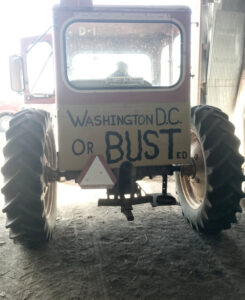
LHM: I did not! That’s why I was so amazed when I saw this picture of a local farmer’s tractor in 2016.

Why on earth would this 1940s tractor be driving from Kansas to Washington, DC? After some Googling, I found out about the American Agriculture Movement protests. In January 1979, farmers from points across the country formed tractor parades—“tractorcades”—thirty miles long en route to the nation’s capital. The movement remained active through the Eighties and inspired Willie Nelson and friends to host the first Farm Aid concert. I remembered the concert but had no knowledge of its roots.

I felt compelled to tell the farmers’ story of fighting to keep their farms alive during the farm crisis—and fighting to continue putting food in the bellies of their fellow citizens. I began writing this story at a time when gun violence protests were sweeping the country and wanted to tell the story of how farmers had found their own way to raise their voices. Today, with tariffs, climate change, and other factors, food producers still face livelihood-​threatening issues each day. Yet their stories are rarely told.

RVC: No Voice Too Small and No World Too Big spotlight youth activism. What did you learn from the young people featured?

LHM: I learned that if young people have the creativity, persistence, and fortitude to speak up and work together to make change, then adults have no excuse.

RVC: Both books have co-​editors working alongside you. How did that process go?

LHM: It went so well that we are currently working on two follow-​up projects together. My co-​anthologists Jeanette Bradley (also the illustrator) and Keila Dawson and I will release a third title in the young activists series in June 2026. It’s called No Brain the Same: Neurodivergent Young Activists Shaping Our Future, and it won’t be long before we can reveal its gorgeous cover! We are also working on a meaty middle-​grade nonfiction project that hasn’t been announced.

RVC: Let’s talk tomatoes! What inspired your almost-​here picture book, Tomatoes on Trial?

LHM: A Facebook friend posted a meme about the 1893 Supreme Court case in which tomatoes were declared a vegetable. My mind churned with the possibilities for a children’s book. Immediately I could see the layers: courts/​debate, food fight humor, history… With my curiosity piqued, I dove into the research rabbit hole and learned the story of produce merchant John Nix, who imported a boatload of Bermudan tomatoes and was slapped with a 10 percent vegetable tariff. Nix believed tomatoes were fruits and took the New York Customs House collector to court.

RVC: What made this story feel important for kids to know?

LHM: When I started working on the story in 2021, I imagined kids using the book as a springboard for learning to research, verify sources, construct an argument, and hold debates. Kids tend to get indignant when I tell them that the Supreme Court declared tomatoes a vegetable.

But as the book releases in August 2025, there’s a whole other layer that I didn’t see coming: tariffs. The Nix v. Hedden case centered on the 1883 Tariff Act. Tariffs fell out of favor for many years, now, under the Trump administration, they’re back. This book is a low-​stakes introduction to that concept.

RVC: Can you share a craft challenge you faced while writing Tomatoes on Trial—and how you solved it?

LHM: No one had written a book about John Nix, so the only information I had about him was the snippets I found in historical newspapers. I had the bones of the Nix v. Hedden case, but not enough to write a picture book biography. So initially I set out to write about the history of tomatoes and how they were plagued by misinformation for centuries. The first drafts had a Magic School Bus feel, with an adult farmer sharing shocking tomato stories (including the Supreme Court case) with two fictional kids. And it wasn’t working.

Finally my friend and nonfiction guru Kirsten Larson helped me see how to cut through the morass with an episodic narrative rather than a full-​fledged biography. This helped me dig into scenes where “Team Fruit” and “Team Vegetable” flung dueling definitions. Nix v. Hedden is a simple case and inherently kid-​friendly, so this approach let me lean into the humor and write something surprising and relevant.

RVC: What’s your favorite part of the research process?

LHM: It’s that moment when, after you think you’ve uncovered every little fact about your subject, you do another search for good measure that turns up new details.

RVC: And the hardest part?

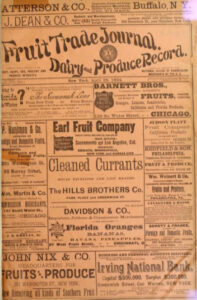
LHM: Image research! For Tomatoes on Trial, I had so little information about Nix that I didn’t know what he looked like. When Calkins Creek acquired the manuscript, they asked me to find images for the back matter, and it became a personal mission to find Nix. Finally, after weeks of searching, I found his obituary in an obscure online archive of the Fruit Trade Journal and Produce Record. To my delight, it included an etched portrait of Nix. I needed only a handful of images for the back matter, but I collected dozens in a secret Pinterest board and eventually shared them with illustrator Edwin Fotheringham. Nonfiction illustrators have such a difficult job, because they have to think about details that aren’t in the text: period clothing, architecture, etc. If I am already doing that research, I may as well share.

RVC: What does a typical writing day look like for you?

LHM: I am a stay-​at-​home mom of two teens, so there is no typical writing day, other than constant interruptions, chores, errands, and appointments. In between I try to list tasks I can do the next time I sit down with my computer. I typically work from the couch, feet up, with my Cavalier King Charles, Gus, and my 21-​year-​old tabby, Gertie, fighting for lap space.

RVC: Do you approach writing differently when the audience skews older (like for your YA title Footeprint)?

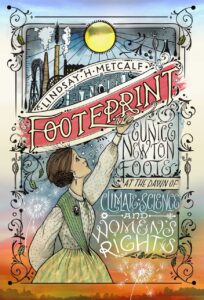
LHM: Yes and no. Footeprint: Eunice Newton Foote at the Dawn of Climate Science and Women’s Rights (February 2026, Charlesbridge), started in my mind as a picture book. Eunice was the first to discover carbon dioxide’s warming properties in 1856, and yet the “father” of climate science is considered to be one of her peers, John Tyndall, who published similar research three years later.

No one had written about her in a traditionally published book and I felt drawn to tell her whole story. It had climate science. The first women’s rights convention at Seneca Falls. Her own patented inventions and her husband as US patent commissioner. Meanwhile, their lives were intertwined with the nascent industrial revolution and the very seeds of climate change.

The best thing I did was write what I needed to write without placing restrictions on myself. I usually start wrapping my head around biography research by making a giant timeline of every fact I know, and then identifying a unifying thread. This book wanted to be more than a picture book, so I shoved my self-​doubt to the side and wrote it as it begged to be written. Her story came out in poems, and I had no idea it would be considered young adult until the book was acquired and my contract specified it.

RVC: A lot of kidlit writers seem to have stories that “came out in poems” these days. Why did this choice seem like the best option for telling this story?

LHM: It worked for several reasons. The subject matter was emotional, with a woman fighting for her right to be a scientist and inventor in an era when married women could not own property or hold patents. While I could feel the emotions behind the facts, I wanted to stick as closely as possible to nonfiction. I found letters written by Eunice and her family later in her life, but I had nothing but her formal patent applications for the time period that formed the crux of the book. Poetic devices—metaphor in particular—create ways to convey emotion without straying from facts.

Another aspect I loved about telling the story in poems was the choppy nature of a novel-​in-​verse. Each poem tells its own miniature story, without the need for much transition. In places where I had gaps in facts—sometimes years—the novel-​in-​verse form helped me bridge those pretty seamlessly through white space and creative poem titles.

RVC: What’s your best tip for writers creating a verse novel?

LHM: The same advice I’d give anyone trying a new type of writing: read great mentor texts, find like-​minded critique partners, and take classes. I learned a ton from Cordelia Jensen, who periodically teaches courses through the Highlights Foundation. Her next course—Revising Your Novel-​in-​Verse—runs November through mid-​December. Cordelia goes deep and offers critiques, and she’s a wonderful verse novelist herself.

RVC: What role do critique partners or writing groups play in your process?

LHM: They are essential! For the young activist books (No Voice Too Small, No World Too Big, and the forthcoming No Brain the Same) three of us work together, almost as a built-​in critique group. Because we’re in touch each day and we have regular calls, we do a lot of problem-​solving and cowriting in real time.

I share solo projects with a critique group that meets monthly, and if those folks have seen a manuscript too many times, I will send it to individual critique partners. Every single project of mine has improved based on astute critique feedback.

RVC: How do you know when a manuscript is done?

LHM: When my agent tells me it’s done. Ha! I find that after I’ve worked on a project for a long time, it’s tough for me to see its strengths and flaws objectively.

RVC: Here’s the last question for this part of the interview. What’s something you’ve learned/​run across recently that made you say, “Yes, yes, yes—THAT’S a book”?

LHM: It’s not my story to tell, but I think someone NEEDS to write about the Indigenous teens who are kayaking the 300-​mile Klamath River after the US government removed a long-​contested dam. This inspiring story of environmental justice and decolonization demands its own book!

RVC: Alright, Lindsay. Step back and take a breath—you’re going to need it. We’re now at THE LIGHTNING ROUND! Fast questions and zippy answers please. Are you ready?

LHM: Hit me.

RVC: What’s your favorite weird tomato fact?

LHM: In the 1800s, people took tomato pills as a cure-​all, from consumption to cholera.

RVC: Kansas sunsets or Kansas thunderstorms?

LHM: Post-​storm sunsets.

RVC: What song do you belt when no one’s listening?

LHM: Right now it’s “Pink Pony Club” by Chappell Roan.

RVC: One writing rule you always break?

LHM: Sentence fragments. And conjunctions at the beginnings of sentences.

RVC: The last great picture book you read that made you stop and reread a line?

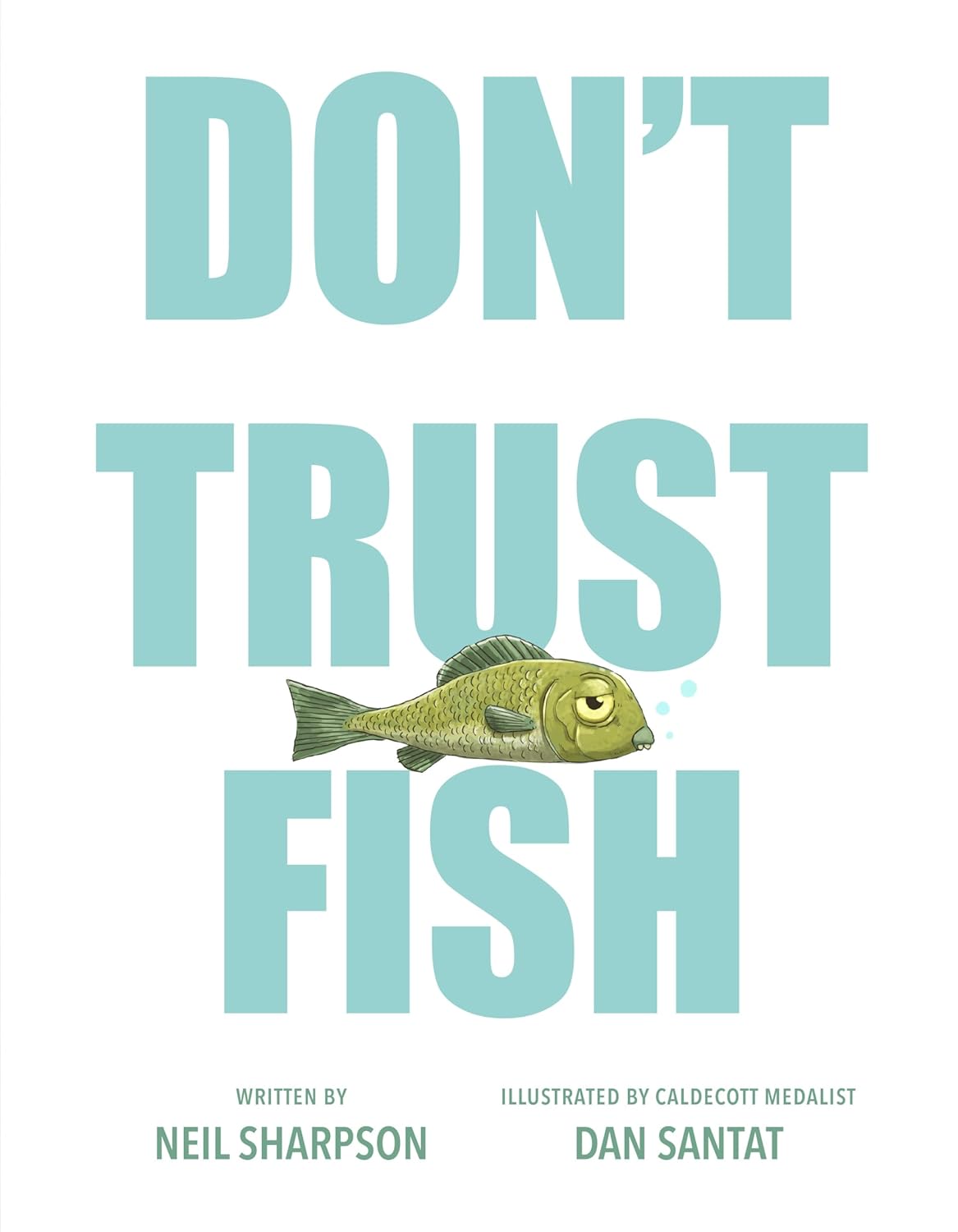
LHM: Don’t Trust Fish by Neil Sharpson, illustrated by Dan Santat.

RVC: One word you hope readers use to describe your work?

LHM: Thought-​provoking. I’m counting that as one word.

RVC: Thanks so much, Lindsay!

LHM: Thanks, Ryan! It’s been an honor.

Expanding Weeks 2 & 4: And a Real Talk on Ghostwriting and Invisible Work

If you’ve been following OPB lately, you might’ve noticed that our Week 2 and Week 4 posts have started stretching a little. Originally, Week 2 was meant to focus strictly on interviews with authors or illustrators. Week 4 was for interviews with industry insiders. And while we love interviews (and have some great ones coming soon), we’re also opening the door a little bit wider now.

So, expect to see more process deep-​dives, craft essays, and behind-​the-​scenes reflections—anything that helps peel back the layers on how picture books really get made, sold, shaped, and shared. Week 2 is for the creatives; Week 4 is for the industry-​minded folks. But there’s plenty of overlap, and honestly? That’s where things get interesting.

Last week, for example, I was talking with a writing client who’s just landed her first picture book deal—and now she’s starting to think about how to build her career from here. She asked a smart question:

Should I say yes to ghostwriting or IP work, or will that hurt my chances of getting future books under my own name?”

9 Secrets of Ghostwriters | Mental FlossI’ve heard versions of this question before. And it’s a good one, because the answer is complicated.
I told her that ghostwriting and IP (intellectual property) work can be incredibly fulfilling—and often financially solid. Here are some other cool aspects about it:

  • You get to work on commercial, high-​concept books.
  • You learn to write on deadline.
  • You collaborate with editors, designers, and marketing teams.
  • You stretch muscles you didn’t even know you had.

But there’s a catch: sometimes, your best work disappears.

I know this firsthand. I’ve got books on shelves right now—books I’m proud of, books that sell well, books that connect with kids—but they don’t have my name on them. They’re part of brand-​driven IP lines, or they were ghostwritten for public figures. In fact, many of my biggest publishing successes don’t show up in my official bio.

That becomes a problem when editors and acquisitions boards are trying to “see the whole picture” on a potential author before pitching a project internally or pulling together a P&L report. They’re wondering:

  • What’s their track record?

  • How many books have they sold?

  • Do they have experience delivering under pressure?

  • Are they promotable?

  • Are they likely to stick the landing during revisions?

  • Will this book stand out—or get lost on a crowded list?

If your best work is invisible, it doesn’t factor in. So, here’s what I shared with my client–in bullet format, since I’ve been feeling bullet pointy in this post (apparently!):

The Pros of Ghostwriting and IP Work
• You get paid to write. (That’s no small thing.)
• You sharpen your craft and build confidence.
• You expand your network with editors and publishers.
• You often get insider access to what’s trending in the market.
• You prove—sometimes to yourself—that you can deliver.

The Cons
• You usually don’t own the work.
• You may not get public credit.
• You can’t always list the book in pitches or proposals.
• You’re building someone else’s brand, not your own.

In the end, it’s about knowing what you’re signing up for. If your goal is to boost visibility and build your personal brand, it may slow things down. But if you’re looking for experience, income, and a way to keep your creative muscles active? It can be a great way to grow.

There’s no one “correct” path in this business. Some of the most seasoned writers I know have built long, successful careers that no one outside the industry knows about, and yet their fingerprints are everywhere. Is someone going to argue that their career isn’t worthwhile? Not me.

And that’s what I shared with my client, adding that the work matters—even if your name doesn’t always show up on the cover. So does the growth, the hustle, the collaboration, and the choice to keep showing up with something to say.

At OPB, we’re here for all of it. The front-​facing triumphs, the behind-​the-​scenes wins, and the quiet stories that help make the loud ones possible. Stay tuned for more creator-​focused topics like this. Because sometimes, pulling back the curtain is the story.

Author Interview: Donna Janell Bowman

This month on the OPB Author-​Illustrator Interview Series, we’re thrilled to feature Donna Janell Bowman—a writer, researcher, and storyteller who brings history to life for young readers. Donna’s award-​winning picture books, including Step Right Up: How Doc and Jim Key Taught the World About Kindness, King of the Tightrope: When the Great Blondin Ruled Niagara, and Wings of an Eagle: The Gold Medal Dreams of Billy Mills (co-​authored with Billy Mills), shine a light on incredible historical figures who persevered against the odds.

With a passion for uncovering overlooked stories, Donna’s meticulous research and lyrical writing have earned her accolades like the Sibert Honor, multiple state book awards, and recognition from ALA, NCTE, NCSS, and the Library of Congress. She holds an MFA from Vermont College of Fine Arts and has spent years teaching, editing, and mentoring writers.

Join us as we discuss her journey from ranch kid to award-​winning author, her deep-​dive research process, and the unforgettable stories she brings to life.


RVC: You grew up on a ranch, surrounded by wide-​open spaces and animals. How did your childhood experiences shape your love for storytelling?

DJB: Ooh, I love this question! There were a few downsides to being a ranch kid: I was isolated from my friends who lived in regular neighborhoods, we had only five TV channels (pre-​digital age), and I had seemingly endless chores in all weather conditions. When I was young, I didn’t appreciate how the wide-​open spaces and uninterrupted time provided a sort of incubator for a rich imagination and sense of curiosity. My penchant for stories began right there in Central Texas.

RVC: It sure sounds like it!

DJB: The animals, too, shaped me. I was an animal lover, and we had a whole lot of them, but I had a special bond with horses. Through my years of training for and competing in horse shows, I was the lucky beneficiary of the remarkable animal-​human connection. I learned compassion and empathy — traits that would be critical to future me, the writer.

RVC: You once dreamed of being a veterinarian, movie star, writer, and princess—all at the same time! When did writing take center stage for you?

DJB: Ah, the pie-​in-​the-​sky dreams of youth! I was awed by the power of drama to evoke emotion and truth, and actors’ abilities to inhabit characters so believably. I had a very active imagination! But Hollywood was not in the cards for me. Instead, I checked out books from the bookmobile that came to my school at irregular times and imagined the stories playing out in my mind. Then I created my own stories while sitting in a tree, often with a horse and dog waiting below. Stories, poems, and diary entries filled my notebooks. When my parents gifted me a typewriter, I became a writing machine, surely to the annoyance of my family.

My concern for animals sparked my interest in veterinary work, but after working for a clinic for two years as a teenager, I realized that it wasn’t quite the altruistic endeavor that I naively hoped. Later, I would write a book about kindness toward animals.

As for becoming a princess, well, at some point, I realized that Disney princesses were passive in their lives rather than empowered women. How boring! Don’t get me wrong, I was ready to saddle my own horse if some hunky guy who lived in a castle showed up on his trusty steed with the perfect proposal and some feminist leanings.

It took a little time, but I eventually circled back to my writing roots.

RVC: Before publishing children’s books, you wrote for newspapers and magazines. How did that background help shape your voice as a nonfiction writer?

DJB: This is a classic case of faking it till I made it. Though I had taken some journalism classes in college, I did not consider myself a journalist. When I left the corporate world, I took a chance and pitched myself to regional newspapers and later to children’s magazines. To my surprise, I had success with both. The more I wrote and adapted to variables, the closer I came to my own writing voice, and the more confident I became in my skills.

RVC: This is a common story I hear from kidlit authors. You’re in good company!

DJB: While I was writing those articles, I wrote plays for local theatre, and I was immersed in children’s books with my kids. At some point, when my youngest son was in diapers, I knew that I wanted to be a children’s book author. For an agonizing number of years that followed, I studied and dissected picture books like a scientist. And I wrote a lot. I was relentless!

RVC: Talk about your MFA from Vermont College of Fine Arts. What was the most valuable lesson you took away from that experience?

DJB: Everybody with an MFA will answer this question differently, depending on their pre-​MFA experience and their specific program. I started the VCFA Writing for Children and Young Adults program with seven books under contract and years of deep self-​study under my belt. But, good golly, the program was intense! The volume of reading and critical and creative writing on short deadlines was challenging. On top of that, somehow, I managed to launch my first trade picture book, Step Right Up, during my second semester. Yowza! The two-​year program deepened and expanded my knowledge base, provided an invaluable community that now includes forever friends, and taught me that there is always more to learn.

RVC: Let’s get to your books! What’s the story of your first published picture book? 

DJB: Thank you for clarifying “published” picture book. During school visits, kids always ask me how many books I’ve written, which is a very different question.

RVC: Absolutely. Those are two completely different things.

DJBLike most authors, before my first published book, I wrote a lot of meh manuscripts that will never see the light of day, but each one educated me.

Step Right Up: How Doc and Jim Key Taught the World About Kindness took ten years to bring into the world. I first learned about Doc Key and his “educated” horse, Beautiful Jim Key, through an adult book about the subject. My interest was piqued because once a horse girl, always a horse girl. But I was so skeptical about the true story that I had to do my own deep research. Soon, I was convinced that this was a story that kids needed to know.

RVC: How did the manuscript change over those ten years?

DJB: My first iteration of Step Right Up was middle-​grade nonfiction, but an agent suggested that I rewrite it as a picture book. I spent the next 1 ½ years studying the unique genre of picture book biographies. After too many rewrites and revisions to count, my manuscript found a home with Lee and Low Books and was published in 2016, just when the world needed a book about kindness. Gratefully, it racked up many awards and accolades.

RVC: Nice! What lessons did that book teach you—about writing, research, or even publishing?

DJB: Oh, gosh, how much time do you have? My journey with Step Right Up was a masterclass in research, the challenges of carving a focused angle out of a giant story, the power of revision, the synergistic relationship between author and editor, and the fluid nature of publishing timelines. Perhaps most importantly, I learned that the key to writing a book that deeply resonates with readers is to select a topic that deeply resonates with me. Considering my background, it’s not surprising that a piece of my heart is threaded through Step Right Up.

RVC: Your books often highlight underdogs and figures who defied expectations. What draws you to these kinds of stories?

DJB: It’s interesting that we authors don’t always recognize the patterns in our choice of subjects or story themes until we’re a bit further down the publishing path. Like most people, I have felt like an underdog at times, and I know the internal wrestling match between insecurity and determination. By learning about the lives of people who overcame great obstacles, persevered against skepticism, and upended expectations, I find hope and empowerment. Kids need those stories, too. That’s the power of books and stories, isn’t it?

RVC: With so much research involved in nonfiction, how do you organize your notes and materials to keep everything manageable?

DJB: I’m a research junkie, so this makes me chuckle. My processes have evolved since my first nonfiction manuscript (unpublished) almost twenty years ago.

I am a tactile person, so I like both hard copies of my research materials and digital folders. Since many of my books are historical, I organize my materials chronologically or by subtopic. In fact, I’ve earned a bit of a reputation for my giant binders. As if that’s not enough of a chore, I then copy and paste the most vital information into a Word document that is divided by relevant topics for easy scannability. It’s a tedious process that makes me grouchy, but the document becomes an invaluable tool during fact-​checking and when, years later, I’m interviewed about my older books. For example, a few weeks ago, I was interviewed about Beautiful Jim Key, but it has been many years since I visited my old research. Thankfully, I didn’t need to dig through my old binders because I had my detailed “book bible” document as a quick refresher.

RVC: Wings of an Eagle was a collaborative project with Olympian Billy Mills. What was it like co-​authoring a book with him, and how did that change your writing process?

DJB: People are often surprised to learn that Wings of an Eagle was my idea. In 2014–15, I learned about Billy while I was researching for a different book. Talk about an underdog story? He was born impoverished, was orphaned as a child, and faced health challenges and systemic racism. Just when he was ready to give up, he remembered his late father’s advice to chase a dream to heal a broken soul. Billy’s dream was Olympic-​sized. Spoiler alert: He succeeded and is still the only American to win Olympic gold in the 10,000-meter event, and only the second Native American to win Gold in any track & field event.

RVC: Such a heroic story here!

DJB: I researched and wrote a first draft of the book while I was a VCFA student. But, as a white woman, it didn’t feel right to pursue publication without Billy’s blessings and input, so I spent the next four-​plus years trying to secure an interview with him. In January 2020, I got my chance. I spent a day with Billy and his wife at their home. It was magical! By the end of the day, we agreed to collaborate; I would do the writing and revising and work with an acquiring editor, and Billy would supply information and ensure authenticity and accuracy. Our many conversations broadened my perspective and inspired me to look much closer at American history, with special consideration for Billy’s point of view. My journey with Billy and Wings taught me to be open-​hearted and flexible.

RVC: Your books blend history with a strong narrative voice. How do you balance factual accuracy with engaging storytelling?

DJB: Firstly, thank you! I always remind myself that I’m writing a true story, not a journalistic article. For narrative nonfiction, my job is to select the facts that serve my story angle and theme and then flesh them out into source-​based scenes that seamlessly connect to each other in a natural arc and a satisfying resolution. Unfortunately, picture books have limited page space and word counts, so I must leave 95% of my research material on the cutting room floor. That part is painful!

As for voice, before I begin writing, I carefully consider the character’s vibe and the overall story tone. As much as possible, I customize my narrative voice to reflect who the character is/​was and the impact they had on their world. That’s why each of my books has a unique narrative voice.

RVC: What’s one of the most surprising discoveries you’ve made while researching for a book?

DJB: I’ve had stunning revelations during research for each of my books, but I’ll offer one as a cautionary tale.

RVC: Please do!

DJB: For my book King of the Tightrope: When the Great Blondin Ruled Niagara, I was desperate to track down descendants of the tightrope walker because my research revealed conflicting information. Three years into my search, I finally made contact with Blondin’s French great-​great-​grandson. Fortunately, he was his family’s historian, and he was thrilled about my project. Huzzah! We shared resources and, together, dispelled some myths about Blondin that had been perpetuated since the mid-​1800s, including a fictionalized biography published in 1861—a source used by practically every writer who has written about Blondin since that time. Lesson learned: Don’t fully trust any single source.

RVC: What advice would you give to writers tackling their first nonfiction picture book?

DJB: Choose a character or topic that will retain your interest and commitment for a very long time, potentially years.

Ask yourself why you personally resonate with your character or subject. Doing so will lead you to the heart of your story and your likely theme.

Let glorious curiosity be your guide, and don’t settle for the low-​hanging fruit of research. The good stuff is buried and begging to be uncovered — probably not online.

Remember that experts and sensitivity readers are important. Don’t be shy about contacting them. They are usually honored to be asked.

RVC: If you could go back in time and give one piece of advice to your younger writer self, what would it be?

DJB: Only one? Okay then…do not expect your children’s books to financially support you!

RVC: One last question for this part of the interview. What’s next for you? Are there any upcoming projects or events you’re excited to share?

DJB: I do have other projects in the works, but I’m not able to discuss them yet. Otherwise, I’ll be heading to ALA with Billy Mills at the end of June to accept the Robert F. Sibert Honor for Wings of an Eagle. And Wings has been named the South Dakota One Book for 2025, so we will be there in September, along with illustrator SD Nelson, for the book festival and to celebrate approximately 15,000 third graders receiving a copy of the book. Huzzah!

RVC: I’ll see you at ALA then. And congrats!

DJB: Oh, and I’ll be teaching some online classes soon, so readers should watch my website for details.

RVC: Okay, Donna. Let’s launch into the Speed Round. Fast questions and zippy answers please. Are you ready?

DJB: Hey, I have survived an MFA and the publishing process, so I can handle anything.

RVC: What’s one thing about ranch life that city folks would be shocked to learn?

DJB: Mud can suck boots right off your feet!

RVC: You can instantly master any extreme sport—what do you pick?

DJB: Mountain climbing.

RVC: If your life had a theme song, what would it be?

DJB: “Unwritten” by Natasha Bedingfield.

RVC: Which of your book characters would make the best travel companion?

DJB: Billy Mills, of course!

RVC: If you could go back in time and witness one historical event, which would it be?

DJB: Hm! I would like to have witnessed the suffrage movement and the first vote under the 19th Amendment.

RVC: What legacy do you hope your books leave behind?

DJB: Through my books, I hope readers, especially my future descendants, will hear my voice encouraging them to chase their dreams, shoulder through obstacles, and extend hope and love to all of humanity.

RVC: Thanks so much, Donna!

DJB: Thank you for inviting me, Ryan! It has been a real pleasure!

Author Interview: Shannon Stocker

Thanks to Joyce Uglow for another fine OPB interview. I’ll give a quick bio on our guest, author Shannon Stocker, and then Joyce will take the reins. Enjoy!


Shannon Stocker lives in Louisville, KY, with her best friend and husband of 20+ years (Greg) and their two beautiful miracles, Cassidy and Tye. They have a chatty parrot named Prozac (‘Zac’), a service dog named Sophie (Cassidy is a brain cancer warrior), a mini Aussie named Copper, a rescue kitty named Nugget, and a bearded dragon named Pepper. She is fully aware that she harbors too many animals. Outside of writing, she’s a singer, songwriter, pianist, guitarist, and actress.  Shannon is represented by Allison Remcheck of Stimola Literary Studio.


JPU: Reinventing the Wheel: How Two Sisters Revolutionized the Wheelchair comes out in the summer 2026. Get a Hug releases in fall of 2026. Why are these two picture books important to get into the hands of kids?

SS: Hi, Joyce and Ryan! Thanks so much for having me on your blog. Reinventing the Wheel is another nonfiction picture book biography that’s dear to me, like Listen: How Evelyn Glennie, a Deaf Girl, Changed Percussion, because it shines a light on a fabulous invention for wheelchair users by Irish sisters, Ailbhe (pronounced AL-​va) and Izzy Keane.

IZZY'S WHEELS PW announcement.png

I spent two years in a wheelchair, and I remember only too well the looks of pity I’d get from others. At the time, I had actually been given two years to live; I didn’t know that I would regain my strength and walk again someday. Those two years taught me a great deal about myself, and they changed the way I approach everything—including my writing. I’m passionate about highlighting the beauty, the color, the possibility within different disability communities. We too often put boxes around that which is unknown to us. Kids in wheelchairs deserve more than that. They deserve our encouragement to break free from limits that others place on them and explore the vast realm of that which is possible.

To think of things that no one else has ever thought of before. That’s what Izzy and Ailbhe Keane did. As for Get a Hug, this book is everything that I first fell in love with about writing. It’s so much fun; it rhymes, it’s musical, it’s song-​like, and it’s reminiscent of one of my favorite children’s authors—Sandra Boynton. It’s an ode to hugs, and everything a hug can be. I really wanted to write a book that exudes pure joy, and this is that book.

Screenshot 2024-08-23 at 10.28.41 AM.png

JPU: Ah…yes. It has been said that a little bit of joy can last a lifetime if practiced daily. As a former educator and aunt of young man who struggles with mobility, I can totally see why both of these books are important to you. It is crucial that people see themselves in books. Did your idea to acquisition process differ for these two picture books?

SS: Reinventing the Wheel only went to my editor, Jess Garrison, at Dial/​PRH. It really belonged with her. She did such a lovely job with Listen—my agent wanted to give her first crack this one, since it felt like a great follow-​up. Obviously, I’m thrilled that Jess agreed!

Get a Hug got immediate interest from a few houses, but Celia Lee was effusive about it and immediately had a vision for the right illustrator (Lily Zhang, whose initial sketches are friggin’ adorable). Celia’s suggestions for edits rang true to me, and revisions just poured out so easily. When she made an offer, I knew it belonged with her at S&S!

JPU: I see that you and I are on the same page when it comes to the notion that artwork in a picture book has the power to draw in a book buyer. And I agree that the vision for the artwork is one of the keys to success. I also love a fun follow up and companion book. And so do kids! What would you like your readers to take away from these two stories?

SS: I’m hoping that both books are feel-​good stories that bring joy. I’d love for Reinventing the Wheel to bring a sense of “normalcy” to wheelchairs. People who use them often don’t feel confined. Wheelchairs can allow for a sense of independence and freedom, and they deserve to be a reflection of the user, just as a pair of shoes or an outfit might be for those who don’t need a wheelchair. I’m hoping that Get a Hug winds up being one of those books that kids choose time and again from the shelf because it’s so fun to read!

JPU: YES! That re-​readability IT factor brings it home time and time again. New ideas for books come to me when we venture out and about to see the world or travel the USA. Does inspiration strike you when you’re at home, on vacation, at work, or other places?

Inspiration strikes wherever I keep my eyes open (and sometimes when they’re closed)! I travel for my day job, so I’m always looking around at people: what they’re wearing, their tattoos, the way they interact with others. I especially try to interact with people in the disability community. If someone makes eye contact with me, I’ll smile and say hello. I frequently write down names and traits for characters in my novels, too. I actually just got an idea on our vacation a couple of weeks ago, when I met someone whom I believe will make a wonderful subject for my next nonfiction picture book biography. But I also get ideas right here at home from my kids all the time. Especially my son, whose imagination soars. Ideas are everywhere!

JPU: Isn’t it fun to notice and note people’s reactions to a smile or a nod? This brings me to wonder about your thoughts on back matter. Is there a certain back matter style or structure that resonates with you?

SS: For me, back matter should add something to the manuscript that didn’t belong in the manuscript but makes the story feel complete. It should complement the book. In Reinventing the Wheel, for example, I really wanted to get Izzy’s take on wheelchair etiquette. The book is not about wheelchair etiquette at all, but the topic came up multiple times in interviews with the sisters.

I think that people who don’t use wheelchairs sometimes feel uncomfortable around them—is it okay to draw attention to them? Should I help someone in a wheelchair, or should I not? Should I bend over when talking to them so we’re eye-​to-​eye? Sometimes people think they know the answers, but maybe they don’t. Back matter, to me, is a great opportunity to fill in some of the blanks, especially when a book is nonfiction or the author has a personal connection to the story, as I do.

JPU: Teachers love back matter, discussion guides, and extension activities. What are your thoughts on creating tools for teachers, care givers, and/​or parents?

SS: Oh, this is such a great question, and I wish I had a better answer for you! Luckily, my houses have been pretty good about creating discussion guides and extension activities for my books. Unlike some other authors, I’m not a teacher, so I really rely on the ones who are to give me guidance and feedback. I was recently talking with a critique partner about this, and I think I’m going to reach out to the homeschooling community on Instagram for help on this with my novels. It’s not been my strength but is definitely an area where I’m looking to improve.

JPU: Speaking of strengths, I believe one of yours is message consistency. If you were on a panel of kidlit writers talking about platform, what would the audience members be surprised to hear you say?

SS: In many ways, I think books have a life of their own. I know a lot of authors who spend a great deal of time building their online presence, but some might be surprised to hear that I feel it barely moves the needle. I do pretty much the same thing for all my books, and some do much better than others. My suggestion would be that writers do the best they can with platform, but try not to stress about it too much.

JPU: I agree! We do not need to add any level of stress to our lives! How about your super writer power? Does it kick into gear when creating an intriguing title with hooks that attracts book buyers?

SS: I try not to write hooks for the purpose of making a sale. If you write for the market, or if you write with the trends, by the time you’re on submission, the market will have changed. The best writing superpower we all have, in my opinion, is the wealth of experiences we’ve collected through our lives.

  • What connects with YOU?
  • What story can only YOU write?
  • How can you take YOUR passions, YOUR pain, YOUR tragedies, YOUR funny moments, YOUR experiences, and turn them into a story?

When books are filled with honesty, people really feel them to their core. That’s what gives them heart. We are never the only one to experience things. If we can use books to connect with other people, that’s when the magic happens.

JPU: Truth be told! When listening in on conversations between kids, (ok… eavesdrop) I pay attention to their interests. I’ve been known to lose myself in research because a news article spurs me to dig into a topic. What is the best rabbit hole your got lost in?

SS: LOL – I can think of a million bad rabbit holes that I’ve gotten lost in, but “best rabbit hole” is harder! I think my best rabbit hole is researching musicians with disabilities. I have ADHD, segmental neurofibromatosis, RSD/​CRPS, and I’m a coma survivor. My daughter has brain cancer, and my son is neurodiverse. My parents were both hard-​of-​hearing, and my mom was blind for a period of time (retinitis pigmentosa).

But I’m also a musician (pianist, singer, songwriter, mediocre-​at-​best guitarist). For years, I’ve had to change my way of playing instruments or performing to get around my disability. For example, I had to start using a travel-​sized guitar because a standard guitar presses against the tumors in my arm and causes pain. Everyone has obstacles in their life. The question is, how do you use those obstacles to succeed? How do you use your experiences to get ahead and pursue your passions? I’m fascinated by those questions.

JPU: Questions and curiosity fascinate me too. Is there a children’s book from your childhood that you wished you had written? What makes it special and unique?

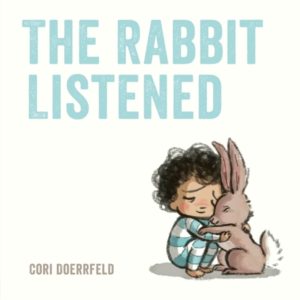
SS: I am one of the rare authors who didn’t read much as a child. I don’t remember ever being read to, either. But I did fall in love with picture books when I had my own children. A book I wished I’d written is The Rabbit Listened by Cori Doerrfeld. It’s so beautiful and perfect in its simplicity, and the message is crystal clear without being didactic. And those illustrations are adorable! To me, this book is like a great song with an earworm hook. It comes back to me over and over again. Another one like that is Guess How Much I Love You by Sam McBratney. That last line is so perfect! Who knows—maybe I have a thing for rabbits…

JPU: In many ways, kids today have it better than I did when I was a kid. Our library was quite a distance away, and we did not have many books. I’m glad to see that Oliver (one of my grandsons) is an avid reader. He may have picked up his soft spot for bunnies from reading books.  There’s much to love about those fuzzy little friends. What is the best advice you can give to a new kidlit writer?

SS: FIND YOUR PEOPLE!!! Do not try to go this alone. The publishing journey is not for the faint of heart. It’s filled with rejection and self-​doubt. It’s slow and painful. Find writers who are at the same stage you are, grow together, learn together, go to conferences together, critique one another’s work, and be there to cheer one another on along the way.

I remember wanting to find an established group that I could join, when I first got started. But honestly, that’s not the way it works. Established groups typically started and grew together, when everyone was a newbie. It sounds counter-​intuitive, but that really is the best way to learn. Find people whose feedback and writing resonates with you and hold onto them for dear life. Then, ride the wave together.

JPU: Okay, Shannon–it’s time for the Speed Round. Here we go! What is your One Little Word for 2025?

SS: Compassion. It has never mattered more.

JPU: 100%! Are you a book buyer or library user?

SS: Both! Yay, libraries!! One of the best ways to support authors is to ask your library to carry their books. It’s free and oh-so-helpful!!

JPU: Sorry! That wasn’t a fair question. How about this choice? Do you prefer to write Picture Books or Young Adult?

SS: Can’t choose between my babies. They are apples and oranges, and I love them both.

JPU: Okay… Are you a “pantser” or a “plotter” when writing picture books?

SS: I used to be a pantser, but I’m more of a plotter now. I have to have a sense of where I’m going or I tend to flounder. That said, it’s not uncommon for my outline to change along the way. In fact, it always does.

JPUChange can bring about golden nuggets. What are you working on now?

SS: I just finished a new picture book last week that I’m super excited about. It’s been spinning in my brain for years, and I finally made the time to just put my butt in a chair and finish writing it. And I LOVE it—it gives me all the feels. I’m also working on characters for my next novel.

As for revisions, I’m working on my next YA novel, The Roach King of Raleigh, which comes out early next year, and revisions of my upcoming picture books, Reinventing the Wheel, Get a Hug, and a couple more that have yet to be announced.

JPU: You get THE call from THE children’s book awards committee, what’s your reaction?

SS: Oh my gosh, this was the BEST call ever!! I actually missed the first call, but when they called the second time, I remember hearing, “Schneider Family Award committee,” and screaming. I asked them if I could gather my family before they said anything else and they all cracked up. I screamed to my whole family, put the phone on speaker, and then asked them to continue. It was chaos in the most wonderful, hysterical way. I sobbed through the whole call, feeling the most immense sense of gratitude and validation. Particularly because it was the Schneider Family Award, and I’m such a passionate advocate for the disability community. Any award would be meaningful, obviously, but this one was a bucket list item, for sure!

JPU: Thank you, Shannon. It was wonderful getting to know you and your new books. All the best to you. See you in the library and on the bookstore shelves!

Author Interview: Becky Scharnhorst

Thanks to guest interviewer Joyce Uglow for handling this month’s interview with Becky Scharnhorst!


Becky grew up in Northeast Wisconsin and spent most of her childhood playing in lakes and reading books. Shortly after graduating from Luther College, Becky spent a year working as a children’s bookseller and soon discovered she enjoyed reading picture books more than anything else. Now Becky spends her days writing children’s books and working at her local library. When she’s not reading or writing, Becky can be found hiking through the woods, baking something sweet, or thinking happy thoughts. She currently lives in Central Wisconsin with her husband, two kids, and a few too many pets.


JPU: Best Buds is the most adorable book on earth, and I simply cannot wait for its release on July 8, 2025. Please share what you see as the power Best Buds can have on young readers. What do you hope will speak to kids?

BS: Thank you so much for your kind words about Best Buds! I’m thrilled to hear it resonated with you. My hope is that after reading this story young readers will feel empowered to trust themselves and to embrace their own unique self. In this story, Spencer is confident in who he is and in his choice of friends. He knows what qualities he’s looking for and he finds friends who have them. Even when others question him, he remains true to himself and his chosen friends. I hope young readers feel equally confident in who they are, and I hope it makes them consider what qualities are important to them when it comes to friendship.

JPU: Booklist had this to say about your picture book My School Stinks. “Along with being a good choice for children anxious about their first day, this offers a nifty exercise in reading between the lines. What is your favorite read between the lines in Best Buds?

BS: There is a spread near the beginning where Spencer learns he can buy plant friends at the farmers’ market. The text reads “On a trip to the farmers’ market, Spencer discovered he could even buy friends, though something didn’t feel quite right about that.” 

I love that line because it works on two different levels. Children will think it’s funny even if they don’t understand the hidden meaning behind that phrase because they know you can’t buy friends at the store or market. But older children and adults who do understand the meaning behind the phrase “buy friends” will know that the text is also saying something about the true nature of friendship.

JPU: Friendship. As a principal, I often gathered small groups for special friendship lunches. It would have been great to have a garden at our school to plant friendships. New ideas for picture books come to me when I’m traveling.  Does inspiration strike you when you’re at home, on vacation, at work, or other places?

BS: That’s an interesting question. I was going to say all of the above, but when I started going through my list of books and ideas, I realized most of them came to me when I was at home. I’m guessing that’s because home is where I’m most comfortable and where I can most easily quiet my mind. That said, I have worked out a lot of story problems while hiking, so the forest is another place of inspiration for me.

JPU: Home is where the heart is, right? Speaking of traveling, This Field Trip Stinks is hilarious! In contrast, I think the jokes in Best Buds are more subtle. Is there a line or a spread that makes you giggle?

BS: The spread that makes me giggle the most is the one where Spencer discovers he can buy friends at the farmers, market. However, a close second is the one where Spencer takes his plant friends to various locations. All of Spencer’s lines on that page make me laugh, but I especially love the one that comes right after the librarian comments on how many friends he has brought to story time. Spencer casually replies, “Don’t worry. They’re much quieter than Jeremy.”

JPU: There is that travel theme again…  I do love a busy farmers market where I can replenish my pantry with special honey, plants, and bread. Picture books are extraordinary treasures in of themselves. It’s well known that great teachers use picture books for enhancing their students’ learning. Your extension activities, discussion guides, and resources are super fun and helpful. In your opinion, what are the important features in a tool for teachers, caregivers, and/​or parents?

BS: I think one of the most important features is that the tools are easy to access and easy to use. Parents, teachers, and caregivers are usually quite busy, so if the activities you are providing require a lot of extra prep or materials, they likely won’t get used at all. I also think it’s important the activities are fun for kids. Having curriculum tie-​ins is an added bonus, but I think it’s okay if the activities you provide are purely for fun. We are writing for children, first and foremost, so when creating resources, we need to keep that in mind.

JPU: Here’s one to make you think outside the box. If you were on a panel of kidlit writers talking about platform, what would the audience members be surprised to hear you say?

BS: I laughed out loud when I read this question because I can’t imagine any scenario where I’d be asked to be on a panel talking about platform. This is one of the areas where I struggle the most. I don’t know if I could even describe my platform, though I probably shouldn’t admit that. I admire people who excel at marketing and branding, but I am not one of them. Probably some of that stems from my mixed feelings about social media. I tend to be a rather private person, so I don’t feel comfortable sharing a lot about myself online. At the same time, I want my online presence to be real and authentic, so it’s a struggle to find that balance. The audience might be surprised to hear me say that I’m still figuring it out. Or, maybe that’s obvious after taking a look at my online presence.

JPU: I don’t know about that, Becky. I see you as someone who stands on the nature platform very well.  So, how about your super writer power? How do you kick it into gear when creating an intriguing title with hooks that attracts book buyers?

BS: You’re really digging into to all my weaknesses, Joyce! I am embarrassed to admit that I only came up with one of the titles for my books. I do not have a superpower when it comes to clever titles that will attract book buyers. What I do have are brilliant critique partners who are masters at wordplay! My friend Tara Hannon came up with the title for Best Buds and it is utter perfection. Laura Lavoie is another writing friend of mine who is so good at coming up with catchy titles and concepts. She wrote an excellent blog post about titles that I still refer back to when brainstorming. Titles are hard for me! 

What I usually do is write a list of words and phrases that are associated with my manuscript. Then, I come up with a list of terrible titles using those words. After that, I send the list to my smarty pants critique partners and they usually come up with the perfect title. I’ve also had titles changed by my editor. So, I guess my superpower is surrounding myself with geniuses!

JPU: I agree! Critique partners, editors, and fellow writing community members enrich what we do. I’ve been known to lose myself in research because a news article spurs me to dig into a topic. What is the best rabbit hole you got lost in?

BS: Octopus camouflage! Even though How to Get Your Octopus to School is a fiction book, my editor wanted me to include some facts about octopuses in the back. I thoroughly enjoyed researching these incredible creatures and especially learning more about their impressive camouflage. I don’t think I want to know how many hours I spent watching octopus camouflage videos.

JPU: I have to admit that EVERY time I see an article, video, or book about an octopus, I think of you. Name a children’s book from your childhood that you wished you had written. What makes it special and unique?

BS: I loved The Monster at the End of This Book as a child and I still love it today. I think one of the things that makes it special is that it’s interactive. There are a lot of interactive books out now, but I can’t think of any others from my childhood. Also, the page turns are epic! Young readers cause ropes to snap and brick walls to tumble with the mere flip of a page. It’s empowering and hilarious! It also has one of the best endings ever! It’s silly, surprising, and completely satisfying.

JPU: I need to dig that one out again. Jon Klassen and Mac Barnett just wrote an in-​depth analysis of Go, Dog. Go! on their SubStack Looking at Picture Books. Those older books are sure different from what is getting published today. What is the best advice you can give to a new kidlit writer?

BS: Focus on your craft. There are many excellent resources available to new writers, and a lot of them are free. So, do some research. Read current books. Take a class. Get some feedback. Revise. Revise. Revise. Always be diligent about your craft. And if you can, find yourself some brilliant critique partners.

JPU: Thanks, Becky. Let’s jump into the Speed Round. What is your One Little Word for 2025? 

BS: I didn’t choose a word for 2025, but I am trying to be more deliberate about rest.

JPU: Ah ha. REST. It is a radical act… I need more of that! Are you a book buyer or library user? Both!

BS: I admit to spending way too much money on picture books. But then I have gifts I can give. I do love a good library stack, too.

JPU: What’s funnier? A well-​crafted joke or a surprise?

BS: Most well-​crafted jokes have an element of surprise to them, so I’m not sure how to answer. Can I say both again?

JPU: Now I’m going to have to reread your books to see which technique you use the most. Are you a “pantser” or a “plotter” when writing picture books?

BS: Plotter! I usually spend weeks or months thinking about a project before I put any words on the page.

JPU: Wise. Becky, you’re very wise. What do you have in the publishing pipeline?

BS: I recently received some exciting news, but I’m not allowed to share the details yet. Hopefully I can spill the beans soon!

JPU: NO! I’m not good at waiting… You get THE call from THE children’s book awards committee, what’s your reaction?

BS: Based on the reaction I have whenever my agent calls with good news, I’d say lots of screaming and jumping around. I am the opposite of chill in those situations.

JPU: Thank, Becky. I know for a fact that kids all over will fall in love with Best Buds. I know I did.

Author Interview: Katrina Moore

Hello, OPB family! I’m thrilled to be taking the reigns over for Ryan this month and conducting this month’s Author Interview with the oh-​so-​kind and talented Katrina Moore. I’ve been a huge fan of Katrina’s work for years and it was an absolute thrill to be able to meet her in person at NCTE in Boston last fall. Before we jump in to the interview, here’s a little about Katrina:

Katrina Moore is an author and former elementary educator. She holds a M.A. in Teaching and taught for thirteen years in Maryland, Massachusetts, New York, and New Jersey. She writes in Georgia, where her mission is to create books that children will hug for ages. She is the author of the humorous TEENY HOUDINI chapter book series (Teeny Houdini: THE DISAPPEARING ACT is nominated for the 2025 Washington State Otter Award), as well as several acclaimed picture books including THE STAR IN YOUCHANG’E ON THE MOON (a 2024 Bookstagang Best Illustrated book), GRUMPY NEW YEAR,  HOPE IS A HOPONE HUGGRANDPA GRUMPS (a 2023 Georgia Picture Book Award finalist, and 2025 Illinois Monarch Award nominee), and SOMETIMES LOVE ( a Bank Street College of Education’s Best Books of the Year). Her forthcoming books include the BIG JOB FOR LITTLE BABIES board book series, illustrated by Benson Shum. WHO’S DIGGING? publishes August 2025, and WHO’S BUILDING? publishes spring 2026. Another picture book in the beloved Grumps series, SCHOOLTIME GRUMPS, will publish summer 2026.

When Katrina is not building new literary worlds, she is cooking without a recipe, painting outside the lines, adventuring, or snuggling up with her two kids, husband, giant pups, and of course, digging into a cozy book. Connect with her at www.katrinamoorebooks.com, or on Instagram @katrinamoore1011  and Twitter/​X @kmoorebooks.


RGL: Hi. Katrina! I’m so thrilled you are here! To start, can you please tell us a little about your childhood? Were you one of those kids who was always writing?

KM: Hi, Rebecca! I’m so happy to be here, too! Thank you, and Ryan, for inviting me to Only Picture Books!

RVC: Happy to have you both here! Take it away, folks.

KM: I grew up as one of five kids, as the middle child, in a very big and busy family. It was a lot of fun, but I always needed and treasured some “me” time. So, while we played “Log Cabin,” or “Mermaids,” or “Quicksand Monster,” I was often scurrying off to find my own little nook, to spend some quiet time with my imagination. From an early age, I filled notebooks with drawings, musings, and lots of poems. I was often creating things – 3D art sculptures from found and repurposed materials around the house (these got me in a bit of trouble!), cakes, cookies, paintings, and dresses. Making something messy into something beautiful (and still sometimes, messy) has always been something I’ve gravitated toward.

Sometimes these ideas would start in my notebook, and sometimes they would be recorded there, afterwards. But always, journaling and writing have been something that I’ve done for myself – as reflection, as an escape, as a starting point to a bigger project, and as a way to fuel and capture my many passions, even as a kid.

RGL: I resonate so much with all of this! (Except for the four siblings. I only had one, and that was PLENTY!)  I know you worked as a teacher for more than a decade. What ages and subjects were your favorites to teach?

KM: Yes! I taught for over thirteen years as a public school elementary teacher. I taught every grade from kindergarten to fifth but spent the most time teaching second and third grade. One of the reasons I loved teaching in elementary school was that I got to teach all the subjects, and therefore, was able to do a lot of interdisciplinary teaching – a lesson or project that covered many learning targets but just felt like a fun project sparked by curiosity that nurtured the whole child.

While there’s something to love about every grade, and age of development, I really loved teaching the primary grades – kindergarten, first, and second. It’s probably the same reason that I love writing for children in these grades, as they’re the target age range for picture books (though, I’d also argue that picture books are really for ages 0 through over 100!).

RGL: Absolutely agree!

KM: There’s an unfiltered honesty at these ages that is so refreshing, and a way of viewing the world that is beautiful and admirable. They’re so smart, and while I’m teaching them important skills, they’re teaching me every day, too. They experience many new things and handle so much more than they get credit for. I have a deep respect for children that always came through in my teaching, and hopefully does through my writing, too!

RGL: Oh, it it definitely does. Did you use a lot of picture books during lessons or as read-​alouds in your classroom? What were a few of your favorite books to share with your students and why?

KM: I did! I read picture books aloud as much as I could, which was at least three times a day. I started every day with a morning meeting (even when I taught fifth grade!), and that always included a picture book read aloud. A favorite that I shared, year after year, during the opening week of school, was MY TEACHER IS A MONSTER (No I am Not) by Peter Brown, which invited them to discuss perspective, closely read the illustrations, feel super-​smart when they figured out what was going on with how the teacher looked, It’s such a fun book that it set the right tone for what learning in our classroom would feel like.

RGL: I don’t know that book, but can’t wait to go check it out now!

KM: Oftentimes, a picture book would make a great opener for a new topic we were going to learn. A great example of this is WATER IS WATER by Miranda Paul and Jason Chin, which was an excellent introduction to our water cycle unit in second grade, as well as a mentor text for poetry, and led to amazing student-​to-​text connections about the ways water is a part of their everyday lives.

RGL: LOVE, LOVE, LOVE that book!

KM: And, always, during the closing circle, at the end of the day, after some sort of reflection-​of-​the-​day activity, I would read a picture book. My favorite ones were always those that sparked rich conversations with my students, and allowed them to ask and wonder about things that they never encountered before, such as THE BOOK OF MISTAKES by Corinna Luyken. Reading this one aloud to students not only nurtured their growth mindset, but empowered them to reflect on their own “mistakes” and share how they could pivot when things didn’t go their way (which happens in elementary school, and as we know, all through adulthood, an awful lot!)

My favorites, as the above were, have multiple takeaways deeply ingrained into the stories, but are, first and foremost, books that understand and respect children, open their world, and entertain them.

RGL: You were clearly an incredible teacher. I wish I’d been in your class! How do you feel your experience as a teacher influenced your writing style and/​or the subjects you chose to tackle as an author? Can you give an example?

KM: My “mission” as an author is to write books that children will hug for ages. That is, I want to make books that children genuinely love. They love it because they see themselves in the story, because they connected with the subject so deeply, or because it makes them think anew, or feel a certain way—and they want to hold onto that.

When I wrote ONE HUG, I wanted to give a voice and stage to the little Chinese-​American girl in me who never saw herself accurately represented in the media. Like the characters in ONE HUG, my cultural identity influences my life, but it’s not my whole story. I wrote it for little-​me, but saw so many of my students in the story, too. Now, it’s so heart-​warming to hear from all different kinds of readers about how much their child, and their families connect with this book—and ones who are sleeping with the book under their pillow because they love it so much.

RGL: Awww, that’s the best. My son used to sleep with books too. So sweet!

KM: When I wrote THE STAR IN YOU, it was a love letter from my teacher heart—a message to each student, to let them know that even if they can’t see their own star, that I can.

Ultimately, the reason I write is the same reason I became a teacher. It’s driven by my desire to nurture children’s love of themselves, and of the world, and to feel confident and empowered by their place in it.

RGL: You are absolutely doing that! So, still wearing your Teacher hat for a little longer, I’m curious what advice do you have for authors? How can we get teachers to fall in love with our books?

KM: Write a book that you really love writing. There are various entry points for connection with a story, and as an author, we never really know the specific way in which a reader will connect with our books. However, when an author is genuinely having fun with their story, or their passion for their subject comes through, it’s often tangible. That, in itself, helps a book stand out to any reader. Specifically for the teacher reader, a book can earn a place on their shelf if it’s one that can be used and reused for multiple lessons, multiple times of the year, and will be one that helps to engage the reader that’s sitting at (or on) their toes during the read aloud. The ones I ended up buying (with my little to non-​existent budget!) were ones that I ended up checking out so many times from the library, it made more sense to own it!

RGL: Such great advice. Thank you! Just curious, do teachers really use back matter and Teacher’s Guides?

KM: Yes! Back matter, when done well, is an incredible tool for a teacher–diving deeper into content that is connected to the curriculum, and offers the information in a child-​accessible way. It’s also excellent for extension. When a young reader wants to know more, but maybe there wasn’t enough time during the read aloud or the lesson, they can further research a topic on their own during a center, or as an independent activity, using the backmatter as a jumping off point. Teacher’s guides are great, too! I’d say the best ones are easy to use, and include activities that are curriculum based/​tied, and pretty self-​explanatory because teachers are very busy people!

RGL: That’s such a great point! So, when and why did you decide to leave teaching to become an author full-​time? What do you miss most about it?

KM: As of this July, I’ll have been writing and authoring full time for two years. I never left because I didn’t love teaching – I truly, truly did! But teaching full-​time is more than a full-​time job (mentally, emotionally, and physically), even when you try to be as efficient as possible (as I did). When I would finish my teaching day, I tried to be as present as possible for my children, dogs, and husband – so my mommy and wife hat would work overtime, too. That didn’t leave a lot of time for writing, which I both needed to do (to meet deadlines and because I don’t feel like “me” when I haven’t written in a while) and wanted to do—because I love it, and it feels like a “calling”. I would write in the wee hours of the night when I very much needed to be sleeping. Suffice to say, it wasn’t very sustainable, long term.

RGL: Good for you for recognizing that and taking care of yourself. Both my mom and sister were/​are teachers and it’s so true that they work much more than a full-​time job. Teachers are serious superheroes.

KM: What I miss most is seeing the same group of children every day and actively being a part of their growth and development. But my favorite part of the teaching day was reading together. During author visits to schools, I still get to do that, so I’m getting to experience the magic that happens during that time, still!

RGL: I love that. Well, you may not be teaching kids anymore, but I happen to know you are amazing at teaching other writers. You don’t know this, but about 7‑ish years ago (I want to say it was 2018 maybe?), when I was just getting my feet wet in the Kidlit world, I attended a session that you presented at the New Jersey summer SCBWI conference about revising, which included a whole slew of tips, including color-​coding different aspects of your manuscript with various highlighters. Your presentation seriously blew my mind. Do you still use that system for revising your own stories? Can you share one or two of your very favorite revision tips?

KM: Thank you, Rebecca! Yes, “Revising Your Writing Into A Pot of Gold” is the workshop where I go through my “Rainbow Revision” technique. It is still one that I use today – though not every time. Basically, you use a different color when you are focusing on one aspect of revision. To mentally, and tactilely switch gears, you change the color of your tool to focus on the next aspect. I don’t always need to go through all the “colors”, and what a specific project needs during revision feels more intuitive now. But I absolutely refer back to, and still use, that as my revision checklist before I feel a project is ready.

My absolute favorite, do-​it-​every-​time, revision tip is to paginate and pace out your manuscript. That doesn’t mean that when you turn it into your agent or editor you should designate the pagination, but as a step in your revision, you should absolutely do this so that you can feel and see the beats of your manuscript, and know which scenes and pages have too much going on, and where your story is feeling static (like perhaps you’ve realized there are four consecutive pages where the action has not changed). I have a lot of different ways that I do this, but a simple one is adding extra spaces between where I think a natural page turn should be. There should be about 12–15 spreads (sections of text between the spaces). How does the pacing feel? Is there too much action in this scene to be shown visually? Are you maximizing the word choice at each page turn?

I share some more revision checklist questions and techniques over on my free Writer’s Blog.

RGL: What a great resource. Thanks so much for sharing. Okay, let’s now dig into your stories a little more. Your books are so full of authentic, kid-​friendly emotion. Take SOMETIMES LOVE, for instance. Here is a story about the long-​time friendship between a little girl and her pup, from whom she has to separate when her mom is deployed overseas (don’t worry, dear readers, it has a happy ending!). The reader, along with the child character in the story, experiences so many emotions in this book – affection, joy, sadness, disappointment, worry, excitement and love, just to name a few. When writing, are you consciously thinking about all the emotions you hope to elicit in the reader?

KM: Thank you, Rebecca. Yes! An emotional journey is just as important, and sometimes (depending on the story), more important for a character to go through as a physical journey. A step in my revision is always to create an emotional map for the story. What is the emotion the character(s) are feeling on the page? What do I hope the reader will feel on this page? (Does it work? Or Not?). It’s not something I worry about while writing my first draft. But it’s always something I check for during revision!

RGL: As a fellow rhymer, I am truly in awe of your rhyming talent and ability to tell such meaningful stories with so few words. In ONE HUG, HOPE IS A HOP, THE STAR IN YOU, and SOMETIMES LOVE, your poetic texts are beautifully sparse while the plots of each of these books is mostly shown in the illustrations. What is your writing process like for these types of books? How do you decide when to add illustration notes and when to hold off and allow the illustrator to fill in the gaps?

KM: Thank you. One of the best parts of being an author-​only for a picture book is that I know part of the magic will happen when the illustrator brings my words to life, and instills their own vision into the story through their visual storytelling and artistic choices. The result of the text and art working together, and one not being able to fully work without the other, makes this format so unique – and exciting. So I’m always keeping that in mind.

For a text that I’m only writing, I still think visually. So, as I’m writing, I am mindful about what will be shown through the art, and then I focus the text on what is essential to the story here? What do I want to convey that can’t come through the art? What words are necessary? For my books that are poems, as are all the ones you mentioned above, they usually begin with a strong concept that I feel compelled to explore.

I’ll begin by word mapping and jotting down all the words that are associated with the concept. Then, I focus on what do I want to say about it? That’s how I usually narrow down which words I absolutely must keep. And then, it’s a puzzle of how this can be shown visually, and what cadence corresponds to it, and what meter meets the tone I want the read aloud to take on. Notice that I didn’t mention finding rhyming words. Though the rhyme must be perfect, or it throws off the entire read aloud experience, it really needs to serve the story, and not the other way around. So I make sure my story is set first, and then I fret about the meter and the rhymes!

RGL: Oh, yes. So many people don’t understand that writing in rhyme is really NOT about rhyming words, but about meter and rhythm, and that story always – always—must come first.

KM: Each of the above stories was sent (to my agent, to my editor, and then to the illustrator) with art notes. Because I do not want to overstep, but know that I need to convey important information about what’s happening in the narrative via art notes, I keep them to the essentials. What is happening in the plot that they need to know. I will usually give one overarching art note before the text, and then, per spread, what is happening in the action (if it’s not clear via the text). For example, in SOMETIMES LOVE, since there was an overarching art note, the first three spreads did not need a specific art note. It wasn’t until the next one, “Sliding, scratching, through the halls, love will sometimes break through walls” that I needed to include the art note: [dog anxious when girl leaves] 

RGL: Thanks for sharing all of that insider info. I love hearing about other writers’ processes. Even in your books that don’t rhyme, like your picture books GRANDPA GRUMPS and GRUMPY NEW YEAR, and your chapter book series TEENY HOUDINI, you use so much rich lyrical language – onomatopoeia, internal rhyme, metaphor/​simile, alliteration, etc. Have you always been a poet at heart?

KM: Thank you for noticing that! Yes. The first “writing” that I filled my notebooks with as a child were poems. I’ve always loved poetry and connected deeply to it. Perhaps because poems create such strong imagery, and usually explore something in a new or creative way. I am a very visual person, and an out-​of-​the-​box thinker, so I’m drawn to a format, and using poetic devices, that make images come to life in my mind, and one that allows us to think about something in a unique way. I also believe that poems, like picture books, are best enjoyed when read aloud. And what a treat it is when words can string together to sing, and boom, and make you feel something!

RGL: I couldn’t agree more! I was also a huge poetry lover/​writer as a kid. Let’s talk now about your incredible range. You’ve published a chapter book series, picture books in both rhyme and prose, a folktale retelling, and later this year you will release a toddler board book series called BIG JOBS FOR LITTLE BABIES, beginning with the first book, WHO’S DIGGING? (Readers, Katrina generously shared a sneak-​peek of this one with me and I have to tell you, it is absolutely adorable!) What made you decide to dip your toes in all these different waters?

KM: Hooray! I’m so glad you enjoyed it, Rebecca. I can’t wait to share the BIG JOBS FOR LITTLE BABIES series with the world in August! That’s a good question, and it’s not something that I’ve intentionally done. The stories that I end up writing are ones that will not leave me alone. As mentioned earlier, I am a person who wears many hats, and oftentimes, many at once. So, for me to take the time to turn an idea into a draft, and to revise that draft to a show-​ready state, it’s got to be one that’s literally keeping me up at night and begging to be written. And, it turns out, most of those were (and are) picture books, but also chapter books, and board books. Some stories are more suited to one form than another, and I just let the “heart” of the story and my “voice” as a writer come through and then go from there (and then make sure it conforms, or not—purposefully to that format). I enjoy the challenge, balance, and freshness of working on multiple projects, and in multiple formats at once.

RGL: That’s so amazing. Which format or genre is most enjoyable for you and/​or most challenging?

KM: Picture books come most “naturally” to me and forever have my heart. I love both the range of ways they can be written, and the range of the readership—especially how you can truly not outgrow them. When done well, there is such magic that happens between the pages of a picture book, and well after it’s closed, between the book and the reader(s) that is unique to that format. At the moment, drafting a middle grade novel is proving to be the most challenging (though also rewarding and energizing!) I am so used to cutting down words, and sticking to essentials, in the picture book format, and then having very controlled language and sentence structure in the chapter book format, that the freedom to build out a scene with words and elaborate (because the only details the reader will get are through the text in a typical novel) feels unnatural to me. I’m certainly stretching new muscles (and it’s mighty fun!).

RGL: I feel that. I honestly can’t imagine writing anything longer than a picture book! Do you think you’ll ever round out your Kidlit portfolio with an MG or YA novel? Or maybe even a graphic novel?

KM: Yes, definitely! As mentioned above, I’m working on some middle grade novels now. So hopefully I’ll be able to share more on that front, soon.

RGL: Oh, I can’t wait to hear more! Alright, now that all the tough questions are out of the way, it’s time for the LIGHTNING ROUND! Are you ready?

KM: Bring it on! 🙂

RGL: Bunnies or Puppies?

KM: Puppies!

RGL: One hug or a thousand kisses?

KM: One hug!

RGL: Three things that make you grumpy:

KM: Traffic, being hungry, and being sleep-deprived!

RGL: Have you ever worked as a magician?

KM: No, but I LOVE magic, and performed many tricks on willing (and unwilling) family members growing up.

RGL: Favorite magic trick?

KM: When you pull something unexpected out of a whole, closed fruit, that definitely shouldn’t have been there! It was the inspiration for the trick in Teeny Houdini : The Super-​Secret Valentine. When a magician performed that trick for me the first time, I was blown away!

RGL: Teacher who was most influential in your life:

KM: So many! But my first was Ms. Galvin, my Montessori teacher who taught me in first and second grade. She made me feel “seen” and special, and showed me how impactful little acts of kindness and generosity can be.

RGL: Nicest thing a child reader has said to you about one of your books:

KM: That I wrote about them in my book.

RGL: What makes your heart sing?

KM: When a person, especially a child, feels empowered to be fully and unapologetically themselves.

RGL: Thank you so much for sharing so much of yourself with us today, Katrina. You and your books are pure joy!


Rebecca’s BIO:

Rebecca Gardyn Levington is a children’s book author, poet, and journalist with a particular penchant for penning both playful and poignant picture books and poems – primarily in rhyme. She is the author of WHATEVER COMES TOMORROW (which has been translated into 9 languages and is the winner of a Crystal Kite Honor and a Northern Lights Book Award), BRAINSTORM!, AFIKOMAN, WHERE’D YOU GO?LITTLE DREIDEL LEARNS TO SPIN, WRITE HERE, WRITE NOW, and I WILL ALWAYS BE (on bookshelves 4/​15/​25!) with seven additional rhyming picture books forthcoming. Rebecca writes reviews and conducts author interviews monthly for the Picture Book Builders blog. Her award-​winning poems and articles have appeared in numerous anthologies, newspapers, and magazines. She lives with her family in Summit, N.J., where she enjoys bouncing on a mini-​trampoline, playing Mah Jongg, and eating chocolate-​peanut butter ice cream (although not usually at the same time!).

Find out more and sign up for Rebecca’s monthly newsletter at www.RebeccaGardynLevington.com.